


AI and The Tower of Babel – Noaḥ 5787
If I didn’t already know, I learned this week that AI can do many things.
Like many.
Apparently, one of them is to schedule a rabbi for a meeting on Shabbat.

Not good.
So, I think I figured out what happened.
I was rushing through my email, clicked a button, and gave the AI app on my computer access to my email and calendar.
Not good.
Suddenly, it was pointing out things it could assist me with.
That seemed helpful – I have lots of emails and projects and can always use some help.
Someone needed an appointment from an email that got missed during all the holidays.
Two people working on related projects might benefit from an introduction.
It asked if I would like help with those.
Sure. I moved on. Then I noticed the tasks were marked done.
Not good.
But wait. I never saw any drafts! I opened my sent folder.
Oh. Not good.
The AI had already sent the emails out. One offered an appointment slot on Shabbat, during services no less!
Not a great look for a rabbi.
The other introduced two people before I had gotten permission from both.

Not good.
I thought I was getting help composing emails. It had moved on to conducting my life.
And yes, I had given it permission. I was moving too fast. A really powerful tool with a distracted human can cause trouble.
But the stakes can get much higher than an awkward email. Researchers have demonstrated teams of AI agents exploiting computer vulnerabilities. In separate simulated tests, AI models threatened blackmail. Anthropic has also reported real hackers misusing its AI to infiltrate organizations.
Some of this is testing; some is already happening.
*****
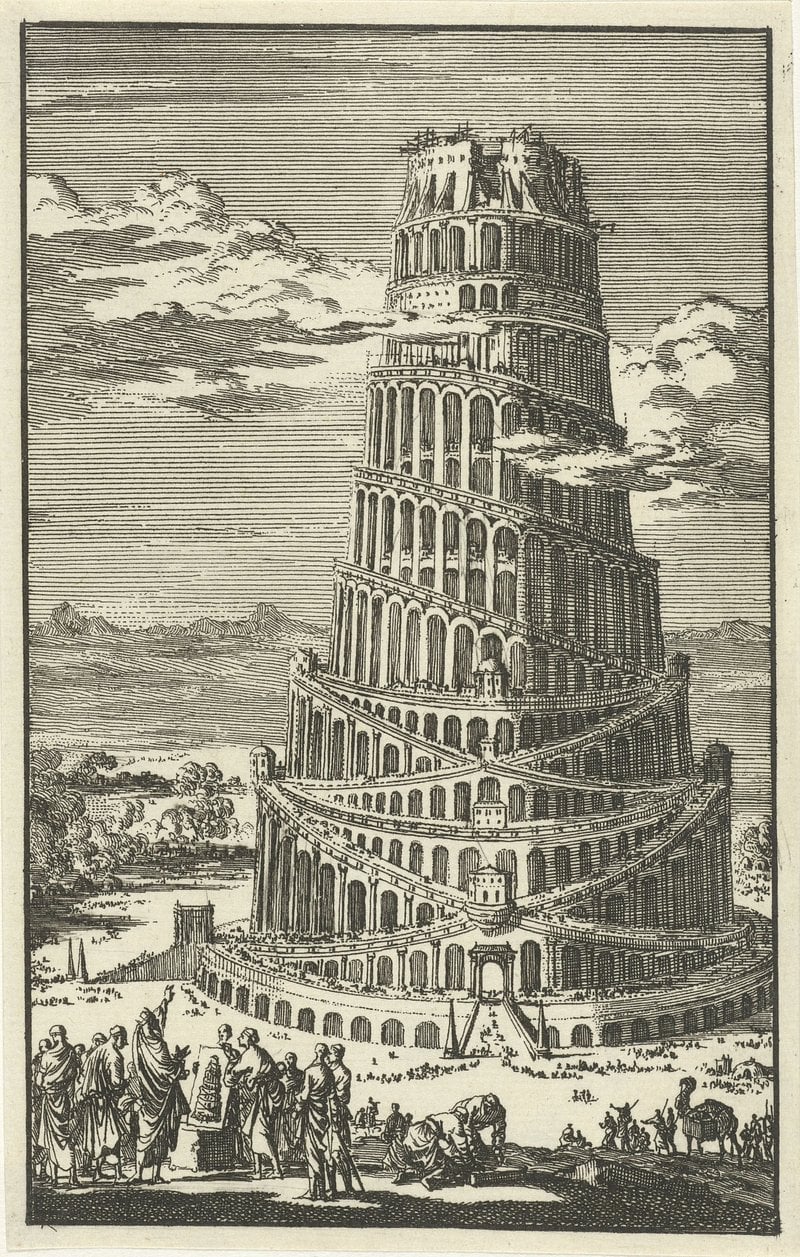
All of which brings me to a very old building project.
Near the end of this week’s parashah, humanity shares one language. The people of the world find a vikah, a valley in the land of Shinar, and settle there.
They build a city and begin building a tower reaching toward heaven.
וַיֹּאמְר֞וּ הָ֣בָה ׀ נִבְנֶה־לָּ֣נוּ עִ֗יר וּמִגְדָּל֙ וְרֹאשׁ֣וֹ בַשָּׁמַ֔יִם וְנַֽעֲשֶׂה־לָּ֖נוּ שֵׁ֑ם פֶּן־נָפ֖וּץ עַל־פְּנֵ֥י כׇל־הָאָֽרֶץ׃
And they said, “Come, let us build us a city, and a tower with its top in the sky, to make a name for ourselves; else we shall be scattered all over the world.” (Gen. 11:4)
The urge to build buildings and arches and stamp your name all over them apparently has a long history. But God is not a fan and confuses their language. They get scattered anyway.
And what, exactly, went wrong? Honestly, it is not totally obvious. Cooperation sounds good. Building sounds good. God’s response can seem troubling.
But let’s look at the technology. The previous verse reads: Havah nilbenah levenim. Let us make bricks. And burn them hard. (Gen. 11:3)
The Torah pauses to explain that people can now use bricks instead of stone. People can now manufacture their building material; they don’t need to go around chiseling and schlepping stones. Think about the possibilities: homes, gathering places, whole cities. Places to learn, pray, and care for people. Now, there’s nothing inherently wicked about a brick.

The rabbis, though, imagine something chilling. In Pirkei DeRabbi Eliezer, the tower becomes so important that when a worker falls and dies, the builders pay no attention. But when a brick falls, they sit down and cry. That midrash helps me understand Babel.
The workers can still speak the same language. But they have already stopped hearing one another. They’ve stopped seeing each other. They have lost their priorities. Their achievement has become more precious than the people making it possible.
That’s dangerous.
*****
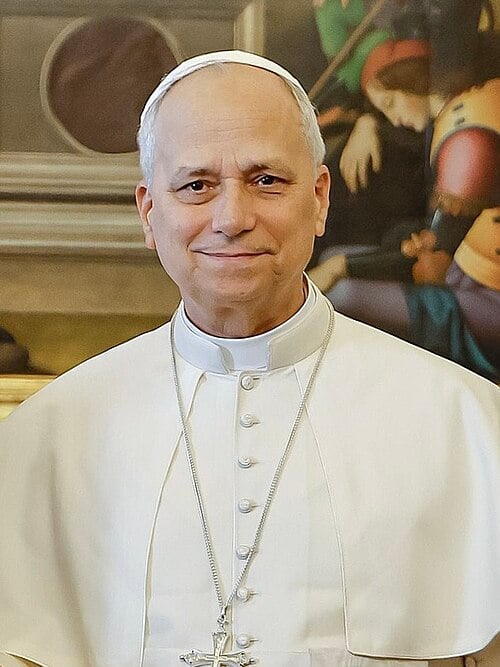
Foto: Ricardo Stuckert / PR
On Thursday morning, I was on a conference call with several dear Christian colleagues and friends. As we got into a conversation about AI, they pointed me to Pope Leo XIV’s encyclical, Magnifica Humanitas, on protecting the human person in the age of AI.
He follows the previous Pope Leo, Pope Leo XIII, who confronted the Industrial Revolution and insisted that workers should matter more than what they produce. And in an encyclical dated 135 years later to the day, Pope Leo XIV begins with the story of Migdal Bavel – the Tower of Babel.
He juxtaposes it with another biblical building project: Nehemiah rebuilding Jerusalem’s walls around the year 445 BCE. Families and neighbors take responsibility for different sections of the wall.
The pope describes an undertaking that “rebuilds relationships before rebuilding with stones.”
It’s a great counterpoint.
While the encyclical speaks in a distinctly Christian theological voice, it is rooted in the insistence on human dignity.
We have our own language for that from last week’s parashah: b’tzelem Elohim, that all humanity is created in the image of God. And the rabbis give us a major halakhic, Jewish legal category – k’vod habriyot, respecting the humanity of another person.
That includes the person who cannot keep up. The person who needs help. The person whose work a machine can now do faster. The pope writes that “humanity flourishes not despite limitations, but often through them.”
Now, I am not saying AI cannot do a lot. And please, if AI can help researchers cure cancer, let it help. But needing one another is not a defect to eliminate. Running amok, AI can break down our connections and basic humanity in the way it is used – from warfare to surveillance to manipulating what we believe.
And there’s another loss we need to take seriously.
https://creativecommons.org/licenses/by-sa/4.0/deed.en
On The Daily this week, Rachel Abrams interviewed Cornell mathematician Steven Strogatz about AI’s mathematical advances.
For him, mathematics is a source of beauty and discovery. You struggle, something opens, and suddenly you understand. He worries that machines may eventually move beyond what humans can comprehend, leaving us without the joy of discovery. Speaking from his grief, he says, “we won’t get to be heroes anymore.”
He unexpectedly turns to Kohelet, Ecclesiastes. He becomes emotional, reflecting on our brief opportunity to love, create, and enjoy being alive. There is birth and death. “The beautiful part is the in-between,” he says.
We should not brush that grief aside. People need livelihoods. They also need opportunities to contribute, to learn, to feel that their efforts matter.
And yet, I want to ask: Does my life become less valuable because someone, or something, can do my work better? A child learning piano does not become pointless because a concert pianist exists. Why would we tell ourselves to stop learning, creating, or caring?
During that conversation with my Christian friends and colleagues, I was walking among the trees.
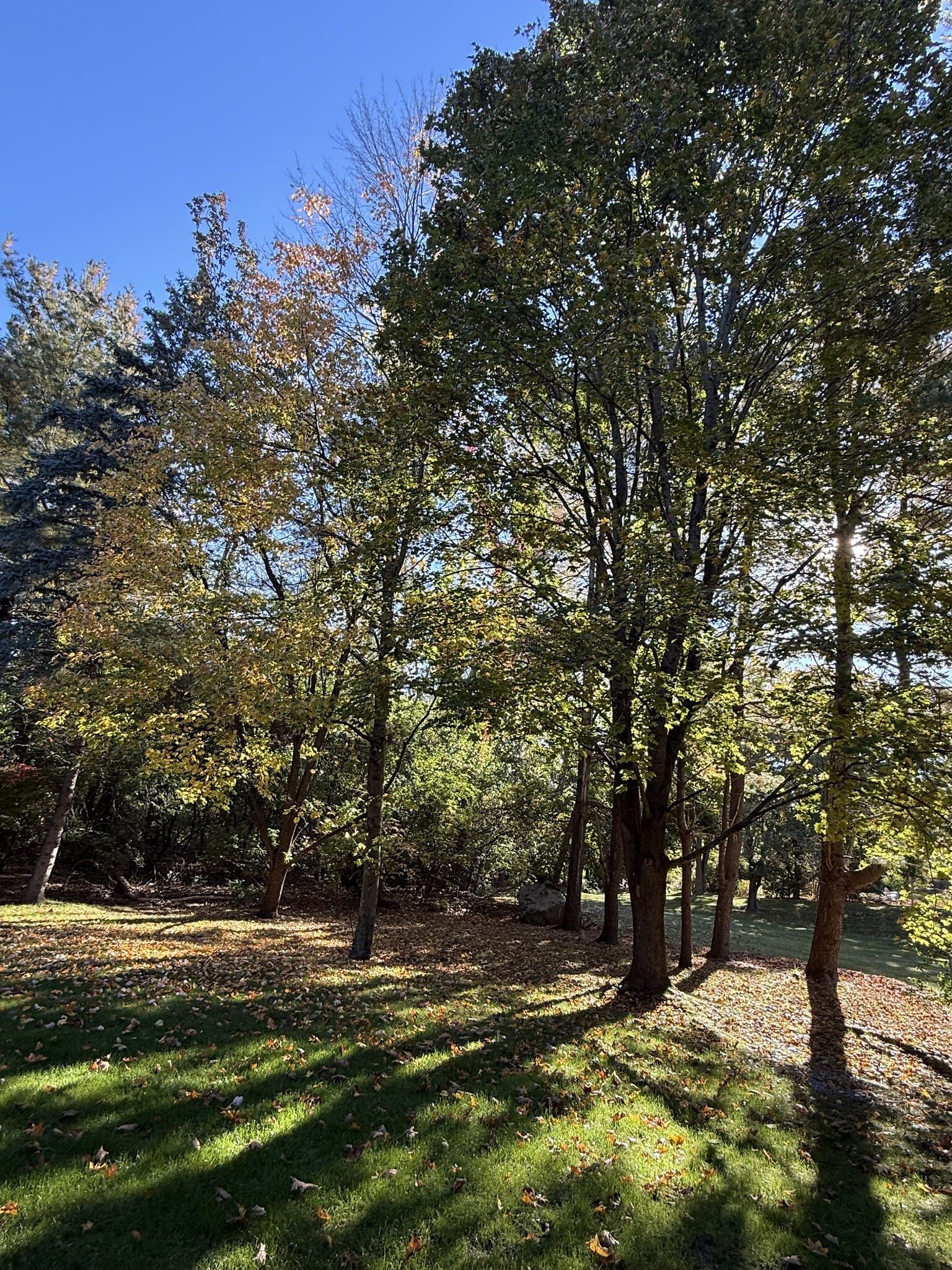
The reds. The oranges. The yellows. The crisp autumn air in my nostrils. We were discussing this astonishing, frightening technology, and I kept looking up.
ChatGPT could give me a beautiful description of autumn. It could explain the chemistry of the leaves.
But it could not take that walk for me.
It could not breathe that air for me.
My colleagues could surprise me, disagree with me, and bring something I didn’t know I needed.
We debated the good and the bad of the technology, learning more about the topic, but more importantly, about each other.
***
Now, relationships can be complicated.
People can misunderstand us.
We can misunderstand them.
We have to wait, apologize, forgive, try again.
That’s humanity.
AI doesn’t do or touch any of that.
I love the help that AI brings in working through information that would take me hours to gather.
But I need it to show me the email before sending it.
And most importantly, saving time only helps if we remember what we want time for. More time with ourselves, our families, friends. More time to listen to a child. More time to sit beside someone who is hurting.
More time to experience Shabbat.
Shabbat gives us practice. We stop producing. We eat, sing, rest, and make room for one another. Our worth survives a day in which the work is done, even if it is unfinished.
Sometime today, sit with another person, and pay attention to how they’re feeling. Maybe take a moment to notice one leaf: even as we build extraordinary things, let’s notice the people and the world around us.
Let’s build a world in which, when a brick falls, we CAN pick it up.
But when a person falls, we stop what we are doing and PICK THAT PERSON UP.