
For a better future in Iran and everywhere, women’s freedom is a must
On International Women’s Day, and precisely at a time when Israeli women are on the front lines of combat and in the spotlight of international attention; female pilots, navigators, aircrew women as well as fighters, doctors, tank operators, reservists, reshaping the profile of Israeli women, it is time to pause and acknowledge a grim truth: women are not only on the front lines of combat. They are still on the front lines of harm and are struggling against a reality of unprecedented erosion of their basic rights.
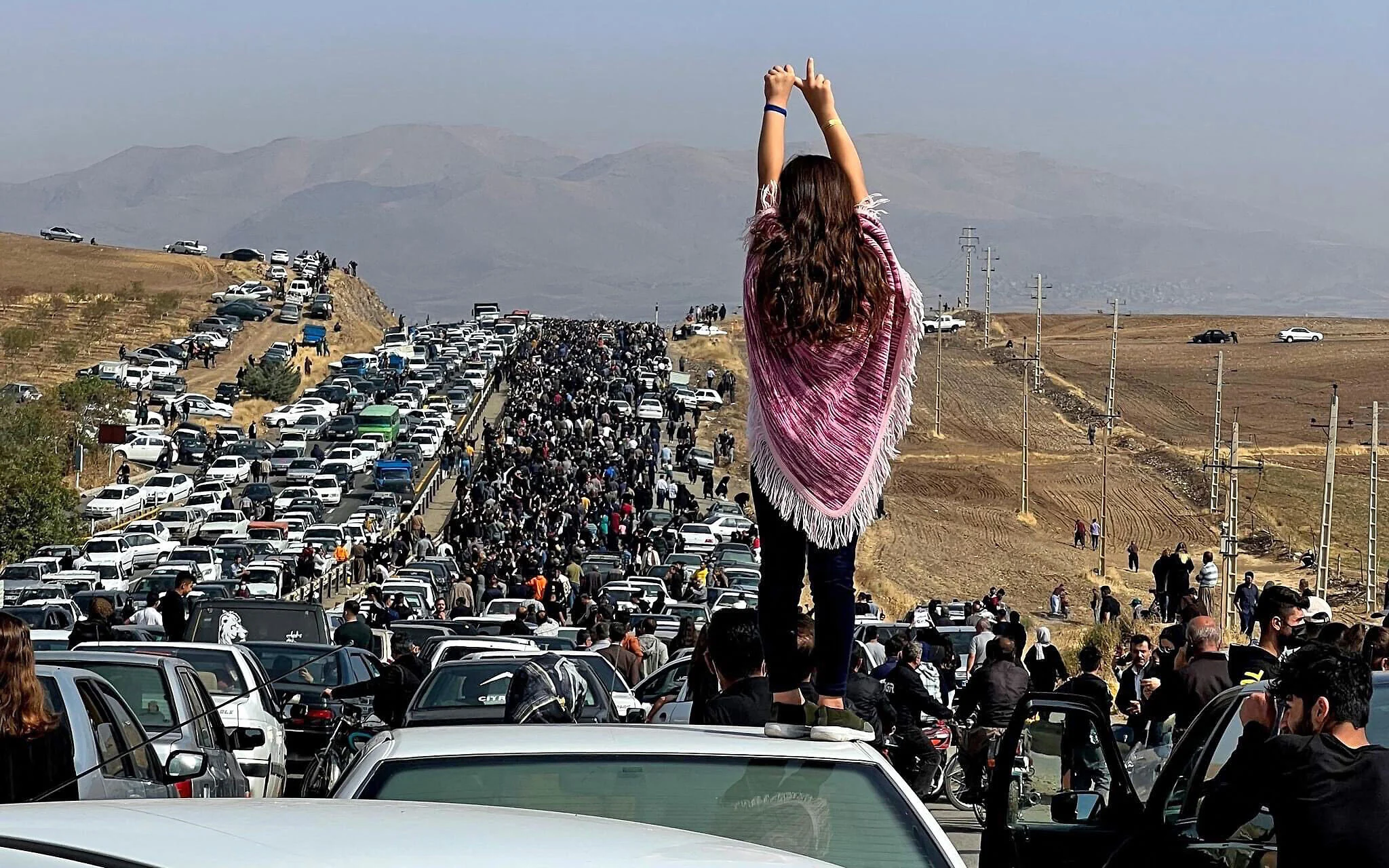
It is not for nothing that the faces of the brave Iranian women who led the protests in Iran, and paid with their bodies and/or their lives, are flooding social networks around the world these days. It is not for nothing that the (blurred) faces of Israeli Air Force pilots appear at the top of headlines. The world loves symbols and loves brave women. But the question arises: where does all this love disappear to when it comes to equality and women’s security? Too often, that is where admiration gives way to hesitation, skepticism, and a striking lack of attention.
International Women’s Day reminds us that the struggle for equality does not take place in a vacuum. It is daily, and it involves questions of power, governance, and the world order we seek to uphold. If there is one common lesson from Tehran, Israel, and many other communities, it is this: you cannot build stable security on indifference to the suffering of women.
In Israeli discourse on the confrontation with Iran, the discussion tends to be limited to tangible military threats: missiles, proxies, and a nuclear program. But the deeper threat posed by the regime in Tehran is not only security-related, it is normative. It is a direct challenge to the idea of an international order based on the basic protection of civil liberties. A regime that has built its power on the systematic oppression of women, the persecution of opponents, and the use of political violence not only undermines regional stability, but also allows terrorism and systematic daily violence to flourish.
It is impossible to ignore the thread that connects the struggle of women in Iran and the Israeli reality since October 7. In both contexts, women are at the heart of the arena: sometimes as those who lead courageous civil resistance, and sometimes as those whose bodies and lives become, in the most painful way, a battlefield. The accumulated experience of the world teaches that violence against women, and sexual violence in particular, is not a by-product of conflicts, but a tool of control and intimidation. So it is in Iran, and so it was in the events of October 7 and the captivity that followed.
For the past two years, we have been working to establish a secure international archive documenting the crimes of sexual and gender-based violence committed by Hamas, crimes that unfortunately targeted both women and men, but which disproportionately affected women and were rooted in broader patterns of gender-based violence. The archive, which I was scheduled to present to many at the UN this week, is not just a repository of historical evidence and testimonies; it is a normative intervention in the struggle for truth. It seeks to ensure that these crimes are not absorbed into the fog of denial, silence, or the rapid political erosion of public memory, but are remembered for generations. The documentation that we have labored over for two excruciatingly difficult years, through daily and almost impossible exposure to these materials, is also a reminder that the fight against gender-based violence and the violation of women’s rights is not a peripheral issue in matters of security. It lies at the very core of security and stability. From an Israeli perspective, recognizing this is particularly important. Israeli society has learned since October 7 to what extent the presence and involvement of women is not only a social issue but also a security one.
The discussion about Iran cannot remain solely in the realm of military strategy. It is already clear today that overthrowing the regime is a complicated and difficult matter. At the same time, any real attempt to shape a different reality in Iran will inevitably involve deep and ongoing support for Iranian activists, and first and foremost for the women’s movements that have become one of the main arenas of resistance to the regime in recent years. Alongside the use of force, a long-term strategic vision requires recognizing that the integration of women into decision-making centers, and the recognition of their equal rights, are not marginal social issues. They are fundamental conditions for internal and regional stability. In other words, the struggle for women’s freedom in Iran is a necessary condition for a different future. And much more than that: it is not just an Iranian struggle. It also reminds Israel, and the entire world, that a free and stable future will not be built without the full freedom of women.
Ultimately, the real question is not just how states protect their borders, but how they define their duty to the human beings who live within them. The true test of a society’s security lies in its ability to ensure that women can live without fear at home, on the street, and in the public sphere, and that they will not be required to fight again and again for their place in leadership positions. The choice to support women fighting for their rights is a fundamental position that will determine what kind of world will be built here on the day after the crises. It is, in fact, the boundary line between a society that seeks stability and a society that loses it.