October 7 Is Still Very Much With Us During the Service Year
This week began with a meeting between our service year group and the social workers from the welfare department at the Merhavim Regional Council. For me, it was an interesting but also sad meeting. There are quite a few social workers in the department, but most of them work only part-time. There was only one man at the meeting. I don’t know what his role is, but my guess is that these positions are seen as “mom jobs,” and not everyone, especially men, can afford to work under such conditions.
The social workers spoke about their challenges, and it was clear that despite their sincere desire to help those in need and improve the situation, they are unable to meet the community’s growing demands. After two years of COVID and almost two and a half years of war, the number of people in need has increased tremendously. It seems that so far the overworked social workers were too busy even to consider how to collaborate with the service year volunteers. Still, the meeting was meaningful, and the staff expressed a genuine desire for future cooperation with our group.
As for my own work in the schools, the only day of the week when I feel that I am using my time efficiently is the day I work with second grade students on reading comprehension in Hebrew. Their books are engaging and relevant; we read texts and discuss them. It is an ideal opportunity for the children to talk about their own experiences.
Unfortunately, I cannot say the same about the rest of the week. When I teach English in junior high school, I feel that at the beginning of each lesson I have to win the students over and coax them into making an effort to focus on English. Still, when we do succeed, it is a great feeling.
Obviously focus is a challenge, although the students claimed they enjoyed the forced break due to the war, I remember from my own experience how exhausting it was to stay away from school when I was in high school many years ago.
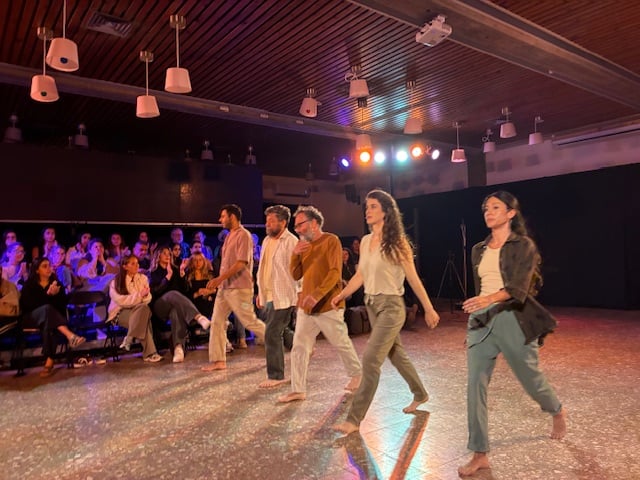
The highlight of the week was a documentary theatrical performance, A Place to Live, by the Otef HaNegev (the “Gaza Envelope”) Theater. Through words, movement, and music, five actors, all residents of the area, described homes that no longer exist, read excerpts from WhatsApp messages they had written to one another on October 7, and conveyed the dissonance of living as refugees in luxury hotels for an extended period, with no privacy whatsoever. It was a moving production, followed by a similar post-performance discussion.
Next week is Lag Ba’omer, and very soon the service year will come to an end