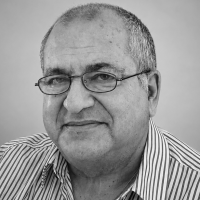
Yair Golan: Democracy for One Camp?
Any fair assessment of Yair Golan must begin with what is unquestionably to his credit. He spent nearly four decades in uniform, held some of the IDF’s most senior commands and rose to the post of deputy chief of staff. On October 7, 2023, while Israel was still struggling to comprehend the scale of the disaster, he did not remain on the sidelines. Golan, then a civilian and reserve major general, went south and personally took part in rescuing survivors from the massacre zone.
Nor is there anything illegitimate about his politics. He is fully entitled to hold left-wing views, to oppose Benjamin Netanyahu’s government and to believe that some of its actions endanger Israeli democracy. A healthy democracy needs a vigorous left no less than it needs a right and a center.
The issue I want to examine is a different one.
Golan heads a party that has chosen the highly demanding name “The Democrats.” He does not merely seek to replace a government. He presents his political camp as engaged in a struggle to save Israeli democracy itself. That makes it entirely legitimate to ask whether the language and methods he employs are always consistent with the democratic values he claims to defend.
This is not a question of left versus right. It is a question of how one treats political opponents, public officials one distrusts, institutional gatekeepers one considers compromised, and media outlets one regards as harmful.
When Harsh Words Become a Pattern
Golan has a long record of inflammatory language.
In April 2022, for example, he described Amichai Chikli (my son, who is now serving as Minister of Diaspora Affairs) as “a man who came from the garbage heap.” Asked to explain himself, he said he meant that Chikli had been an unknown figure whom Naftali Bennett had brought into politics and who, in Golan’s view, repaid him with disloyalty. That context matters. It does not, however, make the phrase itself any more appropriate in the language of elected officials.
The same principle applies to the Homesh controversy. Golan used the term “subhuman” to describe people whom he accused of attacking Palestinians, desecrating graves and property, and committing other serious acts. After the ensuing uproar, he explicitly clarified that he was referring to those individuals and not to settlers as a whole. Fairness requires that this clarification be noted.
Yet even when speaking about alleged offenders, a political leader who uses language that effectively strips people of their humanity crosses, in my view, a dangerous line.
It is therefore reasonable to acknowledge that some quotations attributed to Golan have occasionally been taken out of context or generalized too broadly by his critics. But when this kind of language recurs over a period of years, it becomes harder to dismiss every instance as an unfortunate slip of the tongue.
When Disagreement Becomes “Treason”
In December 2024, amid coalition calls to dismiss the attorney general, Golan said that anyone voting for the move would become “a full partner in a crime,” in “the dismantling of democracy,” and in “treason against the State of Israel.”
Here too, his reasoning deserves to be presented fairly. Golan did not see the proposed dismissal as a routine dispute over the performance of a senior official. He saw it as part of a broader, systematic effort to weaken democratic checks and balances. From that perspective, one can understand why he regarded the move as exceptionally serious.
But the problem remains.
In a democracy, one may believe that dismissing an attorney general would be wrong, dangerous, even destructive. One may also believe the opposite. Once support for a political and constitutional measure is defined as “treason against the state,” the opponent is no longer merely someone who is wrong. He is transformed into something close to an internal enemy.
That is precisely the kind of rhetoric political leaders from every camp should avoid.
“We Will Settle Accounts With You”
Days later, Golan turned his attention to Police Commissioner Danny Levy following reports about Levy’s past ties with Hanni Bliweis. Golan argued that personal loyalty to Netanyahu, if established, could amount to a criminal offense. He warned the commissioner that “nothing lasts forever” and added that, when the time came, “if necessary, we will settle accounts with you too.”
Again, context matters. Golan was not threatening the police commissioner simply because he held different political views. He was referring to specific allegations and demanding that they be examined.
But that is precisely why the phrase “we will settle accounts with you” is so problematic.
If there are criminal suspicions, they should be investigated. If there is evidence, prosecutors and courts should decide the matter. An opposition leader who promises that after a change of government “we will settle accounts” with the head of a law-enforcement agency blurs the very distinction he claims to defend: the distinction between the rule of law and political revenge.
“Cleaning Out” the Civil Service
In September 2025, Golan said that a future government in which he participated would have to “clean out the civil service.” Elsewhere, he described this as removing people “who are not loyal to the democratic rules of the State of Israel,” explicitly mentioning Shin Bet chief David Zini.
Golan explained that, in his view, the present government had made improper appointments and that his objective was to restore senior positions to professional, impartial public servants.
That qualification is important, because the word “cleaning” on its own could misleadingly suggest that Golan proposed dismissing civil servants simply because they were right-wing.
And yet, even in its full context, the formulation should be troubling.
Who, exactly, decides who is “not loyal to democratic rules”? According to what criteria? And what happens when the next government, from the opposite political camp, adopts precisely the same principle and begins “cleaning out” the civil service of people it considers hostile to its own policies?
The politicization of the civil service is not a danger that belongs exclusively to the right. Those who condemn it when the right is in power should be careful not to legitimize it when power changes hands.
The Channel 14 Test
In late 2025, Golan said bluntly: “When we come to power, we will shut down this channel,” referring to Channel 14, which he called a “propaganda channel.” When challenged by the interviewer that such a move would be anti-democratic, he invoked the principle of “defensive democracy.”
After criticism, the position was softened. Golan later spoke of turning Channel 14 into “a real media outlet,” while senior members of his party explained that the goal was to subject it to the regulatory standards applied to other broadcasters, rather than simply shut it down by government decree.
That clarification was welcome.
But the original statement remains deeply troubling.
Freedom of the press is not tested by our willingness to tolerate newspapers and television stations we respect. It is tested by our willingness to protect those we believe to be biased, harmful, even propagandistic.
If a media outlet breaks the law, there are laws. If it violates the conditions of its license, there are regulators. If it engages in incitement, legal mechanisms exist to address incitement.
But politicians should not be the ones deciding which channel qualifies as “real media” and which one therefore deserves to remain on air.
A precedent created today against Channel 14 can be used tomorrow in exactly the opposite direction.
“Killing Babies as a Hobby”
In May 2025, Golan said that “a sane country does not wage war against civilians, does not kill babies as a hobby, and does not set itself the goal of expelling a population.” The remarks were sharply condemned, including by opposition leaders.
Golan later clarified that he was referring to the government, not the IDF, and said that his intention was precisely to protect the army from what he viewed as the policies of extremist ministers.
Any fair discussion of his words must include that clarification.
But it does not resolve the entire problem.
The word “hobby” is not simply criticism of civilian casualties, rules of engagement, or government policy. It comes close to attributing a form of pleasure in the killing of children to the target of the accusation.
When such language comes from a former major general and the leader of an Israeli political party during wartime, its implications reach far beyond the domestic political arena.
A political leader has every right to warn against moral deterioration. One might even argue that he has a duty to do so if he sincerely believes it is taking place. But the more serious the accusation, the greater the responsibility to use language with precision.
The Democracy He Preaches — and the Democracy He Practices
This is where the question becomes more serious.
I do not intend to reduce Yair Golan to the crude label of an “enemy of democracy.” Such labels too easily replace argument with accusation — precisely the tendency I have criticized throughout this article.
The more troubling question is whether a political leader can sincerely believe that he is defending democracy while repeatedly adopting language and methods that risk weakening some of its most basic norms.
Golan undoubtedly sees himself as fighting for Israeli democracy. But sincerity of purpose is not, in itself, a democratic credential. Democracy is measured not only by the institutions one seeks to protect, but also by the restraints one accepts when confronting those one believes are threatening them.
And this is where Golan’s record raises serious concerns.
Anyone who presents himself as a defender of democracy should be especially cautious with words such as “treason.” He should avoid the language of “settling accounts” with the heads of state institutions. He should define with great precision what he means by “cleaning out” the civil service. And he should defend freedom of expression even when the media outlet in question is one he despises.
Democracy grants no automatic certificate of virtue to either the right or the left. It imposes the same difficult test on both: the ability to recognize that even an opponent whom one considers mistaken, dangerous or harmful remains part of the democratic community as long as he operates within the law.
That is the test I would apply to Yair Golan — and one he seems, time and again, to fail.
Not because he is a man of the left. Not because he opposes Netanyahu. And not because he is forbidden from waging a fierce political struggle.
But because anyone who leads a party called “The Democrats” and claims to be fighting to save Israeli democracy must prove that the democracy he defends also includes those who do not belong to his political camp.
In a wounded and deeply polarized Israeli society, that is not a minor requirement.
It may be one of the most important tests we can set today for anyone who aspires to lead it.