Seeking honest leadership, and new narratives.
1000 Days And Counting
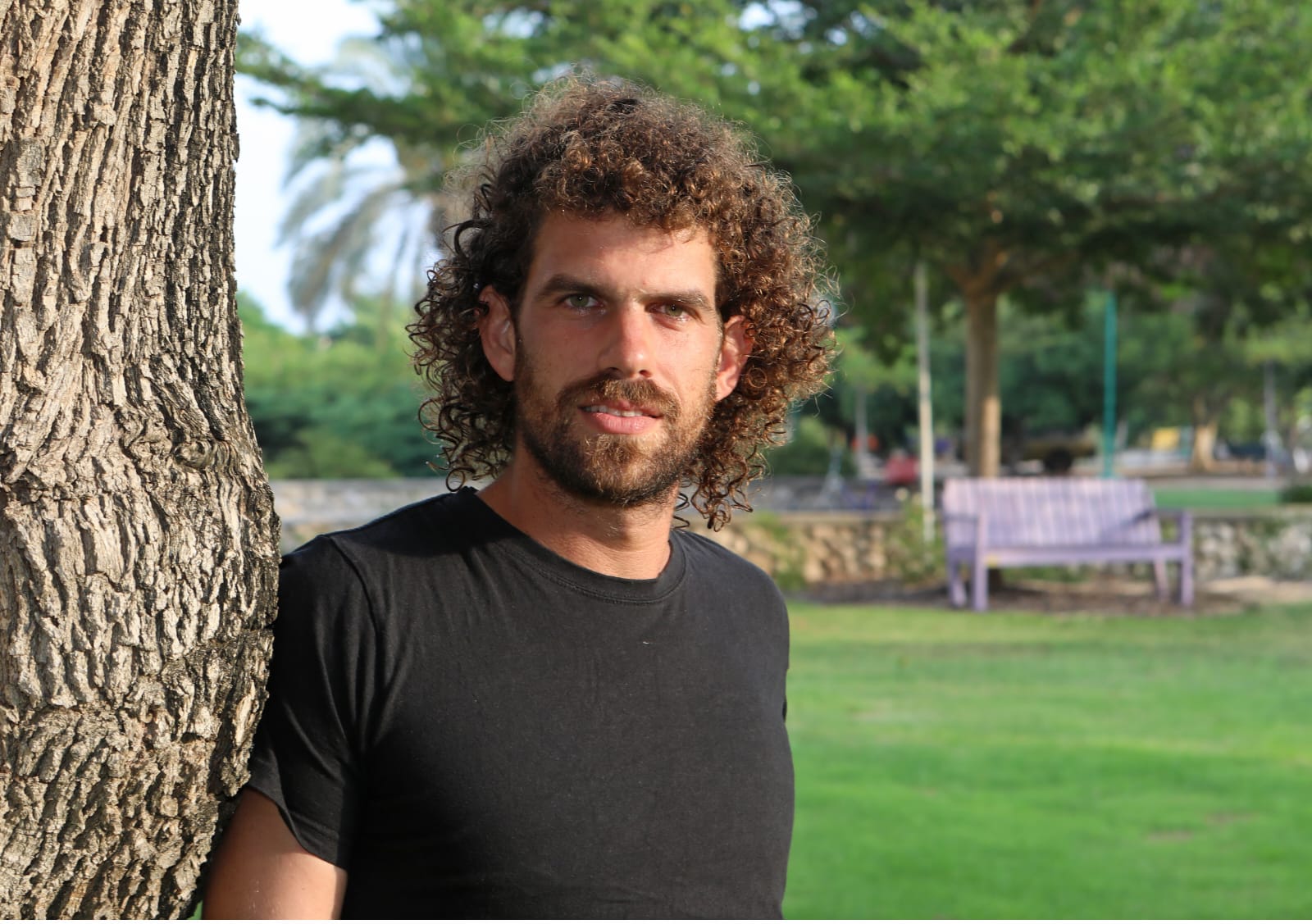
Credit: Eliyahu Hershkovitz
Last week we marked 1,000 days since October 7th.
Former American Democrats in Israel Board Member, Hannah Wacholder Katsman whose son Hayim was murdered by Hamas on that dreadful day, spoke at a gathering in Jerusalem on the 1,000 day. Hannah was kind enough to give me permission to reprint her comments:
I am honored to be here with you, to remember when we stood here each week in support of the hostages and honor those that returned home and cherish the memories of those who are no longer with us today.
My name is Hannah Wacholder Katsman, I live in the neighborhood (Jerusalem) and am a member of the Yedidya Congregation. My son, Dr. Hayim Yeshurun Katsman, aged 32, was murdered on October 7 at his home on Kibbutz Holit.
Today is the seventeenth of Tammuz, one of the days that our sages chose as a day of fasting to commemorate events that led to an ancient catastrophe, the destruction of the Temple.
Today we are also marking a thousand days since that Shabbat, the Shabbat of Simchat Torah, the joy that was supposed to be, but the agony that replaced it. For me, these thousand days bring no special meaning. Was the grief of my family and Haim’s friends greater yesterday? Will we miss our loved one a little less tomorrow? However, I feel a basic human need to mark the days, and recognize the importance of gathering together to remember.
These dates, the 17th of Tammuz, Tisha B’Av, Simchat Torah and the 7th of October, are all part of our history, an opportunity to tell our story, the story of our loved ones and our people, and to find a sense of meaning and purpose we can hang on to today.
Since Hayim’s death, I have been making decisions, along with my family, on how best commemorate him, on how to tell his story.
One such decision was to bury him in a civil ceremony, even though Hayim was classified as a fallen IDF soldier, because he was a member of the Kibbutz rapid response team. On his tombstone we engraved the phrase “Man of Peace”, which, together with the names Hayim, and his second name Yeshurun, mark three main values that exemplify my son: peace, life and honesty.
Hayim lived these three values:
Peace – he played and recorded music, mainly Arabic electronic music, through the belief that music has the power to bring people together and connect.
The value of life and humanity was reflected through his activities in organizations such as the Academia for Equality, and Road to Recovery, through which Hayim took it upon himself to transport sick children from Gaza to hospitals in Israel.
His integrity was reflected through his academic research, where he was able to approach interviewees from the Religious Zionist movement with curiosity and wholeheartedness in order to understand what motivates them, even if their opinions were far from his own.
In his last years, and these words are difficult to use in the context of my son, he worked as the gardener of Kibbutz Holit.
As I mentioned, Hayim was a member of the rapid response team, but he deposited his weapon before traveling to India, and didn’t have a chance to retrieve it on his return. So, on that day, he went out and tried to help, but he found many of his neighbors had been murdered or were in hiding. Finally, he hid with his neighbor, Avital, in a safe room, where the terrorists shot him to death, while Avital survived.
Another commemoration of Hayim includes raising funds for a sustainability center named in his honor in the Bedouin city of Rahat, where Haim worked with teachers and students to establish two community gardens in elementary schools.
Four Bedouin citizens from Rahat who worked in the cowshed in Kibbutz Holit, relatives of Foad al-Zaidneh, the director of the community center and the initiator of the center along with Anat Haas, were kidnapped alive. Two were released, and two others, Yusef and Haim al-Zaidneh, were murdered in captivity.
The cooperation between Rahat and our family symbolizes the values of peace and life: to be a society that desires life above all, calling on all communities to cooperate and live together in peace.
Even after a thousand days, we still have not learned what really happened, why we were not prepared for this horrific and widespread attack. How can we tell the story of our loved ones without knowing the truth? Two thousand years have passed since the destruction of the Temple, and eighty years since the Holocaust.
What story will we tell about this day in 80 years? Those murdered cannot tell their stories. This is our responsibility. To look straight in the eyes of what happened, if only to prevent the next disaster.
I wish all of us a future of love and joy, a future of honesty, life, and true peace within our people and in the entire world.
May Hayim Katsman’s legacy of profound scholarship, peaceful coexistence, and deep love for the land continue to inspire us to build a more just world. Though his voice was tragically silenced, the seeds of hope and understanding he planted will never cease to grow.
Related Topics
Related Posts