In this analysis, I examine the 20-point peace plan through a single strategic lens: whether Iran’s next-generation H3 proxy playbook is dismantled before political abstractions take hold.
‘H3′ refers to Hamas, Hezbollah, and the Houthis—ununiformed armed militant groups aligned with Iran’s disruptive—not only regional, but global strategy. While Hamas and Hezbollah have direct operational and ideological ties to Tehran, the Houthis are an autonomous Yemeni movement that has increasingly cooperated with and benefited from Iranian support, forming part of a broader network that threatens regional and global security.
Recent reports of violence targeting Jewish communities in Australia during the first night of Hanukkah underscore how militant narratives now spill far beyond the Middle East—reinforcing why dismantling Iran’s proxy ecosystem must precede political debates.
I have long argued that durable peace in the Promised Land begins with clarity, not symbolism. The newly articulated 20-point peace plan is notable precisely for what it omits: there is no language of Palestinian sovereignty, no two-state roadmap, and no borders debate. Instead, it centers Israel’s security, hostage return, and conditioned reconstruction of Gaza. That structure aligns with my holistic vision—but only if one non-negotiable condition is met first: the dismantling of Iran’s next-generation H3 playbook.
Security is not an accessory to peace; it is its prerequisite. Any framework that rushes to political outcomes while leaving terror infrastructure intact merely resets the clock for the next war. The 20-point plan implicitly recognizes this by placing demilitarization and accountability ahead of reconstruction. But implication is not enough. The plan must put dismantling H3 first—not as an aspiration, but as an enforceable sequence.
Hamas is the most visible node of this network, but it is not the only one. Hezbollah’s entrenched military capabilities and the Houthis’ expanding reach demonstrate how Iran’s proxy system has evolved—more distributed, more opportunistic, and increasingly global in effect. This is a next-generation model of proxy warfare, and it cannot be countered by partial measures or rhetorical commitments.
Hostage return rightly sits at the moral center of the plan. Human life is not a bargaining chip; it is the baseline of legitimacy. Yet hostages cannot be separated from the broader security architecture. Rebuilding Gaza without dismantling terror networks simply rebuilds the infrastructure of violence. Reconstruction must therefore be conditional, monitored, and insulated from militant capture.
Crucially, the plan’s silence on statehood is deliberate. It reframes the conflict away from abstractions and toward outcomes that can actually be delivered: safety, accountability, and the removal of armed groups that make coexistence impossible. If H3 is dismantled, space for future discussions may emerge; if it is not, those discussions are meaningless.
Ultimately, the question is not whether political frameworks can be articulated, but whether the militant infrastructure that repeatedly collapses them is finally dismantled.
The 20-point peace plan should therefore be judged by one test above all others: does it dismantle Iran’s next-generation H3 playbook? If it does—credibly, verifiably, and with regional backing—it could become the first breath of fresh air toward peace. If it does not, it risks becoming another pause between iterations of the same conflict.
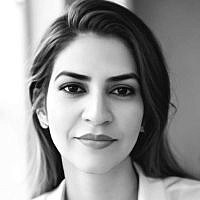
Dr. Tanveer Zamani epitomizes the convergence of surgical proficiency, humanitarian advocacy, and global peace diplomacy. Recognized by Rolling Stone as the second of ‘10 Entrepreneurs to Watch in 2024’, this honor reflects her unwavering commitment, powerful influence, and significant impact across global boundaries. Dr. Zamani is a staunch advocate for Greater Israel’s territorial integrity and the indivisibility of Jerusalem as its eternal capital. She asserts that the two-state solution contradicts the divine Abrahamic plan, emphasizing that Canaan/Jerusalem were ordained and promised for Isaac’s lineage, while Hagar and Ishmael’s descendants were deliberately and divinely re-located in Mecca, Saudi Arabia for their growth and following. She reveals the Quran’s ordination to pray facing toward Kaaba—Mecca—affirming that Jerusalem is not considered a key religious site for Muslims. She highlights that Prophet Muhammad (SAW) made a brief visit to Jerusalem to honor previous prophets and related Holy sites, not to claim ownership, and the Al-Aqsa Mosque didn’t exist during his lifetime, challenging Islamic claims to Jerusalem. Drawing from historical and scriptural texts, she emphasizes the sovereignty of Israel over Jerusalem, dismissing claims that challenge its indivisibility. Dr. Zamani’s academic journey began in Hyderabad, India, where she was born into a family of scholastic intellectuals—both her grandfathers served as deans of renowned Indian universities. Inspired by their legacy and driven by the challenges she witnessed in a developing country, she pursued advanced education and developed a relentless drive for transformative change, which established her as a catalyst for progress across disciplines and borders. She is a general, trauma, acute, and critical care surgeon, a Diplomate of the American Board of Surgery and a Fellow of both the American College of Surgeons (FACS) and the Royal College of Surgeons (FRCSI). In recognition of her exceptional accomplishments, she was conferred the prestigious title of “Mistress - Ms.” by the Royal College of Surgeons, a distinction recognized in Canada, Australia, the UK, and Ireland. Today, in addition to being a practicing surgeon in the U.S., her professional expertise spans global health outreach; advocating for equitable healthcare access, including training local providers and introducing modern surgical techniques in underserved communities. Her visionary leadership extends far beyond medicine. Dr. Zamani has championed social reform, particularly in South Asia, during her short mission trips between 2015–2017, where she became an inspiration for youth, poor students, farmers, laborers, and, most importantly, oppressed women, focusing on eradicating poverty, ignorance, corruption, militancy, poor health access, and gender inequity. She founded the People’s Movement: a platform empowering disadvantaged populations to contest and challenge corrupt mafia, systemic barriers, and political monopolies. Central to her advocacy is a bold call for governance reform, including replacing the parliamentary systems in third-world countries with presidential models to reduce corruption and create accountability. She is also a vocal proponent of global electoral reform and has proposed a fully federally funded scholarship program as a merit-based educational training fellowship for presidential candidates. This proposal envisions a transparent, open, and competitive system, coupled with equal federally funded election campaigns for qualified candidates. Her global vision includes empowering oppressed women, combating child labor, preventing human trafficking, protecting adolescents from drug addiction, preventing vulnerable adults from joining militant groups, and ensuring easy access to health care for mental disorders. As a mother of four—two daughters and two sons—and an Inspirational Champion, Dr. Zamani continues to balance her roles as a surgeon, entrepreneur, and a Peace Crusader.