5 Messages from Sefer Yirmiyahu
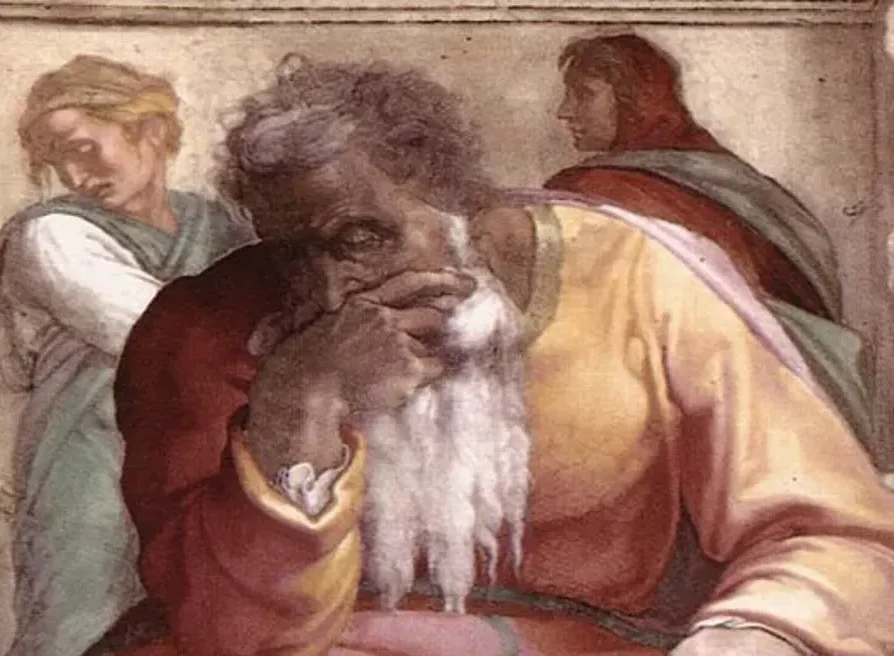
Since February of last year, I’ve been learning a chapter of Nevi’im each day through the OU Torat Imecha Nach Yomi program. Recently, I completed Sefer Yirmiyahu.
Before learning the sefer, I thought of Yirmiyahu as the “weeping prophet,” associated mainly with the destruction of Yerushalayim and the Beit Hamikdash. He warned the people of Yehuda that the churban was coming, and lived to witness the terrible events he had prophesied. Certainly, there is plenty of doom and gloom in the sefer. At the same time, I was struck by how much of it is also about hope, geula, and the future of the Jewish people. These themes stand out all the more against the painful events surrounding them.
With that in mind, here are five messages I took away from learning Sefer Yirmiyahu:
1. Even the greatest people can feel completely alone
Yirmiyahu was given an incredibly difficult mission by Hashem. He had to keep delivering an unpopular message that the people simply did not want to hear. At many points, he understandably felt that he was completely alone (Yirmiyahu 15:10, 17; 20:7–18).
Think about how hard it can be to tell an unpopular truth. Rabbi Binyamin Lau makes this point in Jeremiah: The Fate of a Prophet, comparing the role of a prophet to that of a political commentator. We tend to listen to commentators who confirm what we already want to hear. We don’t necessarily want to hear the truth; we want our perceptions and hopes confirmed.
The people of Yirmiyahu’s time were no different. They preferred the soothing words of the false prophets—the assurances that Yerushalayim would not be destroyed and that Bavel would fall—to Yirmiyahu’s warnings.
It’s important to remember that even someone as great as Yirmiyahu could feel overwhelmed by the enormity of what he was being asked to do. And yet, he persisted.
While we may not be prophets, we sometimes find ourselves in situations where we need to express an uncomfortable or unpopular truth. Whether in our personal lives or when advocating for Israel on the global stage, we may not be able to control how our message is received, but we can choose not to let the loneliness silence us.
2. External religious change doesn’t necessarily mean real teshuva
Yirmiyahu begins his prophetic mission during the reign of Yoshiyahu, one of the most righteous kings of Yehuda. During Yoshiyahu’s reign, a Sefer Torah was discovered in the Beit Hamikdash. When Yoshiyahu heard its words, he was deeply moved and initiated major reforms. He removed idolatry and worked hard to bring the people back to Hashem. There was real reason to hope that the people might truly change and that the terrible prophecies of destruction and exile could be avoided (Melachim II 22–23).
But Rashi makes an important observation: despite the outward appearance of teshuva, the people had not really changed. Rashi describes how they would hide their idols by splitting them between the two sides of their doors, so that when the doors were open, the idols couldn’t be seen. They were literally hiding their idolatry behind closed doors (Yirmiyahu 3:10).
Real teshuva requires a change on the inside. Yirmiyahu calls on the people to “circumcise” their hearts (Yirmiyahu 4:4). Rashi explains the parallel expression in Devarim as removing the covering that prevents Hashem’s words from entering our hearts (Devarim 10:16).
Later, Yirmiyahu describes the future covenant as one in which Hashem’s Torah will be placed within the people and written upon their hearts (Yirmiyahu 31:33). Malbim explains that this means Torah will become so deeply internalized that it will shape people’s very nature and choices. Torah is meant to shape who we are, not just what we do outwardly. If our learning and observance don’t affect our character and our inner lives, we’re missing something essential.
3. Sometimes you have to invest in a future that seems impossible
One of my favorite episodes in the sefer is when Hashem tells Yirmiyahu to buy a field from his cousin in his hometown of Anatot (Yirmiyahu 32).
Yerushalayim was under siege. The Babylonians were surrounding the city, and the country was about to fall into their hands. Yirmiyahu himself was imprisoned. And Hashem tells him to buy real estate! Yirmiyahu went ahead with the purchase, paid the money, and had the deed carefully preserved in an earthen jar. Through this act, Hashem was promising that one day, people would once again buy fields and houses in Eretz Yisrael. And indeed, we are!
This episode really hit home for me. We made aliyah in our 40s, with children of all ages, including teenagers. It wasn’t the stage of life when aliyah necessarily seemed like the logical choice. We were comfortable and happy where we were. But we decided that, above all, this was the best investment we could make in our children’s future.
We are here today thanks to the investment of generations who came before us—people who took leaps of faith and invested in this land so that their children and grandchildren could build their lives here. We hope to do our part so that our own children, and the generations after them, can do the same.
4. The sounds of joy in Yerushalayim will return
Yirmiyahu first describes the terrible silence that will follow the destruction of Yerushalayim—that there will no longer be the sounds of joy, celebration, or weddings (Yirmiyahu 7:34). This prophecy already came to be in his lifetime.
But Hashem also promises that the reverse will happen:
“Od yishama […]b’arei Yehudah […]uv’chutzot Yerushalayim […]Kol sason v’kol simcha, kol chatan v’kol kalah.”
“The sounds of joy and happiness, the voices of the bride and groom, will once again be heard in the streets of Yerushalayim — Yirmiyahu 33:10–11
Every time Od Yishama is sung at a wedding in Yerushalayim, it’s not just a personal celebration; it’s also the fulfillment of a prophecy.
The next time you’re at a wedding in Yerushalayim, think about that. It’s an incredibly meaningful thing to celebrate a new family in Am Yisrael while also being part of a prophecy that is still unfolding before our eyes.
5. The future geula will be even greater than Yetziat Mitzrayim
Yirmiyahu makes a powerful prediction: there will come a time when we will no longer speak primarily about Yetziat Mitzrayim. Instead, we will speak about Hashem bringing the Jewish people back from all the lands to which they were scattered (Yirmiyahu 23:7–8).
The story of the Jewish people does not end with the destruction of the Beit Hamikdash. Hashem promises that we will return, that Yerushalayim will be rebuilt, and that the ultimate geula will be even greater than Yetziat Mitzrayim.
Those of us who have returned to our ancestral homeland are living this nevuah. Jews have come home from every corner of the world. All you have to do is take a bus ride in Israel to experience kibbutz galuyot: overhearing different languages and seeing Jews from so many backgrounds and cultures, all connected, in different ways, to the Jewish people and to this land. May this gathering of our people continue!
When I think about all of this and look at Yerushalayim today—with its celebrations, its communities, and the return of the Jewish people to Eretz Yisrael—I find it hard not to be moved.
We are still waiting and praying for so much. But Sefer Yirmiyahu reminds us that we can’t just wait. Yirmiyahu spent his life calling the people to return to Hashem. We, too, have to do our part: to strengthen our connection to Hashem and to one another, and to work toward bringing the geula closer.
Sefer Yirmiyahu is not only the story of destruction. It is also the story of the promise of geula, and of our responsibility to help bring it about. May we merit to see its complete fulfillment, speedily in our days.