Advancing Women's Health, One Policy at a Time
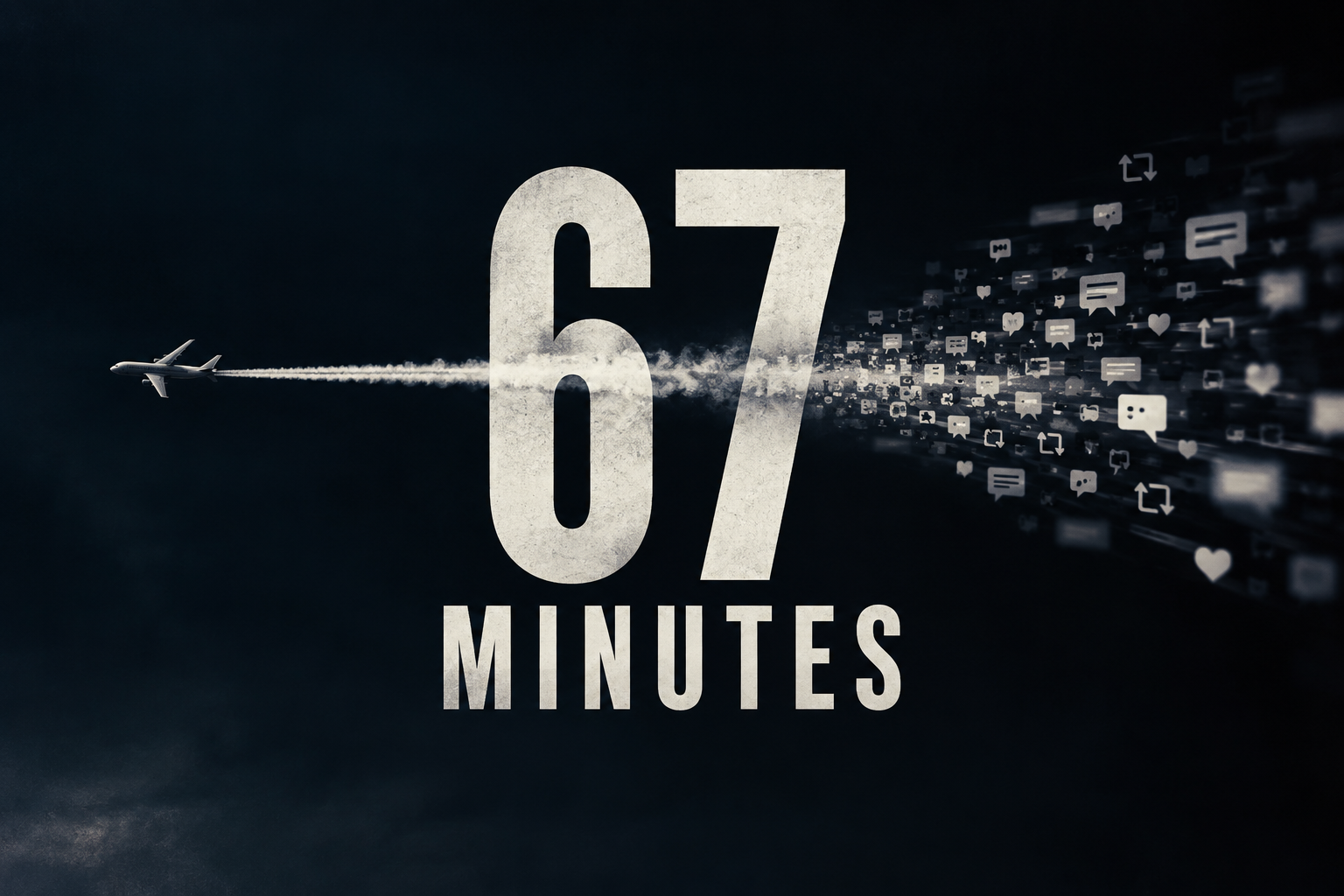
67 minutes
If you read about the allegations coming out of Cornell and your first instinct was to believe the woman, but when Israeli women described sexual violence on October 7th your first instinct was to question whether it really happened, this is for you.
If you watched “Sully” and thought Captain Chesley Sullenberger was a hero, but heard about Israeli citizens fighting to save an Israel-bound FlyDubai flight after the pilot was stabbed, and wondered whether the whole thing was staged, this is for you.
If you believe survivors, except when the survivors are Israeli; if you admire courage, except when the heroes are Israeli; if you demand extraordinary evidence before believing Israel is the victim, but almost none before believing Israel is the perpetrator, this is for you.
If that sounds like an accusation, I don’t mean it that way. I mean it quite literally. Grab a cup of coffee, pull up a chair, and sit down.
I am writing this for you.
As I’m sure you’ve heard by now, yesterday an Israel-bound FlyDubai flight became the scene of a terrifying midair attack. The pilot was stabbed, passengers rushed forward to help, and the plane ultimately landed safely. There were more than 170 souls on board who witnessed what happened, their accounts corroborated one another, and parts of it were filmed live. And, for the record, if you think you can get 170 Israelis to agree on anything, you clearly haven’t spent much time with Israelis.
But somehow, the usual standard of evidence wasn’t enough.
Within 67 minutes of the first distress signal from the FlyDubai flight, the conspiracy theories ignited like fire and burned their way across the internet. Before anyone could possibly have known exactly what had transpired on that plane, people on the internet had decided that Israel was somehow behind it. That it was staged. That it was Mossad. That it was a false flag. Thousands of posts followed. Each one fueling and igniting the next.
Sixty-seven minutes.
Imagine for a moment that it had been a plane bound for the Netherlands. A pilot is stabbed in the cockpit, badly wounded, and somehow continues fighting to save the people on board. Passengers realize what is happening and rush forward to help. Would our first reaction really have been that perhaps the Dutch had staged the whole thing? Would thousands of people have immediately started searching for holes in the story, trying to prove that the passengers were lying, despite an airplane full of people testifying live about what they had just experienced?
We know the answer because we have seen this story before. They literally made a movie about it.
Of course we should question things. We should verify information. We should wait for investigations when facts are unclear. But skepticism only works if we apply it consistently. If the amount of proof you require changes depending on who is suffering, that isn’t healthy skepticism anymore. That’s a double standard.
We have spent years learning how to talk about sexual violence. When a woman says she was sexually assaulted, we understand why there may not be video evidence. We understand trauma. We understand that testimony matters and that it may take time for survivors to speak. We understand why demanding impossible levels of proof can itself cause enormous harm.
And then October 7th happened.
Israeli women were raped, and suddenly people who had spent years telling us to believe women became forensic investigators on social media. Where was the video? Where were the photographs? Why didn’t she speak sooner? How do we know? Maybe it didn’t happen. Maybe Israel made it up.
The rules hadn’t changed.
The women had.
I don’t think most people wake up one morning and decide to apply a different standard to one group over another. I think it happens slowly, silently, without us noticing. You see the same things on your feed again and again. You read the same words. You hear the same framing. Someone posts something, thousands of people share it, someone you respect repeats it, and eventually you don’t even remember where you first heard it.
It stops feeling like something you were told and starts feeling like something you just know.
So when Israelis say they were raped, you are naturally skeptical. When Israel is accused of something, you aren’t. When Israelis describe what happened to them, you demand proof. When someone tells you Mossad staged an attack on an airplane, apparently 67 minutes is enough.
This does not mean Israel should be above criticism. It absolutely should not be. Nor does it mean every Israeli account should automatically be believed. It shouldn’t. Israel should be questioned. Governments should be held accountable, journalists should verify what they report, and claims should require evidence.
But so should the claims you want to believe.
The post that confirms everything you already think about Israel deserves your skepticism too. So does the person telling you Israeli women weren’t really raped. So does the account telling you the passengers weren’t really in danger. So does the person who somehow knew, before investigators even knew what had happened, that Mossad did it.
And if you’ve read this far and you’re still skeptical, that’s okay. I’m not asking you to agree with me, believe Israel, or change your politics. I’m simply asking: test your own standard.
Take the story you were told and just change one word.
Change Israeli to Dutch, Canadian, British, or American.
Now read it again.
Would you still need the same amount of proof? Would you still assume the victims were lying? Would you still search for a conspiracy before the investigation had even begun? Would you still believe that thousands of ordinary people were somehow part of an elaborate government plot?
Would you still be so certain?
If the answer is yes, keep asking questions.
But if something changes, if the story suddenly sounds more believable, the victims more sympathetic, the heroism more obvious, the conspiracy a little more ridiculous, then maybe the thing worth questioning isn’t the story.
Because yesterday, it took just 67 minutes to decide that 170 people couldn’t be believed.
Maybe the question isn’t what happened in those 67 minutes.
Maybe it’s why 67 minutes was all it took.
Related Topics
Related Posts