A Blessing of Our Own
“Was not Esau Jacob’s brother?” God asks through the prophet Malachi. “Yet I have loved Jacob, but Esau I have hated” (Malachi 1:2–3).
It is a striking question, and one that echoes through the story of Parashat Toledot. Jacob and Esau are twins, but from the beginning they seem to be set against each other. Their parents take sides: Isaac loves Esau, while Rebecca loves Jacob. One brother receives the birthright; the other takes the blessing. And the rivalry between them becomes a story of deception, resentment and estrangement.
But what does the story look like when we try to see it through Esau’s eyes?
In Katherine Paterson’s novel Jacob Have I Loved, the narrator is a girl who grows up feeling overshadowed by her more talented and admired twin sister. She comes to identify with Esau: the sibling who is passed over, who feels less loved, and who cannot escape the sense that someone else has received what should have been hers. The biblical phrase in the novel’s title becomes a way of giving voice to the pain of the sibling left in the other’s shadow.
Esau’s pain is not difficult to find in the Torah itself. When he discovers that Jacob has taken the blessing intended for him, he cries out bitterly: “Bless me – me too, my father!” (Genesis 27:34). The Torah rarely describes its characters’ emotions so directly. Esau’s cry deserves to be heard.
Rabbi Hannah Spiro, in her commentary on Toledot, reminds us that the Torah does not present perfect heroes. Jacob takes advantage of his hungry brother to acquire the birthright, and later deceives his blind father to receive the blessing. We may understand why Jacob is chosen to carry the covenant, but that does not make every action he takes right. Being our ancestor does not place him beyond criticism.
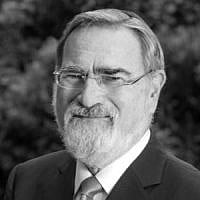
Rabbi Jonathan Sacks offers another way to read the story. Perhaps Isaac intended to give each son a different blessing: wealth and power for Esau, and the covenantal blessing of children and land for Jacob. If so, the deception was unnecessary. Sacks suggests that a failure of communication between Isaac and Rebecca may have helped turn a difficult family situation into a tragedy. The consequences lasted for years, and Jacob himself eventually had to make amends to Esau.
The story also reaches beyond the two brothers. Rebecca’s oracle speaks of two nations, and the rivalry between Jacob and Esau becomes part of the later relationship between Israel and Edom. Yet the Torah also insists on their kinship: “Do not hate an Edomite, for he is your brother” (Deuteronomy 23:8). Even after separation and conflict, the bond is not erased.
When the brothers finally meet again, Esau runs to Jacob, embraces him and kisses him. Jacob tells him: “To see your face is like seeing the face of God” (Genesis 33:10). Their reconciliation does not undo the past, or make them the same. But it makes room for something other than rivalry.
Perhaps this is what the story asks of us: to resist the urge to decide which sibling deserves more, and to notice the one who feels unseen. There is room for more than one child to be loved, and more than one blessing to be given. As Rabbi Sacks puts it, each of us has a blessing that is our own. We do not need to take our brother’s blessing to find it.
Shabbat Shalom