אם תרצו, אין זו אגדה / If you wish, then it is no dream
A Brit Milah and a Very Special Holocaust Survivor
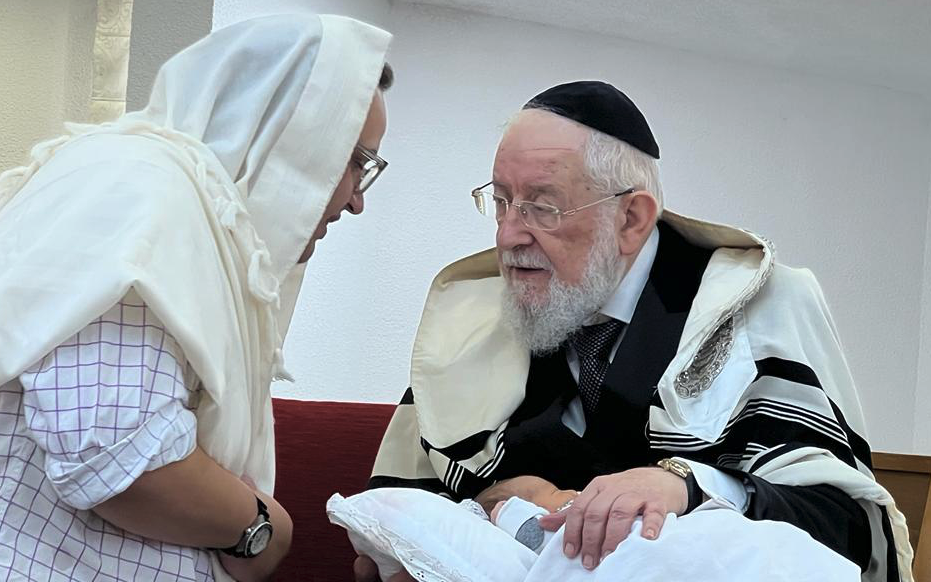
Rabbi Yisrael Meir Lau and Ophir Naftali Sapir
Day 3 – Chanukah 2025
תשפ״ו כ”ז בכסלו , Kislev 27, 5786
December 16, 2025. 15:00
My son was born on the first day of Rosh Hashanah. The Jewish New Year. Of course he was.
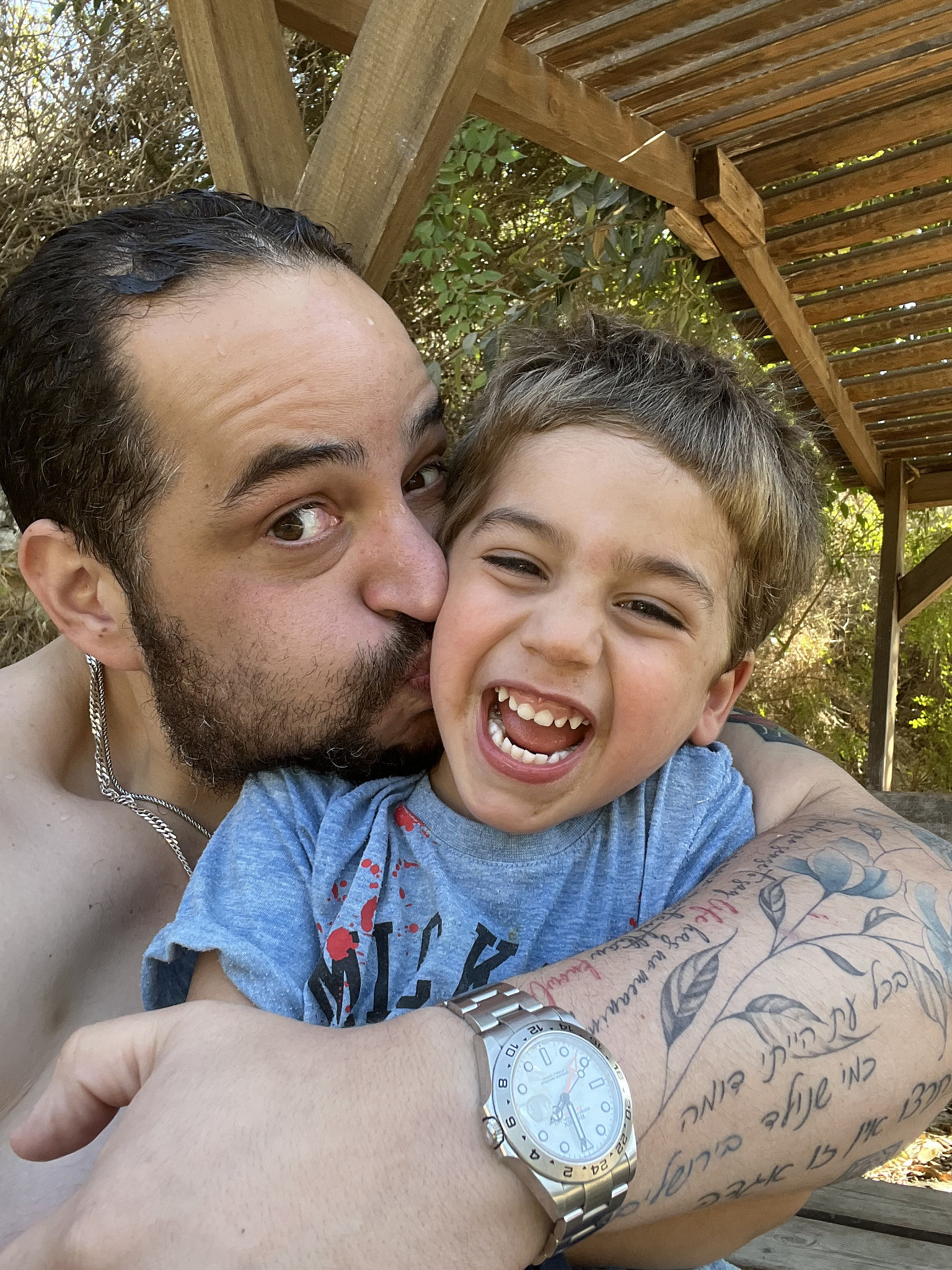
While this freckled kid was still baking inside his mother, I ran into a very Jewish complication. Since my father is not Jewish, I couldn’t simply appoint a sandek—the person who holds the baby during the brit milah. This is not ceremonial trivia. The sandek is the one who announces the child’s name publicly, declaring to the Jewish people and to history: This one counts.
The ritual is precise. The father whispers the name into the sandek’s ear—quietly, gently—before it’s proclaimed aloud. No leaks. No improvisation. A choreography older than most empires that tried to erase us.
I named him Ophir Naftali.
Three months before the birth, I called the Chief Rabbinate of Israel and asked for a private meeting with Rabbi Yisrael Meir Lau, former Chief Rabbi of Israel. I explained that I was a new immigrant, that my father wasn’t Jewish, and that I was trying to understand how to anchor my son firmly inside the Jewish story.
A few days later, the secretary called back.
“Are you sure you don’t want to speak with the Chief Rabbi himself?” she asked. “He read your letter and said he wants to come to your son’s brit.”
At this point, I was cornered by Jewish history. Turning down the Chief Rabbi of Israel is generally frowned upon.
So I did the only reasonable thing. I asked to speak with his father.
Weeks later, during a short Israeli summer nap, my phone rang. Caller ID: State of Israel: Ministry of Religious Affairs. Naturally, I assumed I was in trouble.
I answered.
“Dr Gabriel Sapir?,” said the voice, “This is Rabbi Yisrael Meir Lau. I read your letter. I was very moved and wanted to speak with you personally.”
I jumped out of bed, still in my boxers as if the rabbi were physically present. Thankfully, he was not.
“Rabbi,” I said, “Hebrew is not my first language.”
“Neither is mine,” he replied cheerfully. “Sprechen Sie Yiddish?”
We laughed. Then we spoke Hebrew.
Rabbi Lau is not just a rabbi. He is history walking. Thirty-six generations of rabbis behind him. A Holocaust survivor who lost nearly everything. A boy who arrived in Israel with his older brother, Naftali, after surviving Buchenwald.
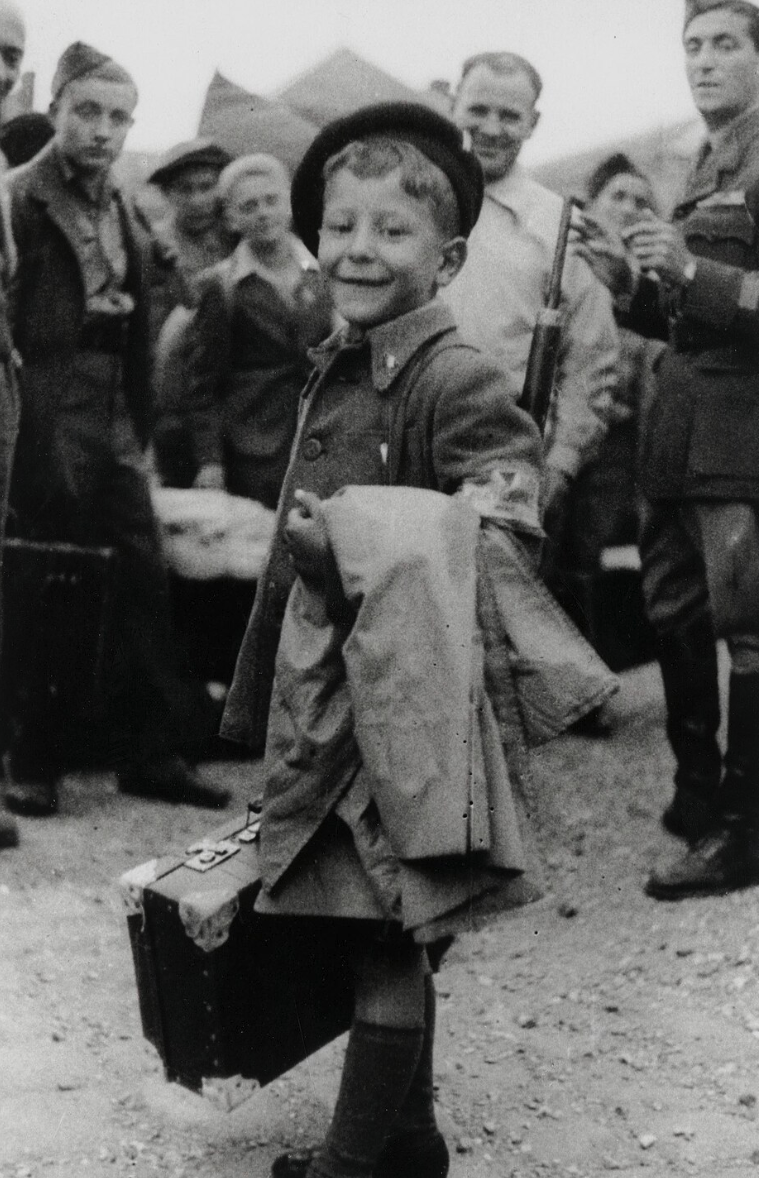
He came to the brit milah smiling broadly. I walked with him to the synagogue through vineyards and oak trees in Gush Etzion. Every few steps he offered Torah: a verse, a Mishnah, a midrash—each delivered with joy. Judaism without apology.
When the moment came, he held my son and asked me to whisper the name: “Ophir Naftali ben Gavriel Elkanah.”
He froze. Then he looked at me, eyes wide, filling with tears.
I hadn’t mispronounced it. I had named my son after his brother — Naftali Lau — who shielded him in Buchenwald, survived, and later served the Jewish state as ambassador to the United States.
When Rabbi Herschel Schachter entered Buchenwald with American forces, he saw piles of corpses and two boys, eight and ten years old, who had lost everyone. On July 15, 1945, those boys boarded a ship to Haifa.
That was not the end of the Jewish story. That was a reboot. Rabbi Jonathan Sacks zt’ll used to say that Jews don’t simply hope for the best. We build hope with whatever tools we have—and only then say ki tov. It is good. Like our Creator did in the Bereshit.
That is what those boys did. And that is what my son represents. People ask what I told Rabbi Lau to convince him to come.
I told him this: that by the time my son reaches bar mitzvah age, Holocaust survivors will likely be gone. But I wanted him to know that a giant of Torah and survival once held him and spoke his name before the people of Israel.
That connection matters. Tonight, hug your children and tell them the truth: You are alive. You are a miracle. And the Jewish people are still here because you exist.
Our enemies have relentlessly tried very hard:
The Greeks tried.
The Romans tried.
The Babylonians.
The Persians.
The Inquisition.
The Nazis.
Every empire that tried to destroy us is now an exhibit. And here we are: still circumcising our sons, still naming them loudly, still refusing to disappear, still thriving in our Holy Land.
So here is the message.
Loud and clear, gently and respectfully as it can be, excuse my French: To our enemies: don’t fuck with the Jews.
And to our people: get married. Build families. Light candles. Make Jewish babies. Lots of them. This is not nostalgia. This is continuity.
That is Chanukah. And that is why we are still here.
From TLV with love,
Happy Chanukah.
Gabi Sapir
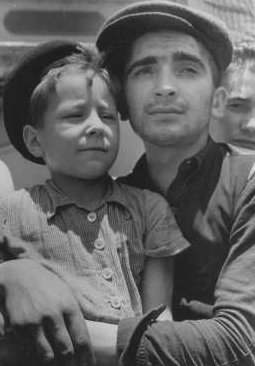
Basically, Rabbi Reuven Chaim Klein writes no one knows what the name Ophir actually means, but everyone has guessed where it comes from. According to the wisdom of my 6-year old “when too many answers are given, no one knows anything”.
The name Ophir also appears as a place name for the location from which both zahav (I Chron. 29:4, I Kings 9:28; 10:11; 22:49, and II Chron. 9:10) and ketem (Isa. 13:12, Ps. 45:10, Iyov 28:16) are brought. Rabbi Pinchas Eliyahu Horowitz (1765-1821) writes in his Sefer HaBrit that Ophir refers to the South American country Peru [..]Others identify Ophir on the Indian subcontinent, with the legendary lost city of Atlantis, with the Phillipines, and even with Australia. [understanding] amongst scholars is that Ophir is somewhere in the Arabian Peninsula or in Ethiopia). Rabbi Yosef Chaim of Baghdad (1832-1909) identifies zahav Ophir as “white gold” (perhaps platinum or an alloy of gold and some other white metal), which he claims is found in Russia..
Related Topics
Related Posts