


A Constitutional Crisis by Any Other Name
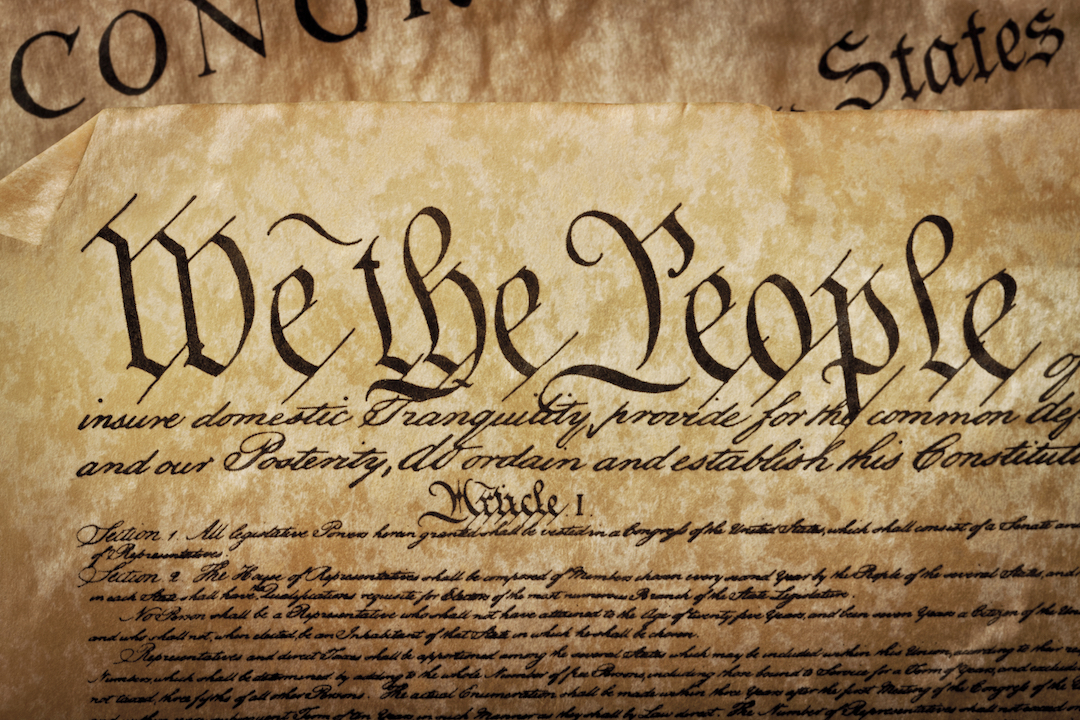
Virtually since the very beginning of Donald Trump’s first term as president in 2017, and particularly now into the start of his second term, legal scholars and political pundits from all across the political spectrum have debated whether Trump and his administration’s actions have hijacked the nation into a “constitutional crisis.”
While Trump and his cabinet officers repeated and have sworn to uphold the 35-word affirmation to “preserve, protect, and defend the Constitution of the United States,” a case can be made that they have failed to abide by their commitments.
So, the question remains regarding whether the United States of America has entered into a constitutional crisis under the Trump administration.
Let’s begin to address the question by offering a definition that covers the terms under discussion:
“In the course of government, the crisis results when one or more of the parties to a political dispute willfully chooses to violate a law of the constitution or to flout an unwritten constitutional convention; or to dispute the judicial interpretation of a constitutional law or of the flouted political custom.”
Under this definition, we have witnessed Donald Trump
- Using emergency powers improperly to impose tariffs, thereby surpassing congressional authority, which had severe and devastating consequences. Only Congress has the power to regulate commerce as articulated in Article I of the Constitution.
- Firing federal employees without due cause and eliminating entire departments such as the United States Agency for International Development (USAID) and the United States Department of Education: agencies created by Congress, which only can be eliminated by Congress.
- Improper and misuse of the War Powers Act by deporting undocumented migrants to foreign prisons without due process of law (writ of habeas corpus).
- Violating federal courts and the US Supreme Court’s orders not to deport undocumented migrants, and once departed, failure to return them to the United States for trial.
- Accepting valuable gifts, for example, a 747-jet airliner from the country of Qatar, worth an estimated $400 million to serve as an Air Force One for Trump’s use, which will revert to the Trump library foundation – meaning for Trump’s personal use – once he leaves office.
- Selling his crypto meme coins to the highest bidders for personal access to the President and for guided tours of the White House.
- Suing law firms, which in the past have brought charges against Trump and members of his administration for violating the law.
- Suing universities and withholding lucrative research grants for violating the Trump administration’s ban on promoting Diversity Equity and Inclusion initiates, for permitting alleged acts of antisemitism against Jewish students, and for offering courses the Trump administration opposes.
- Placing a federal judge under arrest for attempting to retain order in the courtroom by asking a defendant to exit by a rear door as I.C.E. agents were advancing to disrupt the proceeding by arresting the defendant.
- Traveling to the Middle East not to conduct official business of the United States, but, rather, to negotiate private business deals financially to enrich Trump and his organization while the trip was covered by US taxpayers.
- And the list continues.
While the US House of Representatives and the Senate, both Republican controlled, have failed in their oversight responsibilities to hold the Executive branch accountable, the Judicial branch has already issued a record number of injunctions and restraining orders to block what judges have ruled to be Trump’s lawless actions.
The administration, however, has on several occasions failed to follow judicial orders for example, deported undocumented migrants still remain under extremely dangerous conditions at a notoriously brutal prison in El Salvador.
In other instances, the administration has attempted to stall and stretch out the judicial process as long as possible in its goal of noncompliance.
The framers, and specifically, James Madison, crafted our magnificent Constitution replete with a system of checks and balances designed to prevent one branch from exceeding its authority and designated powers.
When one branch fails in its oversight duties and relinquishes its constitutional powers or if a branch refuses to abide by restrictions granted and orders to another branch, then maybe the United States could be considered as experiencing a constitutional crisis.
At the very least, the actions of the Trump administration have severely undercut the public’s trust in the rule of law.
But to paraphrase the Bard, a constitutional crisis by any other name is still a constitutional crisis.