
A Crisis of Leadership
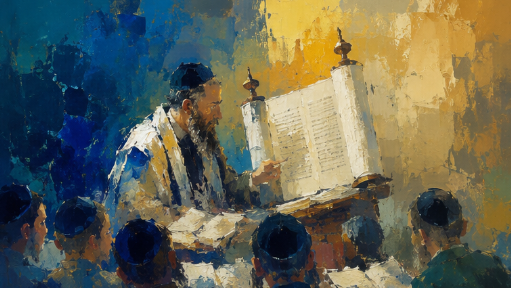
It is a moment unparalleled in the whole Torah. Moshe, until now the Jewish People’s greatest advocate, reaches his breaking point. He complains that he was given the burden of leading the Jewish People; he says his death would be better than living with his current predicament. His tirade, so uncharacteristic of the Moshe we know, reaches a crescendo:
Did I conceive all this People or did I give birth to them? That you say to me that I must carry them in my bosom, as a nursing mother carries the suckling child, to the Land that you have promised to their forefathers? (Bamidbar 11:12).
What happened? This plea comes in the middle of one of Sefer Bamidbar’s longest and most confusing narratives. The Jews begin their journey to the Promised Land. They run into trouble immediately, they begin to complain. God strikes the edge of the camp with fire, which abates upon Moshe’s prayer. This grumbling, incited by bad actors, takes a new and vicious form. They complain about the “מן-Manna bread” that was their sustenance in the desert. They crave meat. With the historical revisionism of a hungry man, they recall “the good days in Egypt,” where the menu was far more varied. Moshe can go no further; the load is too much to bear.
God provides two solutions: one is catered to Moshe and one to the carnal urges of the masses. Moshe is told to gather seventy “זקנים-elders”. God will increase the Divine spirit that rested on Moshe and then share some of it with the seventy elders. With this Divinely inspired spirit they would “carry the burden of the Nation, in order that you (Moshe) would not carry it alone” (Ibid. 17). The people get a less sympathetic response: they would indeed get what they asked for. They would get meat but in such quantities that it would “be coming out of their noses and would disgust them” (Ibid. 20). Accordingly, Moshe gathers the elders to the Mishkan and God makes them into quasi-prophets.
Then comes a subplot: two destined elders, Eldad and Meidad, remain in the camp. They do not attend the ceremony but receive the Divine spirit regardless. They begin to prophesy. The content of the prophecy is not mentioned, but it must have been controversial. It troubles Yehoshua, Moshe’s ever-devoted disciple, who tells Moshe that he must incarcerate them. Rashi[1] adds Midrashic context: they prophesied that Moshe would die and Yehoshua would be the leader who ultimately led them into the Promised Land. This was a true prophecy, but the timing could hardly have been worse. Nonetheless, Moshe’s reaction is baffling. He is comforted by it. He tells Yehoshua, “Are you being jealous on my behalf? If only all of God’s people were prophets, that God would put his spirit upon them!” (Ibid. 29). This is quite the response to hearing that you will die, and someone else will take your job!
Moshe returns to the camp and nothing is heard of Eldad or Meidad again, adding an extra level of mystique to this subplot. God brings a gigantic swarm of quails upon the camp and the people lustfully gather them. God’s promised wrath kills many mid-feast. The place is then aptly called “קברות התאווה-the Graves of Desire”.
This narrative gives us more questions than answers:
The first is why now? Jews complaining has happened before. They have even complained about food before. Moshe has always been there for the Jews. Even when they served the Golden Calf at the foot of Mount Sinai, Moshe defended them. Why does he break now?
What is the function of the “זקנים-elders”? They barely get a further mention in the Torah. It would seem that the solution their appointment provided was their very appointment itself, rather than any future action they would take. If they had done significant things worth mentioning, they would indeed be mentioned. Finally, what is the purpose of the subplot of Eldad and Meidad? What does that story add and why is Moshe’s response so benign?
One possible answer is to simply rephrase the question: it is because this has happened before that Moshe was so disheartened. It was one thing for the Jews to complain as soon as they had left Egypt; they were a disordered, uneducated rabble. Moaning about the conditions of the desert was understandable. A year later, one would expect change, yet none came. Couple this with a careful look at the complaint Moshe levels at God and therein lies the answer: Moshe was supposed to be “משה רבינו-Moshe our teacher”. He was supposed to be the Jews’ teacher, not their mother. A mother’s primary goal is to care; a teacher’s primary goal is to educate. Mothers nurture; teachers enable. Obviously, the best mothers and teachers both care and educate, nurture and enable, but the emphasis of each role is different. This is why Moshe is so distraught; the people have not progressed at all, he has failed. There is no point continuing. What use is a teacher who cannot teach?
God’s response was to give him what every teacher needs: students. He will appoint seventy elders. They will not simply receive divine inspiration directly from God. Rather, God will use the divine spirit that he placed on Moshe and share that onwards with the elders. They will learn from him. Moshe is consoled by this; he no longer wants to quit. There is a purpose to his leadership.
This idea is highlighted deliberately by the subplot of Eldad and Meidad. Hearing that you will die and your student will take your place is only good news in one profession: teaching. A true teacher succeeds when their students can succeed them. This subplot carries the motif of the entire story. Moshe did not have a personal crisis; he was not looking for more love or appreciation. He just wanted to do what he had been charged to do. “משה רבינו-Moshe our teacher”. Two more prophets in the camp were two more success stories. Knowing that when he died, his loyal Yehoshua would succeed him, doing what he always wanted to do – even better. After all, that is his response: “If only all of God’s people were prophets, that God would put his spirit upon them!” (Ibid.29).
Moshe was the humblest of all men. God spoke to him more clearly than anyone else, because there was nothing in the way. No ego, no pride. God’s word could reach him unfiltered. All he ever wanted to do was to pass it onwards.
[1] Rashi, Bamidbar 11:28