
A Daughter-in-Law’s Debt to the Greatest Generation
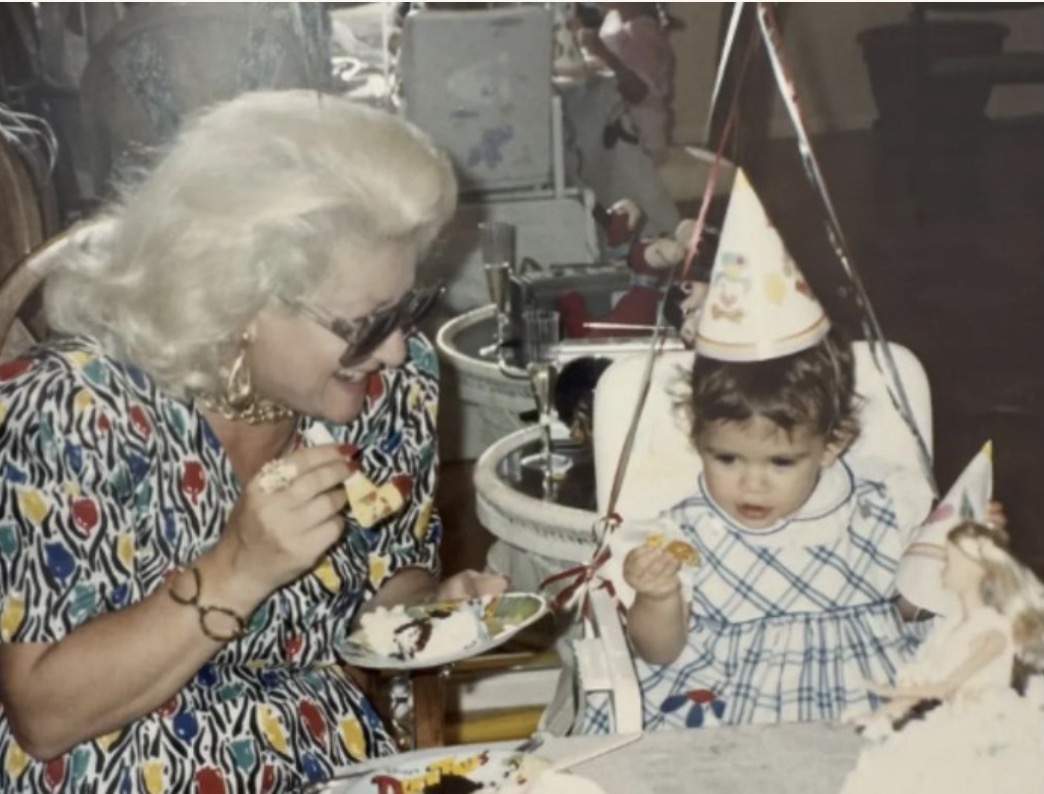
For nearly two decades, Edna Stefania Brill was simply my mother-in-law. The warm, generous woman who raised the man I married. The best grandma in the world to my children. I knew she and her husband Harry were Holocaust survivors, but I didn’t think much about what that meant. Edna was just family. Not a historical figure. Not a symbol of survival. Just the woman who made the most delicious chicken soup and who my children adored.

I was born and raised in New York City to Jewish agnostic parents who raised us with no religion. I was a biology major, never interested in history. I took maybe one world history course in college. I knew Hitler was evil and killed six million Jews, but not much else. Both my parents fought in World War II. My mother was a lieutenant in the Navy. My father served in the Army in Italy. But the war itself felt distant, something that belonged to their generation, not mine.
I met and married Sam in 1984. I knew his parents were survivors, but the details remained vague, unspoken. Edna was too busy being a devoted mother and grandmother to dwell on the past. And I was too busy living my life to ask.
Everything changed the day Edna spoke at my daughter’s high school for Holocaust Education Day.
I sat in that auditorium and heard things I had never known. This woman, my mother-in-law, the grandmother who spoiled my children with love, had lived a life beyond anything I could have imagined. I learned that she had spoken at Lehigh University, that she and Harry had recorded their testimonies for Steven Spielberg’s Shoah Foundation in 1995. But I still hadn’t truly understood the magnitude of what she had survived.
Survivors walk among us, and their silence doesn’t mean their stories don’t matter. I just hadn’t known to listen.
In her later years, Edna would occasionally let my kids video her as she told sanitized versions of her story. I began to understand that this history needed to be preserved. I asked her if I could document more of her experiences, maybe share them with the world.
She resisted. The weight Edna carried wasn’t just memory. It exhausted her. In her darkest moments, she thought of following her sister into silence. The very story that needed telling was the same story that tormented her. I could not ask her to relive that pain for my sake, or even for history’s sake.
So I waited. I respected her resistance. I let her have peace.
After Edna died, I understood that the silence which had protected her in life would erase her in death. If I didn’t tell her story, no one would.
I wasn’t handed a torch. I picked it up. Edna never asked me to do this. She was too exhausted, too haunted, to fight anymore. But I loved her. And the more I learned about what she endured, the more it broke my heart. This woman who had shown me nothing but warmth and kindness had suffered horrors no child should ever know. I couldn’t let her story die with her.
But it was more than love. It was gratitude, and a growing unease about the world we live in now.
My parents’ generation fought for freedom. Edna’s generation survived horrors I cannot fathom. And my generation? We inherited that freedom without earning it. We grew up safe, comfortable, unaware of what it cost. That’s not a failing. That’s exactly what they fought for. They wanted their children and grandchildren to live without knowing what they knew.
But I worry that we have forgotten too much. We take freedom for granted. We assume peace is the default. We scroll past history. We don’t understand that freedom has a price, and someone always has to pay it.
People bled for us. Starved for us. Died for us. Children like Edna fought in wars so that children today could grow up without knowing what war means. And now, as the last survivors fade away, their stories risk becoming mere statistics in history books. We risk losing not just their stories but the very understanding of what they sacrificed.
Gratitude creates its own kind of obligation. Not guilt. Gratitude. The recognition that the least we can do is remember them. Bear witness. Refuse to let their stories disappear into comfortable forgetting.
Something in my moral compass pointed me toward this work. Not because I wanted recognition, but because I understood a debt was owed. To Edna, who survived and then gave us a family filled with love. And to that entire generation. The ones who fought. The ones who survived. The ones who didn’t.
Freedom is not free. It never was. My generation inherited a world we didn’t build and a peace we didn’t earn. We live comfortably because children like Edna bled for us, starved for us, watched their families murdered for us. That debt doesn’t disappear because we’d rather not think about it.
And the opposite of courage isn’t fear—it’s indifference. The Nazis didn’t succeed because of those who hated. They succeeded because millions looked away. Today, when hatred rises and we choose silence, when we scroll past injustice because it’s not our problem, we become the bystanders of our own time. We dishonor every person who suffered so we could live this good life.
“Never again” is not a history lesson. It’s a demand. It means standing up against oppression wherever we see it—not because it’s comfortable, but because we owe a debt we can never fully repay.
My battle is different from Edna’s, but connected. Hers was against the Nazis. Mine is against time, against forgetting, against the silence that swallows so many stories when the last person who remembers them is gone.
So I read everything I could find about World War II and Warsaw. Edna had kept boxes of original documents and historical photographs. Perhaps some part of her hoped someone would eventually do what I’m doing now. I painstakingly reconstructed her journey using all her recorded testimonies, her brother’s testimony, online archives, and Holocaust documentation. For the periods she couldn’t remember clearly, like the POW camps, I read firsthand accounts from other survivors and recreated the conditions as accurately as humanly possible.
This is the work of love made rigorous. I became a scholar of my own family’s tragedy.
I could have embellished. I could have dramatized for effect. But something in me demanded truth over convenience, accuracy over entertainment. That restraint is its own form of respect. It honors Edna’s dignity and her readers’ right to encounter what really happened.
What I discovered astonished me.

“Kajtek,” age 9, Warsaw Uprising, 1944
This woman, “Grandma” to me, was born at Mila 18, the very address that would become synonymous with Jewish resistance in Warsaw. You can’t make that up. At seven years old, she smuggled food through the ghetto walls to keep her family from starving. She transformed herself into a Polish Catholic so convincingly that at nine she performed in front of the Gestapo. They loved her.
By ten, she had been decorated for bravery as a soldier in the Polish Home Army. She was the youngest decorated soldier they had.
She survived POW camps. Pope Pius XII decorated her as an Oberlangen girl, never knowing she was Jewish. She was given a full scholarship to St. Mary’s Convent School in Lowestoft, England, where she thrived as a Polish Catholic war hero. Later, she was kidnapped to Israel. Interpol pursued her.
Out of her immediate family of ten, six were murdered. Four survived the war, but two later killed themselves, including her sister.
This was my mother-in-law.
I am paying back the debt I owe. By preserving Edna’s truth, I honor not just her, but my parents who served, and every person who fought for the freedom my generation takes for granted. I want readers to understand what freedom cost. I want them to feel the weight of it.
Holocaust denial and distortion are growing. Every truthful account that reaches readers, especially young ones, becomes a small act of resistance against forgetting and falsification.
Little Edna’s War will be published on January 27, 2026, International Holocaust Remembrance Day. It tells the extraordinary true story of the youngest decorated soldier in the Polish Home Army, a child who outwitted the Nazis and survived against impossible odds.
I am not just writing a book. I am keeping a promise to the dead and offering a gift to the living.
Every reader who encounters Edna’s courage becomes part of the fight against forgetting. Little Edna’s War is available to order here releasing on 1/27/2026 on International Holocaust Remembrance Day.
Because some stories are too important to let die.