An AfD Leader Called It a Monument of Shame. Edna Was Born at Miła 18.
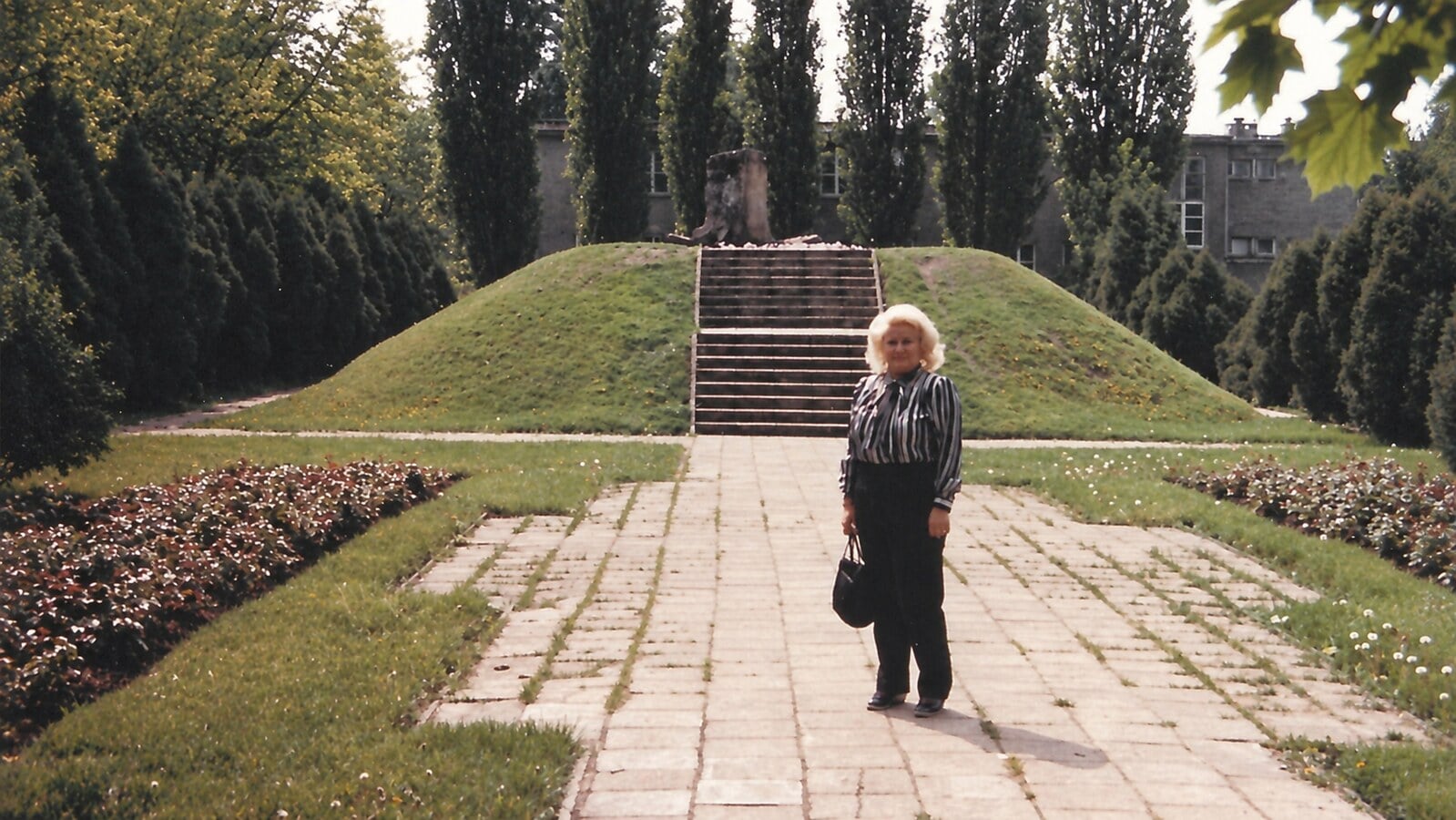
My mother-in-law was born at Miła 18.
In October 1934, the address meant nothing beyond the life unfolding inside it. It was an apartment building in Warsaw, on a street that had not yet been walled into a ghetto. Her mother kept the family’s wedding linens in the basement.
Nine years later, the bunker beneath that address became the command headquarters of the Jewish Fighting Organization. Mordechai Anielewicz and many of the young people who fought beside him died there.
Today, Edna’s birthplace is a mound of rubble with a memorial stone on top.
I spent years verifying her life, document by document, for a book. That is why I read Sunday’s election results from the German state of Saxony-Anhalt the way I did.
The Alternative für Deutschland won 43.9 percent of the vote and thirty-nine of the eighty-three seats in the state parliament, only three seats short of a majority. The Christian Democratic Union, the party of Chancellor Friedrich Merz, collapsed from 37.1 percent to 17.2 percent.
Turnout reached 77 percent, up from 60 percent.
That last number is the one to sit with. This was not apathy. This was participation.
I know what a woman who writes about the Holocaust is expected to say next, and I am not going to say it.
Germany in 2026 is not Germany in 1933. The Basic Law was written by people who had watched a republic dismantled from within, and it has protections that the Weimar Republic never possessed. The Federal Office for the Protection of the Constitution classified the AfD’s Saxony-Anhalt branch as a confirmed right-wing extremist organization in 2023. Every other major party currently refuses to govern with it. Merz and the CDU have restated that refusal.
For now, the firewall is holding.
I am not warning that the Reichstag is about to burn. I am telling you what I have learned to watch instead.
In Germany’s federal system, education is largely a state responsibility. State governments shape school curricula. They fund cultural institutions. They help determine the resources available to museums, archives and memorial sites. They also provide funding and security for religious communities.
Saxony-Anhalt’s Jewish community numbers approximately 1,100 people. It depends upon the state for both funding and protection.
Björn Höcke, the AfD leader in neighboring Thuringia, called Berlin’s Memorial to the Murdered Jews of Europe a ‘monument of shame’ in the heart of the German capital. He demanded a 180-degree reversal in Germany’s culture of remembrance.
Alexander Gauland, one of the AfD’s founders, dismissed Hitler and the Nazis as a speck of bird droppings in more than a thousand years of German history.
Remembrance policy is not a mood. It is a budget line and a syllabus. It is decided in state capitals, and one of those state capitals is now three seats away from an AfD majority.
Remembrance policy is not a mood. It is a budget line and a syllabus.
People ask why this frightens me. I have had to be honest with myself about the answer, because it is not the one they expect.
I am not afraid that Germany will begin murdering Jews again next year. I am afraid of something slower and far more plausible.
Edna died in June 2019. In a few more years, there will be almost no one left alive who remembers the Holocaust firsthand. The Holocaust will pass out of living memory and into the custody of institutions.
Archives. Museums. Memorials. Curricula. Budget lines. Things administered by whoever won the last election.
Höcke’s phrase is not really about a building in Berlin. It is a proposal about shame. It says that Germans have carried enough of it, that the account is settled, and that it is time to become a normal country with an ordinary past.
That argument does not require anyone to deny a single historical fact. It only requires the facts to be taught a little less, for a few years, by people who find them tiresome.
I spent thirty-seven years close to a woman who had been seven years old on the other side of the Warsaw Ghetto wall. What frightens me is not that someone will call her a liar. It is that eventually no one will need to.
What frightens me is not that someone will call her a liar. It is that eventually no one will need to.
Edna recorded more than five hours of testimony for the USC Shoah Foundation before she died. She did it for one reason. So that it would be taught.
Here is what disappears when teaching becomes optional.
At seven, she slipped through gaps in the ghetto wall to bring food home to her starving family.
At nine, while passing as a Polish Catholic orphan and working for the Polish resistance, she performed for Gestapo officers.
On her tenth birthday, she was decorated for valor.
After the Warsaw Uprising, she was taken to Germany as a prisoner of war. The war ended, but Edna continued to believe that she was Polish and Catholic. That was not merely an identity she performed to survive. It had become the identity she understood as her own.
At sixteen, her brother Yakov found her in a convent in England. She did not recognize him until he sang a Yiddish lullaby from their childhood.
She then went to Israel and began the painful journey back to the Jewish life that had been taken from her.
In 1953, in Nahariya, she married Harry Brill, a fellow survivor who had reached Palestine aboard the Exodus 1947. As a boy, Harry had been photographed by Life magazine, his face pressed against the wire netting of a train.
Two children of the catastrophe found each other and built a life.
Edna’s family had ten people in it. Six were murdered. Of the four who survived, only Edna and Yakov lived to old age and died of natural causes.
The war took the others later, on its own schedule.
I know the objection.
The AfD presents itself as pro-Israel. Alice Weidel has described her party as the only protector of Jewish people in Germany. Some Jewish voters support the party, largely because of their concerns about migration, antisemitism and political Islam.
But Germany’s major Jewish organizations reject the AfD. They have warned repeatedly about its nationalism, its extremism and its attempts to diminish Germany’s responsibility for its past.
I am being offered a trade: support for Israel abroad in exchange for historical revision at home. My mother-in-law’s family are the people that revision is about. I decline.
Support for Israel abroad in exchange for historical revision at home. I decline.
The firewall is also under pressure from outside Germany.
In February 2025, Vice President JD Vance stood at the Munich Security Conference, in Munich of all cities, and attacked the political exclusion of parties such as the AfD. While he was there, he met privately with Weidel.
As an American Jew, I was outraged.
An American vice president had gone to Germany and challenged one of the democratic safeguards Germans erected because they had learned, at an unimaginable cost, what happens when an extremist movement is normalized.
That firewall was not built because Germans fear disagreement. It was built because their democracy once welcomed its executioners through the front door.
America helped defeat Nazi Germany. American soldiers liberated concentration camps. American jurists helped prosecute Nazi leaders at Nuremberg. American power helped make possible the democratic Germany that emerged from the ruins.
For an American vice president to pressure Germany to lower its defenses against the far right is not an expression of democratic principle. It is an act of historical arrogance.
For an American vice president to pressure Germany to lower its defenses against the far right is an act of historical arrogance.
Elon Musk went further. He endorsed the AfD outright and congratulated Weidel after Sunday’s victory.
Berlin and Mecklenburg-Vorpommern vote in less than two weeks.
The man who led the AfD to victory in Saxony-Anhalt is Ulrich Siegmund, thirty-five, a former marketing executive who ran a cheerful campaign on TikTok. Observers repeatedly describe him as personable and likeable.
That is not reassuring. That is the thing I am trying to tell you.
In April 1943, while the Warsaw Ghetto burned, an amusement park stood just beyond its wall on Bonifraterska Street.
Historians still debate whether the carousel turned during the uprising and who rode it. They do not dispute the flames rising nearby, or the ordinary life continuing within sight of them.
That may be the most dangerous illusion of all: that catastrophe always announces itself as catastrophe.
Sometimes it arrives beside music, laughter and a cheerful young man smiling into a camera.
Sometimes the most useful thing you can place beside a massacre is an ordinary spring afternoon.
–
Janet Bond Brill, PhD, is the author of Little Edna’s War, based on her mother-in-law’s Holocaust testimony, published on January 27, 2026, on International Holocaust Remembrance Day. Order Now.