

Writer, Thinker, Tour Guide
A Fork in the Haredi Road
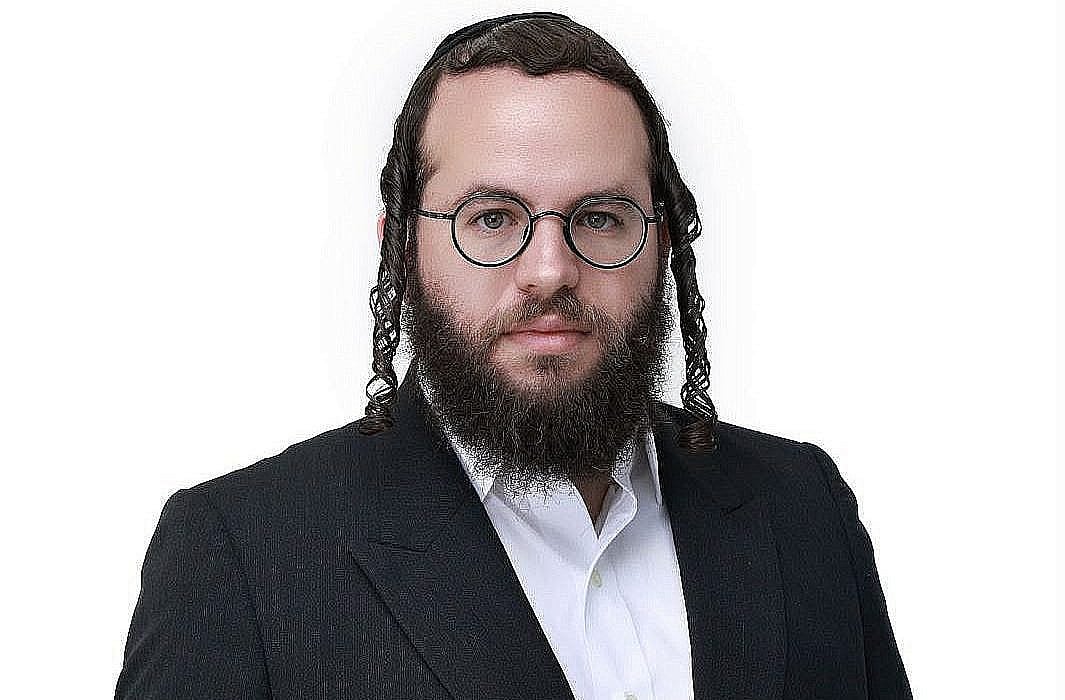
Moti Leitner (via X)
Channel 13 reports that elements associated with the Peleg Yerushalmi have been exploring the possibility of yet another Haredi political party formed with several leading figures unsatisfied with the “mainstream” parties — one that would take an even more uncompromising position against military service. The name it has taken is “Code Black” (Tzeva Shachor) from the network they developed to alert supporters when military police attempt to arrest Haredi draft evaders. Demonstrators are then dispatched to obstruct the arrest.
At almost the same moment, a very different Haredi political movement has begun taking shape around Moti Leitner, deputy mayor of Beit Shemesh. Leitner argues that genuine full-time Torah learners must be protected, but that the great majority of Haredi men should serve in the military or perform meaningful national service. He speaks openly about teaching mathematics and English, preparing young people to earn a dignified living, representing working Chareidim, and helping Chareidi olim find their place in Israeli society.
These are not merely two competing political organizations. They represent two very different possible futures for the Haredi community.
I know which one I hope will succeed.
I say this as someone who is completely committed to Torah and who has spent most of his adult life teaching it. I am primarily a product of Haredi Yeshivos and virtually all of my family identifies as Haredi. I served for approximately 20 years as a congregational rabbi in the United States before returning with my wife to live in Israel nearly eight years ago. The Torah world that formed me was shaped by Gedolim such as Rav Moshe Feinstein, Rav Yaakov Kamenetsky, Rav Joseph Breuer, and Rav Shlomo Zalman Auerbach ob”m.
That world believed passionately in Torah learning. But it did not teach us that working honestly to support one’s family made a person a second-class Jew. It did not teach that being a good neighbor, respecting other Jews, or accepting responsibility for the society around us represented a surrender to secular values. It understood that Torah Im Derech Eretz could produce Jews who were fully and unapologetically committed to Torah while participating responsibly in the world around them.
Yet in much of today’s Haredi political culture, the definition of loyalty has become steadily narrower. Working, serving, pursuing professional training, or seeking broader educational opportunities can place a person at the edge of the community. The message is often that there is only one ideal path, and that everyone else is, at best, an accommodation.
That is not sustainable for the Haredi community, and it is not fair to the many sincere Torah Jews whose lives do not fit that mold.
For years, the national debate over Haredi military service has been presented as a choice between defending Torah and surrendering to those who hate it. That is a false and destructive choice.
The question “Shall your brothers go to war while you sit here?” was asked by Moshe Rabbeinu—not by Yair Lapid, the Supreme Court, or an anti-religious demonstrator. It is a Torah question, and it deserves a Torah answer.
Certainly, there are young men sincerely immersed in full-time Torah learning whose continued learning should be protected. The IDF must also create dependable frameworks in which Haredi soldiers can serve without being required to compromise their religious standards. Collective punishments and rhetoric portraying an entire community as parasitic will predictably produce greater resistance rather than cooperation.
But that cannot justify a blanket communal exemption. A young man who is not genuinely learning is not being exempted because of his Torah learning. He is being exempted because he is Haredi. After years of war, repeated reserve duty, bereaved families, and a genuine military manpower shortage, that position is both morally indefensible and politically doomed.
This is why Leitner’s willingness to say that those who are not suited for full-time yeshiva learning should accept responsibility is so important. He is not saying it as an outsider seeking to destroy the Haredi world. He is saying it as someone formed by that world who wants it to survive and flourish.
The same is true of education and employment. We cannot lament Haredi poverty while denying young people the basic tools they need to earn a living. We cannot tell a father that he must support his family and then stigmatize him for seeking the education or professional training that would allow him to do so. We cannot say that every child is precious while offering too few alternatives to those who do not succeed in the standard yeshiva framework.
Most important, people should not have to leave the Haredi community in order to be heard within it.
Working Haredim pay taxes, raise families, establish businesses, learn Torah, support communal institutions, and contribute to Israeli society. Haredi soldiers and national-service volunteers do not cease to be Haredi when they put on a uniform or enter a hospital, ambulance, police station, or public agency. Parents who want their children to learn English and mathematics are not necessarily seeking to take them away from Torah. They may simply want their children to enter adulthood with genuine choices.
These people are not a problem to be managed. They are part of the Haredi public and deserve political representation of their own.
That is what makes the movement around Leitner significant. It is not calling upon Haredim to become secular or to dissolve themselves into broader Israeli culture. It is saying that a person should be able to declare, without embarrassment or apology: I am Haredi. I work. I serve. I support my family. I care about my country. And I still belong in my community.
No politician deserves automatic support, and no new party should be excused from presenting serious policies, responsible candidates, and financial transparency. Leitner and those around him will have to prove that they can translate their attractive principles into workable proposals.
But political change begins by making it possible to say things that the existing establishment refuses to say. In his Jerusalem Post interview, Leitner said clearly that a successful Haredi society and a successful Israel are not competing goals. To a great extent, each depends upon the other.
That should not be a revolutionary statement. Unfortunately, in the present Haredi political environment, it is.
I recently became acquainted with this movement and was invited to contribute to its efforts. I accepted because I have waited many years to hear a serious political voice emerge from within the Haredi community and say these things openly.
If there is political room for those who want to respond to Israel’s present crisis with still greater separation and an even more uncompromising rejection of service, there must also be room for Haredim who seek a different future—one built upon Torah, responsibility, dignified work, education, service, and mutual respect.
The Haredi community stands at a fork in the road. One path leads toward deeper isolation, growing poverty, greater resentment, and an increasingly bitter confrontation with the rest of Israeli society.
The other allows us to remain fully loyal to Torah while taking responsibility for our families, our community, and the country in which HaKadosh Baruch Hu has given us the privilege to live.
That is the path Moti Leitner is trying to open. It is a path worth taking.
Rabbi Yehuda L. Oppenheimer served for approximately twenty years as a congregational rabbi in the United States, most recently at the Young Israel of Forest Hills. He now lives in Afula, works as a tour guide, and writes regularly for The Jewish Press and the Queens Jewish Link.