


A Global Mission to Remember October 7 and Stand With Israel
In a world where Israel is increasingly discussed through headlines, political arguments and competing narratives, there is something profoundly powerful about bringing people to Israel and allowing them to see the truth with their own eyes.
A photograph cannot fully convey the grief of a bereaved parent. A news report cannot reproduce the silence that falls over a place where young people were murdered while attending a music festival. And no political speech can adequately describe what it means to sit across from a former hostage and listen as that person recounts the experience of being taken from home, family and freedom.
These encounters have a power that no headline can match.
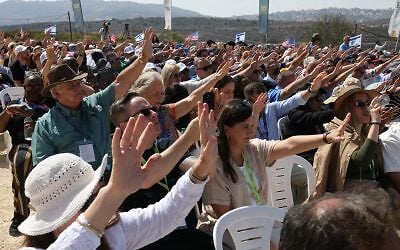
That conviction was at the heart of the Friends of Zion Ambassador Summit, which held in cooperation with Israel’s Ministry of Foreign Affairs has just concluded in Israel following a week of intensive visits, personal testimonies, diplomatic engagements and moments of profound emotion. More than 1,000 Christian leaders, community leaders and influencers from 121 countries came to Israel, representing communities and audiences around the world.
They did not come simply to attend a conference. They came to encounter Israel.
 As the founder of Friends of Zion, I believe that the most effective response to antisemitism, disinformation and the growing isolation of the Jewish people is not merely to argue with those who spread falsehoods. It is also to equip people of conscience with the knowledge, relationships and firsthand experiences necessary to challenge those falsehoods wherever they encounter them.
This summit was built on that principle.
A Week That Brought the Reality of Israel Into Focus
 The delegation’s journey took participants far beyond the conference room. Throughout the week, they visited places of historical, religious and national significance, met Israeli leaders and diplomats, engaged with business figures, and heard directly from people whose lives were transformed by the events of October 7, 2023, and their aftermath.
They met former hostages, survivors of the Nova festival massacre, wounded Israelis, bereaved family members and others who have endured extraordinary suffering. They listened to personal accounts of captivity, loss, survival and the difficult process of rebuilding a life after unimaginable trauma.
These were not abstract discussions about the Middle East. They were encounters with human beings whose stories deserve to be heard.
For the international participants, the opportunity to listen directly to survivors and families created a deeper understanding of the human consequences of terrorism. It also gave them something essential to take home: the ability to speak about Israel through the experiences of the people they had met, rather than relying exclusively on what they had read or watched from thousands of miles away.
The distinction matters. In an era when information travels instantly but understanding often remains superficial, firsthand experience can become a powerful antidote to indifference.
Returning to Nova: Remembering the Lives Behind the Headlines
One of the most moving moments of the summit took place at the Nova festival memorial site near Re’im, where more than 1,000 leaders and influencers encountered the stories of those whose lives were forever changed by the October 7 massacre.
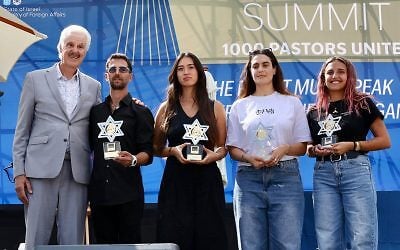
The delegation met former hostages Romi Gonen, Elkana Bohbot and Noa Argamani, alongside survivors, bereaved families and soldiers who had been present during the events of that terrible day.
For Noa Argamani, the visit carried extraordinary personal significance. It was her first return to the site since she was abducted on October 7 and subsequently released from captivity. She chose to come to meet the international leaders who had traveled to Israel to demonstrate their solidarity with the Israeli people.
Romi Gonen, returning to the site for the second time since her release, shared her experience and reflected on what it meant to revisit the place where her life had changed irrevocably. Elkana Bohbot also recounted his ordeal in captivity and the journey back to his family.
Listening to these testimonies in the place where the massacre occurred gave the delegation a perspective that no distant observer could easily acquire.
The Friends of Zion “Here Am I” Award was presented to Romi Gonen, Elkana Bohbot, Noa Argamani and Hila Abir, the sister of Lotan Abir, who was murdered at the Nova festival. The recognition honored their courage and the importance of preserving their stories.
For the participants, the visit was not simply an opportunity to learn about history. They stood in a place of profound loss and encountered the people who continue to carry its consequences. They could return to their congregations and communities knowing that these were not stories they had merely read about. They had heard them directly from those who lived them.
An International Memorial With a Global Audience
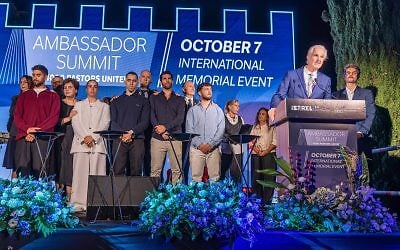 On October 7, we gathered at Jerusalem’s Southern Wall for an international memorial honoring the victims of the massacre and standing with the survivors, hostages, bereaved families and wounded Israelis whose lives were changed forever.
More than 2,300 people attended the gathering, including Christian and jewish community leaders, influencers, diplomats, media representatives, bereaved families, former hostages and wounded survivors.
Organized by Friends of Zion in partnership with Sylvan Adams, President World Jewish Congress Israel, the memorial was designed to ensure that the victims of October 7 would not be forgotten and that the experiences of survivors would reach audiences far beyond Jerusalem.
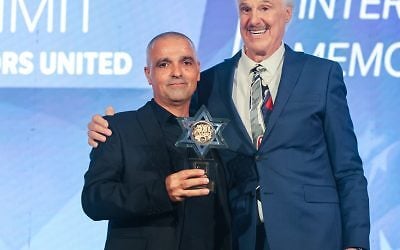 During the ceremony, I presented the “Here Am I” Award to Yaniv Hayun in recognition of his courage and his role in helping thwart an attempted hijacking aboard a Flydubai aircraft and subdue the attacker.
The memorial formed the centerpiece of an unprecedented international initiative: a special 24 hour live broadcast from Jerusalem, the first of its kind for an international October 7 memorial.
According to Friends of Zion’s figures, the memorial event and broadcast reached more than 250 million people across 176 countries. In addition, Friends of Zion’s content generated more than 96.6 million views across more than 190 countries. Notably, 59.8% of the audience was between the ages of 25 and 34, highlighting the initiative’s significant reach among younger adults.
These numbers are significant, but their importance extends beyond the size of the audience. They represent opportunities to introduce people to the human stories behind October 7, challenge misinformation and ensure that the experiences of Israeli victims and survivors remain part of the international conversation.
The broadcast’s reach was particularly notable in countries where Israel has no diplomatic relations.
Approximately 3.8 million views were recorded in Syria, 98,000 in Saudi Arabia, and 1.1 million in Algeria, all countries with which Israel has no diplomatic relations. In Egypt, which maintains diplomatic relations with Israel, the broadcast generated approximately 1.2 million views.
In Brazil, the broadcast reached more than 8.5 million people following a public appeal by Senator Flávio Bolsonaro, a presidential candidate and supporter of Israel, who encouraged Brazilians to watch. Bolsonaro has pledged that, if elected president, he will work to move Brazil’s embassy to Jerusalem.
Digital reach with should not confuse with political agreement, nor assume that every person who watched was persuaded by what they saw. But reaching audiences across national and political boundaries creates an opportunity that should not be underestimated.
A story that might otherwise never reach someone can now enter their home. A survivor’s testimony can reach a community thousands of miles away. A message of solidarity originating in Jerusalem can cross borders that formal diplomacy cannot always cross.
That is the power of communication when it is guided by a clear moral purpose.
Diplomacy Begins With Human Connections
The summit also demonstrated that meaningful international engagement requires more than formal meetings and official statements.
Participants met President Isaac Herzog, government officials, diplomats, ambassadors, business leaders and other prominent figures. These encounters provided opportunities to discuss Israel’s circumstances, strengthen relationships and deepen international understanding.
The delegation also visited Yad Vashem, Jerusalem’s Old City, the Church of the Holy Sepulcher, the City of David, the Friends of Zion Museum, the Dead Sea, Masada and ancient Shiloh. Participants traveled to communities in the Gaza border region and visited locations in the Galilee and around the Sea of Galilee.
These places tell different parts of Israel’s story: its history, its religious significance, its national identity, its vulnerability and its resilience.
The summit was held for the second consecutive year in cooperation with Israel’s Ministry of Foreign Affairs, reflecting the importance of sustained collaboration between civil society and Israel’s diplomatic community.
Yet the most meaningful diplomatic outcomes often begin with something simple: a conversation, a shared experience or a personal relationship that continues after the official program ends.
When a Christian leader meets an Israeli survivor, hears a family’s story or speaks with a diplomat about the challenges facing the country, that relationship can become the foundation for continued engagement. When the visitor returns home, the experience can inform conversations in churches, community organizations, public forums and digital platforms.
The summit was designed to help make those connections lasting.
Why Christian Leadership Matters
For decades, I have worked to strengthen the relationship between Christians and the Jewish people. My conviction is rooted in faith, history and a deeply personal understanding of the consequences of hatred.
I founded Friends of Zion because I believe that standing with the Jewish people is a moral responsibility. It is not simply a matter of political preference, and it cannot be reduced to a statement of support made when that support is convenient.
Antisemitism must be confronted wherever it appears, including when it is disguised as fashionable opinion or amplified through misinformation. The history of the Jewish people makes clear how dangerous it can be when prejudice is normalized, when victims are forgotten and when society becomes indifferent to the suffering of others.
Christian leaders have a particularly important role to play. They influence congregations, educate young people and help shape the moral perspectives of their communities. They can challenge antisemitism, explain the historical and spiritual relationship between Christianity and the Jewish people, and ensure that the lessons of October 7 are not lost amid the noise of international politics.
But leadership requires more than declarations.
The leaders who joined us in Israel were given the opportunity to encounter the people and places behind the headlines. They heard testimonies, witnessed the consequences of terrorism and developed relationships with Israelis whose experiences they can now share with their own communities.
Their responsibility begins where the summit ends.
I hope they will use their platforms to tell these stories accurately and compassionately, to challenge falsehoods, to educate their communities and to ensure that the voices of survivors are not pushed aside. I hope they will encourage others to look beyond simplistic narratives and understand the human realities facing Israel.
Their experiences will not eliminate antisemitism overnight. No single conference, broadcast or diplomatic initiative can do that. But sustained efforts to educate, build relationships and confront hatred can make a meaningful difference.
The Summit Has Ended. The Responsibility Continues.
The Friends of Zion Ambassador Summit was never intended to be an isolated event. Its purpose was to build a network of people who will continue to engage with Israel and speak about what they have witnessed.
More than 1,000 leaders and influencers have now returned to 121 countries carrying personal memories, firsthand testimonies and relationships formed during a remarkable week.
They have met people who survived captivity, families who lost loved ones, Israelis wounded by violence and individuals determined to rebuild their lives. They have visited the places where history unfolded and witnessed the enduring importance of Jerusalem to people of different faiths and nationalities.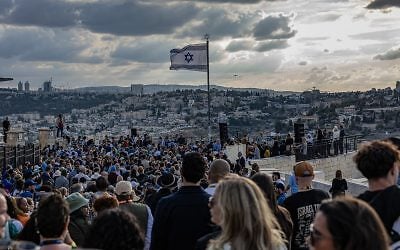
They have also seen that solidarity can take practical form: listening to survivors, honoring the dead, supporting the wounded, strengthening international relationships and refusing to let hatred dictate the conversation.
The international memorial and its 24 hour broadcast demonstrated that Israel’s story can reach hundreds of millions of people. The summit demonstrated something equally important: that behind the global audience are individuals who can become informed, engaged and committed to sharing what they have learned.
The broadcast may have ended, and the delegation may have returned home, but the work must continue.
I call on Christian leaders, political figures, media organizations and people of conscience to ensure that the victims of October 7 are remembered, that survivors are heard and that antisemitism is confronted wherever it appears. I also urge those who believe in the dignity of every human being to resist the temptation to look away when defending the truth becomes difficult.
History is shaped not only by those who commit acts of hatred, but also by the choices of those who witness them. We must decide whether to remain silent or to act, whether to accept falsehoods or challenge them, and whether to allow the Jewish people to stand isolated or to demonstrate that they have friends prepared to stand beside them.
At Friends of Zion, we will continue to build bridges between Israel and Christian communities around the world, to amplify the voices of survivors and to create opportunities for people to encounter the truth firsthand.
The message that emerged from Jerusalem is clear. The Jewish people must not be forgotten. The victims of October 7 must not be erased from history. And those who stand against antisemitism must be prepared to translate their convictions into action.
More than 250 million people encountered our October 7 memorial and broadcast. More than 1,000 international leaders and influencers came to Israel and experienced its reality for themselves.
The real measure of this initiative will be what they do next.
Solidarity is not measured only by the number of people who hear a message. It is measured by the number who carry it forward.