Journalist
A Hateful New Normal for Europe’s Jews

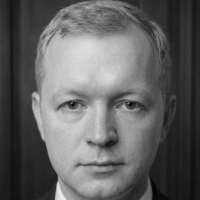
Picture: Michael Kuenne
What should have united the world in outrage has instead unleashed a tidal wave of antisemitism. In Berlin, synagogues burn, children chant for Israel’s erasure, and Jews live in fear. Europe’s “Never Again” is being tested, and failing.
On October 7, 2023, Hamas terrorists committed the deadliest one-day massacre of Jews since the Holocaust, murdering 1,200 Israelis in cold blood. One would expect such barbarity to have united the civilized world in grief and moral clarity. Instead, it opened the floodgates to what Felix Klein, Germany’s commissioner for antisemitism, rightly called a “tsunami of antisemitism.” He warned that open, aggressive Jew-hatred in Europe is now “stronger than at any time since 1945.” German intelligence echoed his assessment: the threat to Jews is at its highest level in decades, on a scale unseen since the aftermath of World War II.
The numbers bear out this grim reality. Germany logged nearly 5,200 antisemitic crimes in 2023, more than half of them after October 7. By the close of 2024, the total rose to 6,236, the highest figure ever recorded and nearly double the count from 2022. What should have been a moment of solidarity with Israel and the Jewish people became, instead, a license for open hate. “Never Again” now echoes not as a warning from the past, but as a haunting question in the present: Is it happening again?
For Jews across Europe, daily life since October 7 has been marked by anxiety and vigilance. In Germany alone, the Interior Ministry recorded over 1,000 antisemitic offenses in just the first quarter of 2025, including violent assaults and attempted murders. Josef Schuster, president of the Central Council of Jews in Germany, called the figures “alarmingly unsurprising,” reflecting what Jews feel every day in their neighborhoods, schools, and workplaces.
A survey of Jewish community leaders found that 80 percent believe it has become visibly less safe to live as a Jew in Germany since October 7. One in three congregations reported direct attacks: vandalism, graffiti, threats, or worse. University campuses, long considered places of free inquiry, have turned hostile; many Jewish students now conceal their identity or avoid campus entirely.
Berlin: The Epicenter of Escalation
The fear is not theoretical. In Berlin, Jewish homes were marked with Stars of David, synagogues firebombed, and students physically beaten for being visibly Jewish. In November 2023, Israel took the extraordinary step of warning its citizens to reconsider traveling abroad, including to Europe, because of the explosion of antisemitic threats. The message was clear: Jewish life on this continent is once again endangered.
Berlin has become the epicenter of this resurgence. The city’s antisemitism monitoring office recorded an average of seven to eight antisemitic incidents per day in early 2024, already surpassing the entire tally of the previous year.
On October 7 itself, as news of Hamas’s atrocities reached the world, men in the Berlin district of Neukölln celebrated by handing out baklava in the streets. Police later intervened, but the symbolism was unmistakable: the slaughter of Jews was cause for public joy. Soon after, Stars of David were daubed on Jewish homes, Molotov cocktails hurled at synagogues, and demonstrators paraded openly through the city, chanting slogans that call for Israel’s annihilation. When Berlin’s mayor visited a synagogue that had just been attacked, drivers passing by rolled down their windows to shout “Free Palestine.”
Anna Segal, a local Jewish leader, summed up the feeling in her community: “We do not feel safe. We feel attacked. We feel like targets.”
Even more disturbing, children at some rallies were heard chanting “We want ’48!”, a call to erase Israel and return to the map of 1948. The indoctrination of minors into genocidal slogans is not “protest.” It is hate education. Berlin’s antisemitism commissioner, Samuel Salzborn, warned that these rallies serve “exclusively the purpose of antisemitic escalation,” increasingly resembling “pre-terrorist structures.”
What makes this new wave so insidious is its broad coalition. The old far-right antisemitism never disappeared; parties like the AfD have dragged it into parliament and mainstream politics. But today’s hatred is not confined to the margins of the far-right. Islamist ideologues, emboldened by Middle Eastern conflicts, have brought their imported antisemitism into Europe’s streets. Even worse, parts of the progressive left have joined them. As Nikolas Lelle of the Amadeu Antonio Foundation notes, there is a growing alliance between “progressive” movements and Islamist actors, united by their obsession with demonizing Israel. The infamous banner “Free Palestine from German Guilt” captured this alliance in a single phrase: young German leftists urging their nation to “get over” its Holocaust guilt so they can more comfortably attack the Jewish state.
This toxic convergence, neo-Nazis, jihadists, and radical leftists, has created a shared front against Jews and Israel. Their slogans differ, but the target is the same.
Perhaps most alarming is the complicity of Western media and academia. Instead of exposing this hatred, too many institutions have rationalized or ignored it. The historian Simon Sebag Montefiore observed with horror that since October 7, countless Western professors, students, artists, and activists have denied, excused, or even celebrated Hamas’s massacres. They did it openly, cloaked in the fashionable language of “decolonization.” What should have been denounced as barbarism was dressed up as resistance.
Meanwhile, media outlets have repeatedly parroted Hamas’s casualty claims from Gaza without scrutiny, presenting unverified numbers as fact. The result is a steady drumbeat that frames Israel as the sole aggressor, while Jewish suffering is downplayed or dismissed. An ADL report noted that even “neutral” networks increasingly display open anti-Zionism and a reflexive instinct to blame Israel. The moral double standard is glaring. Human rights activists who fill social media with outrage at nearly every cause go silent when Jewish women are raped, when Jewish children are burned alive, when Jewish students are beaten in Berlin. Austrian scholar Beatrice Frasl captured the hypocrisy: activism that ignores Jewish suffering is not moral commitment, it is performance.
After the Holocaust, Europe promised Jews safety and belonging. For a time, that promise seemed real. But today’s reality belies it. When synagogues resemble fortresses, when Jewish children hide their identity in schools, when mobs in European capitals chant for a world without Israel, Europe’s pledge of “Never Again” rings hollow.
The old demons were never exorcised. They lay dormant, waiting for a spark. Hamas’s October 7 massacre provided that spark, unleashing hate that had simmered beneath the surface.
Some steps have been taken: Germany has outlawed Hamas and Samidoun, passed a resolution titled “Never Again Is Now,” and begun prosecuting offenders. But words and resolutions mean nothing without enforcement. What is needed is political courage, laws applied with consistency, education that dismantles lies, and leaders who call antisemitism by its name rather than hiding behind euphemisms.
The choice facing Europe is stark. Either it confronts the new antisemitism with the same determination it once vowed after 1945, or it allows radicalization to become the “new normal.”
The Jewish people should never again have to live in fear on European soil. That was the meaning of “Never Again.” That is the test of Europe’s conscience now. And it is a test it cannot afford to fail.
Related Topics
Related Posts