

Mathematics Teaching Professor, Author
A Hidden Synagogue in a Terraced House: Discovering the Irish Jewish Museum
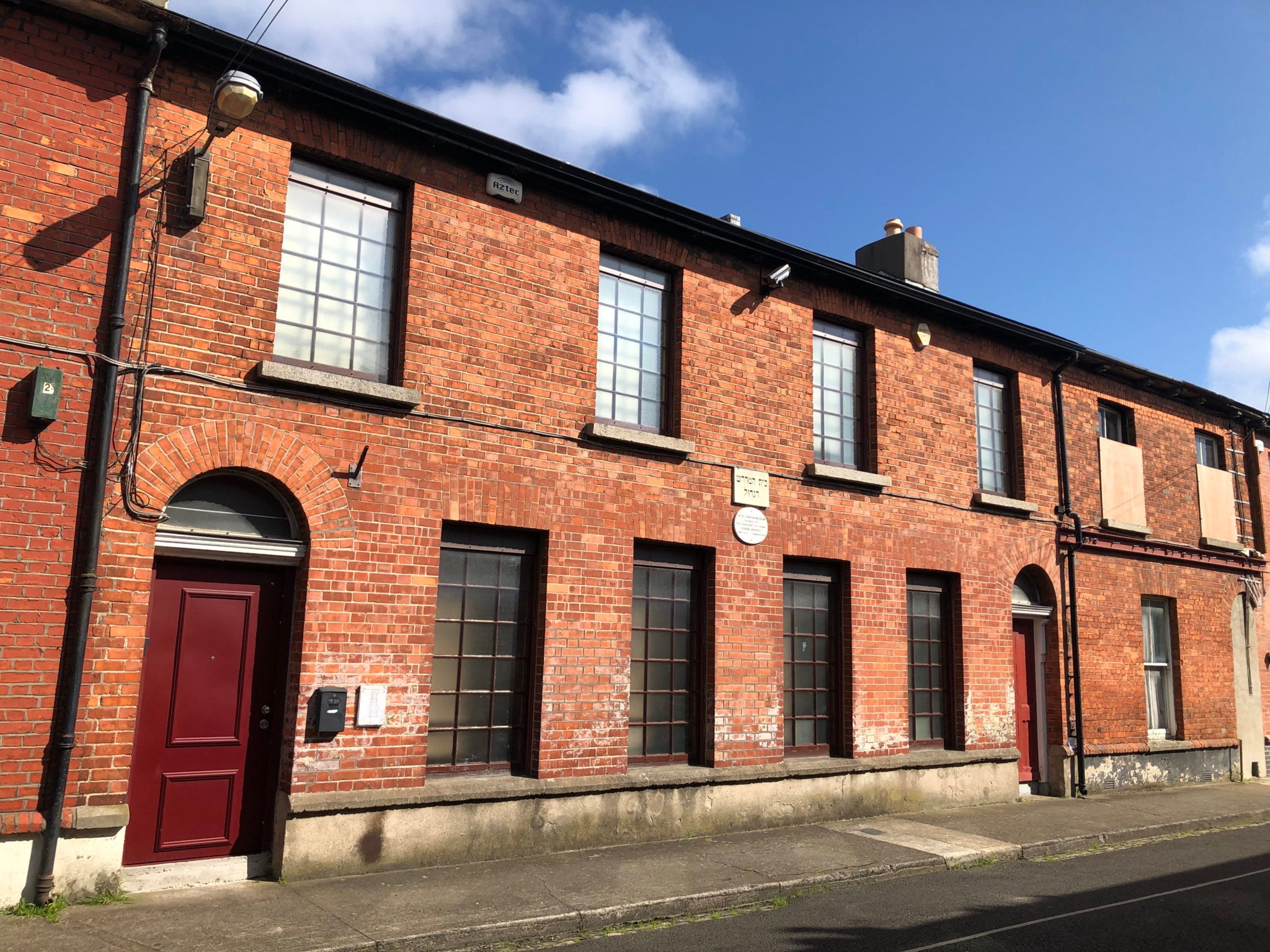
Irish Jewish Museum (Source: Irish Jewish Museum)
Nestled in the heart of Dublin’s historic Portobello district, the Irish Jewish Museum offers a unique window into the story of Ireland’s Jewish community. Housed in a pair of former terraced houses that once served as a synagogue, the museum preserves the memories, traditions, and contributions of Jewish families who helped shape Irish society over the past two centuries. Through its collection of photographs, documents, religious artifacts, and personal stories, the museum chronicles a rich cultural heritage while highlighting the enduring connections between Jewish and Irish identities. More than a repository of history, the Irish Jewish Museum stands as a testament to diversity, resilience, and the multicultural fabric of modern Ireland.
I would like to thank Irish Jewish Historian Yvonne Altman O’Connor for her support of this article.
Museum
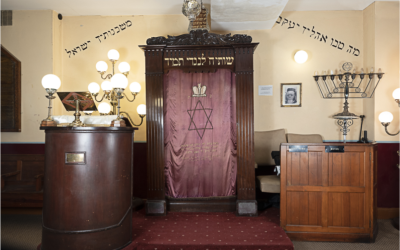
The former synagogue, the Walworth Road Synagogue, housed in two adjoining terraced houses opened in the early 1900’s accommodated around 150 worshippers. As Dublin’s Jewish population gradually moved to the suburbs and declined in number, the Walworth Road Synagogue closed in the early 1970s and remained unused for nearly fifteen years.
Following the establishment of the Irish Jewish Museum Committee in 1984, the building was restored and officially reopened as the Irish Jewish Museum in 1985 by Irish-born Israeli President Chaim Herzog during a state visit to Ireland. Herzog had strong Irish connections, having grown up in Ireland, where his father, Rabbi Dr. Yitzhak Herzog, served as the first Chief Rabbi of Ireland.
Today, the museum preserves and showcases the rich history and cultural heritage of Jewish communities across Ireland, featuring memorabilia and records from Belfast, Cork, Derry, Drogheda, Dublin, Limerick, and Waterford spanning the past 150 years.
Conservation and Preservation
The collection is at the heart of the Irish Jewish Museum, and its preservation is one of the museum’s most important responsibilities. As a volunteer-run institution, conservation work can be costly and is always carried out by qualified professionals who assess and treat items requiring attention.
Over the past decade, the museum has worked with numerous conservators to preserve its collections. The textile collection was carefully assessed, recorded, treated, and appropriately stored or displayed. This was followed by the conservation of the document collection, which was catalogued and rehoused in archival-quality storage. A major two-year project was also undertaken to assess, clean, catalogue, and translate the museum’s extensive book collection.
In addition, works of art and many significant artefacts have undergone conservation treatment. Among the most notable projects were the restoration of an eighteenth-century parochet (Torah curtain), a Moroccan Torah tiq (case), and the Aron Kodesh (Holy Ark) from the former Greenville Hall Synagogue on Dublin’s South Circular Road.
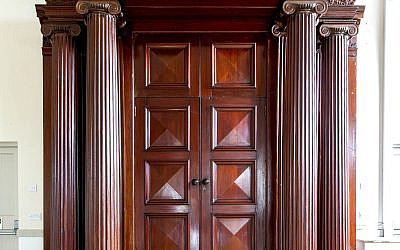
The restoration of the Greenville Hall Ark represents one of the museum’s most significant conservation achievements. Crafted by the cabinetmaker, Abraham Noyek for the synagogue’s opening in 1925, the Ark was a cherished feature of the congregation. After being salvaged when the synagogue closed, it fell into serious disrepair. Through grant assistance and professional conservation, the Ark was painstakingly restored to its former splendor, ensuring that this important piece of Ireland’s Jewish heritage could be preserved for future generations. However, due to lack of space in the museum, the Ark has been dismantled and is currently in storage.
School Visits
The Irish Jewish Museum offers school visits that provide students with an engaging introduction to Jewish history, culture, and religious life. Students can explore authentic artefacts, experience an original synagogue setting, and participate in discussions designed to encourage questions and deeper understanding. Museum staff work closely with teachers to tailor visits to the interests, age group, and curriculum requirements of each class.
Schools may choose from a variety of topics, including the synagogue as a sacred space, exploring the significance of the Ark, Torah scrolls, sacred texts, and the bimah. Students can also learn about the Jewish home as a sacred space, covering Shabbat observance, kosher traditions, prayer, the roles of family members, religious objects such as tefillin and mezuzahs, and important rites of passage including birth, Bar and Bat Mitzvah, marriage, and death.
Other programs include a journey through the Jewish calendar, examining festivals such as Rosh Ha-Shanah, Yom Kippur, Sukkot, Hanukkah, Purim, Pesach, Shavuot, and Tisha B’Av. Dedicated sessions explore the story of Passover, the Haggadah, the Seder, and associated traditions and foods.
Students can also study the history of the Jewish people, from the biblical patriarchs and covenants through the Temple periods, diaspora, emancipation, the Shoah (Holocaust), and the establishment of Israel. Another program focuses on the history of the Irish Jewish community, tracing the arrival of the first settlers, their occupations, neighborhood’s, schools, synagogues, and their contribution to Irish society.
For Transition Year students and above, the museum offers a Holocaust education program examining the origins of antisemitism, Kristallnacht, the ghettos and camp system, the experiences of victims and perpetrators, and the aftermath of the Holocaust. The program also highlights Irish connections to the Holocaust and encourages reflection on tolerance, prejudice, Holocaust denial, and the importance of remembrance in today’s world.
Genealogical Assistance
The Irish Jewish Museum houses an extensive collection of documents, photographs, and memorabilia that offers a valuable resource for those exploring their Irish Jewish heritage. Its exhibits provide a glimpse into the social, cultural, and religious life of Jewish communities in Ireland over the past 150 years. For many visitors, the museum has also been a place of personal discovery, helping them uncover family connections and traces of relatives long thought lost. This is made possible by the extensive collection of Jewish genealogical records of Ireland compiled by Stuart Rosenblatt.
Timeline of the Jews in Ireland
One of the most fascinating resources on the Irish Jewish Museum’s website is its extensive Timeline of the Jewish People, which traces Jewish history from ancient times to the present day. While the full timeline is a priceless educational tool, a brief look at some key moments reveals the long and remarkable connection between Jews and Ireland.
The earliest recorded reference to Jews in Ireland dates from 1079, when the Annals of Innisfallen recorded that five Jews arrived bearing gifts for Toirdhealbhach Ua Briain, the High King of Ireland. Although little is known about this visit, it marks the first documented mention of Jews on Irish soil.
During the medieval period, Jewish life in Ireland was closely linked to developments in England. In 1232, King Henry III granted his Viceroy custody of the King’s Jewish subjects in Ireland. However, this early community disappeared when King Edward I expelled Jews from England and Ireland in 1290.
The expulsion of Jews from Spain in 1492 and later from Portugal led many Sephardic Jews and Conversos to seek refuge throughout Europe. Some settled in Ireland, including William Annyas, a Portuguese Jewish refugee who became Mayor of Youghal, County Cork, in 1555—the first known Jewish mayor in Ireland. His nephew, Francis Anes, also served as Mayor of Youghal on several occasions.
Jewish life in Ireland began to re-emerge in the seventeenth century. Following Oliver Cromwell’s readmission of Jews into the Commonwealth in 1656, Jewish merchants established trade links with Dublin. In 1663, Ireland’s first known synagogue was founded in Crane Lane, Dublin, while Jewish bakers connected to the Pereira family settled in County Meath after supplying bread to King William’s army during the Williamite War.
The community continued to grow, establishing Ireland’s first known Jewish cemetery in Ballybough in 1714. Although the Irish Naturalization Act of 1783 led to a decline in the community and the closure of Dublin’s synagogue, the repeal of the legislation in 1816 encouraged new arrivals from Germany, England, and Eastern Europe.
By 1829, a new synagogue had been established on Stafford Street in Dublin, laying the foundations for the vibrant Irish Jewish community that would flourish throughout the nineteenth and twentieth centuries.
This rich timeline, interpreted by the Irish Jewish Museum, provides a unique insight into more than a thousand years of Jewish history in Ireland and the enduring contributions of Jewish communities to Irish society.
A Must-See Exhibit: Ireland and the Holocaust
Some of the most compelling exhibits at the Irish Jewish Museum explores Ireland’s relationship with the Holocaust and the experiences of Irish Jews during World War II. Through documents, photographs, personal stories, and artefacts, the exhibition examines Ireland’s response to Jewish refugees fleeing Nazi persecution, the realities of Irish neutrality during “The Emergency,” and the impact of the Holocaust on Irish families.
The exhibit includes the experiences of Ettie Steinberg, an Irish-born Jewish woman known to have been murdered in Auschwitz, and the hundred children who were granted permission to come to Ireland after the war following the intervention of Chief Rabbi Herzog. The website also relates the story of the hundreds of Jewish children who found refuge at Millisle Farm in County Down through the Kindertransport program and honors Irish figures such as Hubert Butler and Mary Elmes.
The museum also honors Irish figures such as Hubert Butler and Mary Elmes.
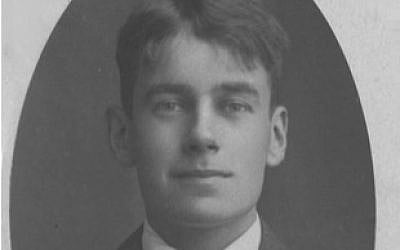
Hubert Butler, a Kilkenny scholar and writer, worked with the Religious Society of Friends in Vienna after the 1938 Evian Conference, helping process documents that enabled over 2,400 Jews to escape Austria.
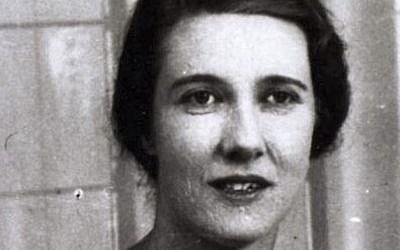
Mary Elmes, a Cork-born Quaker and graduate of Trinity College Dublin, led rescue efforts in Perpignan during World War II, helping save hundreds of Jewish children from Rivesaltes Camp. Arrested by the Gestapo in 1943, she continued her humanitarian work after her release and was later recognized by Yad Vashem as “Righteous Among the Nations,” the only Irish person to receive this honor.
Visitors also learn about Holocaust survivors who made Ireland their home after the war and contributed significantly to Irish society.
Combining powerful personal stories with historical context, the exhibit offers a moving and thought-provoking insight into one of the darkest chapters of human history and its connections to Ireland.
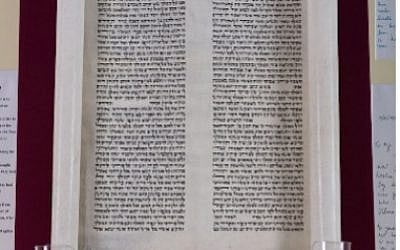
The Scher Family Megillah
Among the notable items in the Irish Jewish Museum collection is the Scher Family Megillah, a handwritten scroll of the Book of Esther. Megillot are traditionally written in Hebrew on parchment, and this example was created in the 1860s in Telzh, Lithuania, by a scribe named Avraham.
Avraham wrote the scroll by hand at night while working in a mill by day, completing it as a parting gift for his son David, who was emigrating to America amid the difficult conditions faced by Jews in the Russian Empire. The scroll became a treasured family heirloom, carried across generations as the family migrated, eventually passing through Cork and remaining in the Scher family line, each transfer accompanied by a letter from father to son.
Today, the Megillah stands as both a sacred object and a powerful symbol of migration, memory, and continuity within Jewish heritage.
The Solomons Family of Dublin
The engaging exhibit on the Solomons Family of Dublin explores the contribution of this talented family in art, medicine, sport, and community leadership. There are many examples of the nationally recognized artist Estella Solomons’ work on display.
Leopold Bloom
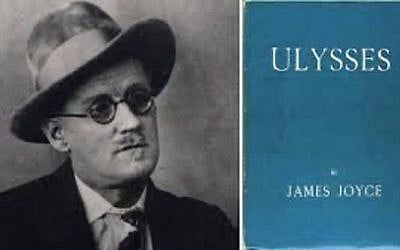
A most interesting little exhibition on the Jewish elements of James Joyce’s novel Ulysses attracts attention from visitors who learn about the real Jewish characters in the novel and the significance of the creation of Leopold Bloom as the first great Jewish figure in modern literature.
In conclusion, the Irish Jewish Museum serves as an important guardian of Ireland’s Jewish heritage, preserving the stories, traditions, and experiences of a community that has made significant contributions to the nation’s cultural and social landscape. By showcasing historical artifacts, personal narratives, and religious traditions, the museum fosters a deeper understanding of Ireland’s diverse past and promotes respect for cultural differences.
The museum has regular events open to the public which highlight aspects of Jewish history and culture. Run entirely by a small group of dedicated volunteers, the museum is known by the many visitors it receives from all around the world for its warm welcome and the unique personal experience offered. It is hoped that the museum will receive support to undertake much necessary refurbishment and expanded exhibition and storage space in the near future.
As both a historical institution and a place of remembrance, the Irish Jewish Museum continues to educate and inspire visitors, ensuring that the legacy of Irish Jewry remains an enduring part of Ireland’s shared history.
Contact Information:
Irish Jewish Museum, 3, Walworth Road, Dublin 8, Ireland
Phone: +353-89-426-3625
Email: info@jewishmuseum.ie
Website: www.jewishmuseum.ie