


A “Horror Show” in Three Acts
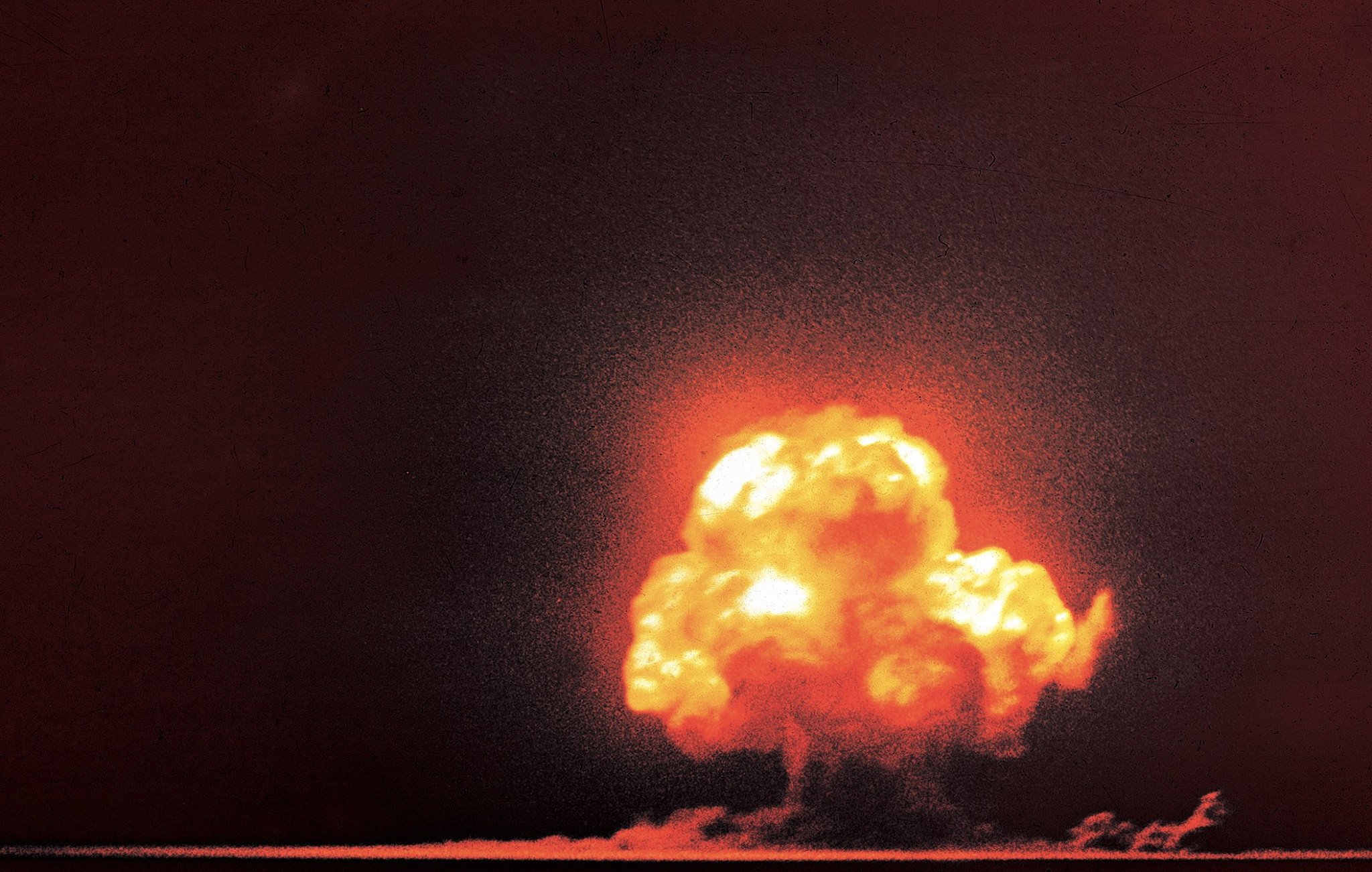
Three acts define a modern-day tragedy, each marking a terrifying escalation in humanity’s capacity for destruction. The first introduced the world to nuclear annihilation. The second demonstrated the devastating reach of radical Islamic terrorism. The third, still unwritten, threatens to combine the two.
Act One: Hiroshima — The Dawn of the Nuclear Age
On August 6, 1945, the United States dropped an atomic bomb on Hiroshima, Japan. With an explosive force equivalent to approximately 15,000 tons of TNT, the weapon killed tens of thousands. The nuclear age had begun.
Act Two: September 11 — Terrorism Comes to America
On September 11, 2001, radical Islamic terrorists turned commercial passenger airplanes into weapons of mass destruction, destroying the World Trade Center and killing nearly 3,000 people. America was attacked on its own soil in an act of unprecedented modern terrorism.
The world witnessed the destructive potential of an organization driven by radical religious ideology, one willing to sacrifice its own members to murder innocent civilians on a massive scale. September 11 demonstrated that America’s enemies did not need conventional armies to inflict extraordinary damage. They needed determination, organization, and the willingness to kill indiscriminately.
Act Three: Iran — The Nuclear Terror Scenario
The third act is still hypothetical, but its ingredients are already present. It is being written now. The Islamic Republic of Iran threatens to bring together the destructive power of Act One with the ideological fanaticism and terrorist methods of Act Two.
The means are unmistakable: uranium-enrichment technology, centrifuges, nuclear scientists, ballistic missiles, and an extensive network of terrorist proxies. Hezbollah, Hamas, the Houthis, and other Iranian-supported organizations have provided Tehran with instruments of violence and influence throughout the Middle East. Iran has spent decades developing the infrastructure to threaten its neighbors and project its power well beyond its borders.
The motive is equally clear. Iran’s leadership has repeatedly called for the destruction of Israel and threatened American interests. Its hostility is not merely rhetorical. It is reflected in decades of terrorism sponsorship, weapons development, regional aggression, and attacks that have cost American lives. The October 7 massacre of Israelis, perpetrated by Hamas, an Iranian-supported terrorist organization, demonstrated the murderous potential of this network.
The opportunity is the variable that should command our attention. American and Israeli military operations have damaged Iran’s nuclear and military infrastructure. But destroying facilities is not the same as eliminating nuclear knowledge, accounting for every stockpile of enriched uranium, or preventing reconstruction. The uncertainty surrounding Iran’s remaining capabilities is itself a dangerous strategic reality. Work around impenetrable Pickax Mountain continues.
This horror show must not be allowed to reach its final act.
There is now an additional and troubling dimension: American domestic politics. Following the 2026 midterm elections, the Democratic “blue wave” has created a hostile congressional environment for President Trump. Investigations, political obstruction, funding battles, and public fatigue could constrain his ability to sustain the pressure necessary to prevent Iran from realizing its nuclear ambitions.
Tehran understands American politics. It may well view the rise of politicians such as Zohran Mamdani, Abdul El-Sayed, and members of the Squad as evidence of growing American divisions over Israel, Iran, and the use of military power. The Iranian leadership could calculate that time, political polarization, and declining public support for confrontation are more effective weapons than another direct military engagement with the United States.
President Donald Trump deserves enormous credit for confronting a danger that successive presidents have failed to resolve. He has demonstrated the courage and willingness to employ American military power against a nuclear threat that previous administrations preferred to manage, negotiate around, or postpone. It was a consequential departure from decades of weak-kneed strategic hesitation.
Unfortunately, President Trump has not consistently made his case to the American people. Military announcements and political declarations are no substitute for a sustained explanation of what is at stake. He has not adequately explained why Iran’s nuclear ambitions represent a fundamentally different danger from another Middle Eastern conflict, why the consequences extend far beyond Israel, or why the costs of prevention may be justified.
Americans deserve a frank, strategic explanation. The President must make clear that this is not simply about defending Israel, supporting a particular Israeli government, or winning another regional confrontation. It is about preventing a hostile regime with an international terrorist network and committed to revolutionary expansion, from acquiring the most destructive weapon.
He must explain the military objectives, the limitations of military action, and the consequences of allowing Iran to rebuild its nuclear program. Americans may disagree about tactics, resent economic disruption, or worry about the cost of another war. Those concerns are legitimate. But the public must understand the stakes rather than be distracted by political maneuvers that obscure the strategic reality.
The Nuclear Nightmare Possibility
Annie Jacobsen’s book, Nuclear War: A Scenario, offers a chilling illustration of how quickly a nuclear crisis could spiral beyond anyone’s control. Her fictional scenario involving North Korea describes how warning systems, military decisions, retaliation, and catastrophic miscalculations could trigger an escalating nuclear exchange before political leaders have time to regain control.
The warning applies equally to the Middle East. Consider the possibility of an Iranian nuclear attack against Israel. Israel would face an existential threat and could respond with devastating force. American involvement could follow. Other nuclear powers might become entangled through alliances, strategic calculations, or misinterpretation of military movements.
What begins as a regional confrontation could become a much wider nuclear crisis. The consequences would not be confined to Tehran or Jerusalem. American and European cities could become targets. International markets and economies could collapse, and populations thousands of miles from the original attack could suffer the consequences.
This is the distinction Americans must understand. The cost of confronting Iran today may be measured in dollars, military resources, and human casualties. The cost of confronting a nuclear-armed Iran tomorrow may be beyond calculation.
Military action carries genuine risks: American casualties, economic disruption, regional instability, and the possibility of a prolonged conflict. But those risks must be weighed against the alternative. They cannot be considered in isolation.
There is no guarantee that military operations alone can permanently eliminate Iran’s nuclear ambitions. Any military success must be followed by intelligence, verification, deterrence, alliances and a sustained strategy to prevent reconstruction. Nevertheless, accepting a nuclear-armed Iran as an inevitable outcome would represent strategic irresponsibility.
The third act has not yet been written. We still have an opportunity to prevent the tragedy. The price of prevention may be high, but the price of a failure so horrific it cannot be measured.