


Mathematics Teaching Professor, Author
A Jewish Legacy: Beth Shalom of Traverse City, Michigan
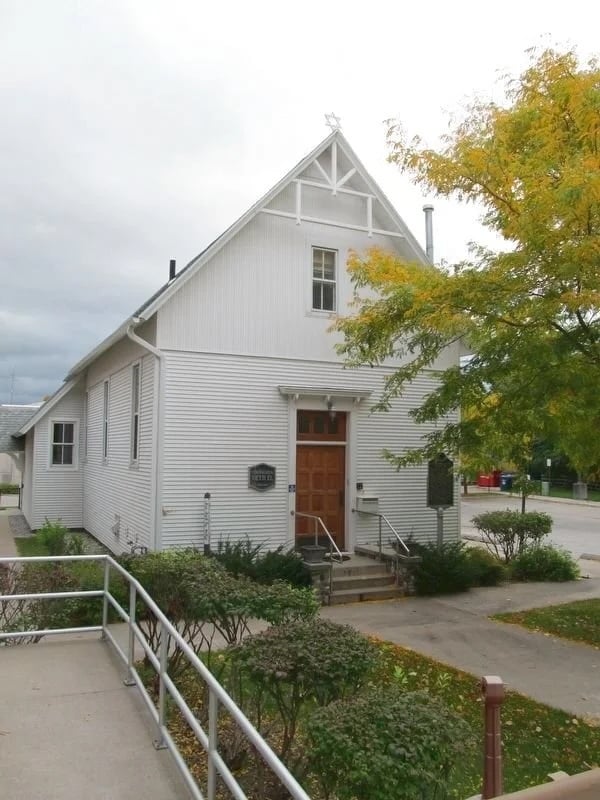
Beth Sholom (Source: Beth Shalom of Traverse City, Michigan)
Congregation Beth Shalom is a small, vibrant Jewish congregation in the beautiful town of Traverse City, Michigan. With a rich history dating back to 1885, it is recognized as the oldest continuously serving synagogue in the state. Throughout its history, the congregation has played an important role in preserving Jewish traditions, fostering community, and providing a place for worship, education, and cultural connection. Through generations of change and growth, Beth Shalom continues to welcome people of all backgrounds and levels of Jewish knowledge and experience, honoring its past while building a vibrant Jewish community in Northern Michigan.
I would like to thank the esteemed Ken Newbury, President of Congregation Beth Shalom, for his guidance.
Education
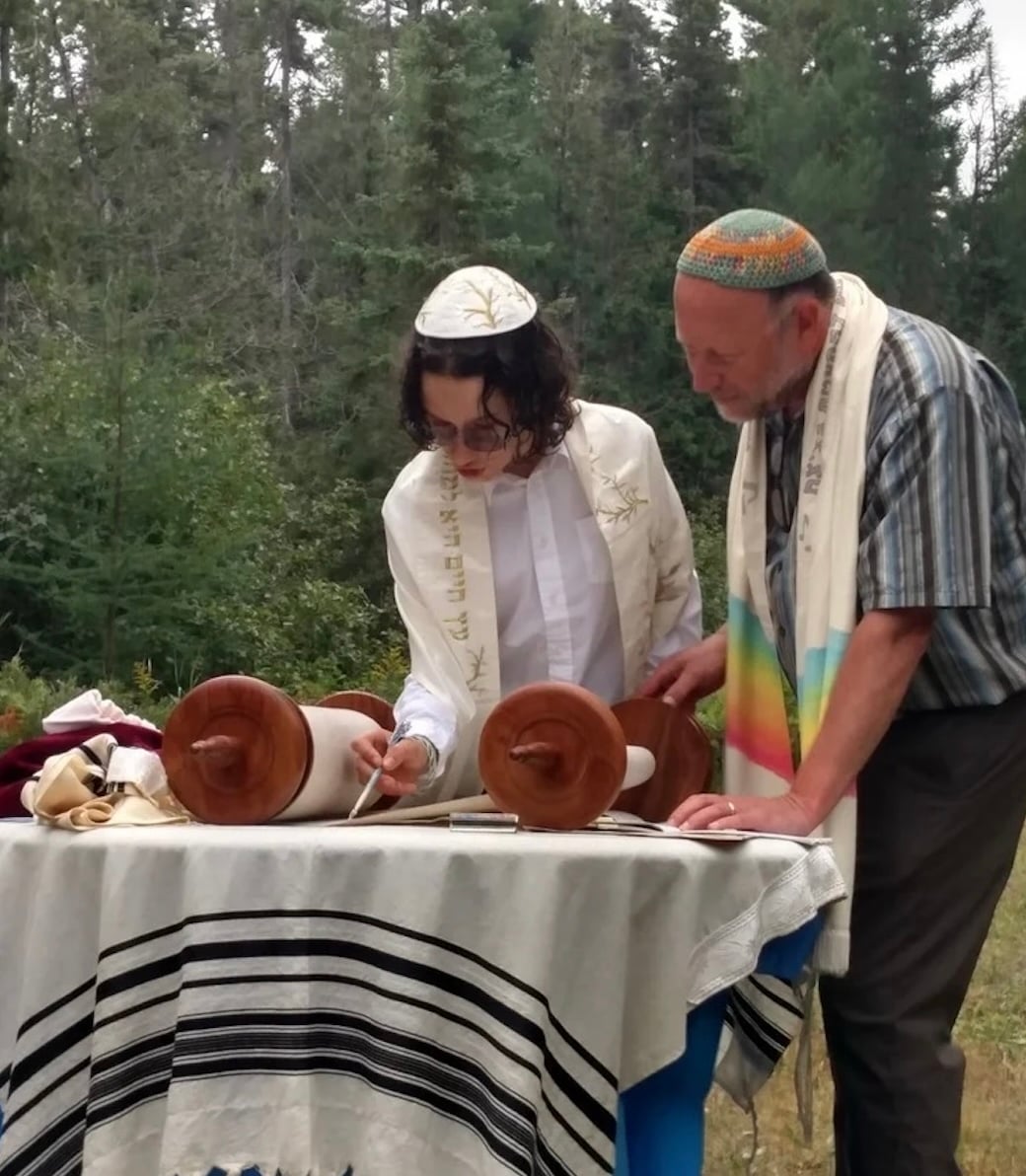
Beth Shalom Synagogue provides spiritual, cultural, and educational programs guided by timeless Jewish values, empowering people to lead engaged lives of purpose. The congregation strives to make Jewish ideas relevant to modern life, remains committed to the practice of social justice, and combines elements of the secular, natural, and traditional to uplift daily life and the surrounding communities.
Rabbi Arnie conducts religious school with children during his weekends in Traverse City. Between his visits, parent-led programming provides additional educational and cultural experiences.
Additional religious school programming is available through the L’Dor v’Dor Consortium. This programming includes monthly online learning sessions facilitated by a Consortium Educator, bimonthly in-person site visits facilitated by a Consortium Educator, scripted lesson plans that congregation members can adapt or use as written, and online beginning Hebrew classes for students in fourth through sixth grades.
L’Dor v’Dor is a group of six congregations from Northern Michigan and Northern Ontario. Its leadership team meets to share resources, plan joint events, learn from one another, and enhance the Jewish experience of its members.
Community
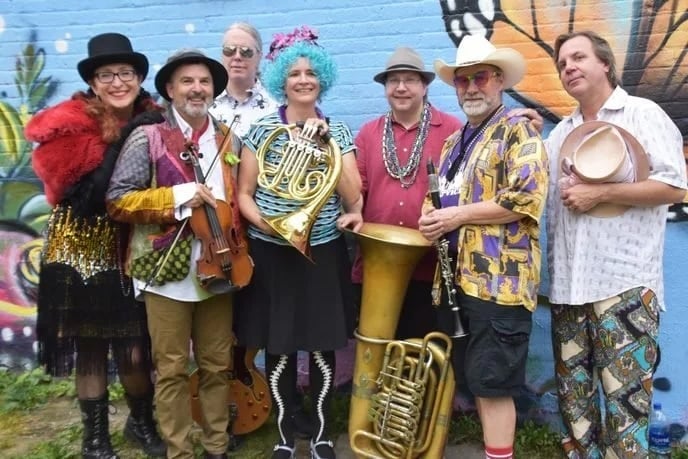
Beth Shalom of Traverse City, Michigan, is a Jewish community grounded in the thoughtful practice of tradition, text, ritual, and music. The congregation welcomes people of all levels of Jewish knowledge and experience. Guided by a vision of an inclusive, warm, participatory, and meaningful community, Beth Shalom is building a vibrant gathering place in the heart of Northern Michigan.
Beth Shalom of Traverse City, Michigan, continues to grow and thrive, bucking the national trend facing many synagogues. The congregation is delighted to have five B’nai Mitzvah celebrations planned over the next two years, reflecting its vitality and promise. Beth Shalom also enjoys a rich and expanding calendar of programs, including a book club, Jewish film programs, and its innovative Brit Ahava program.
The synagogue has broadened its vow renewal opportunities, creating meaningful ways for members to celebrate and reaffirm their individual and collective covenants with the congregation and with one another. Most recently, 84 members gathered at the home of Rabbi Sleutelberg and Robert Crowe for a joyous celebration combining Sukkot and Simchat Torah. The warmth, enthusiasm, and strong turnout were wonderful reminders of the connections that sustain Beth Shalom and the vibrant Jewish community it continues to build.
Historical Backgrounds
The first known Jewish resident of Michigan was Ezekiel Solomon, a fur trader and supplier to the British Army who arrived at Fort Michilimackinac in the summer of 1761. Originally from Berlin, Germany, Solomon traveled by canoe from Montreal to participate in the Great Lakes fur trade. He survived the 1763 Ojibwa attack and massacre at Fort Michilimackinac during Chief Pontiac’s uprising.
In 1850, Temple Beth El was founded in Detroit by twelve German-Jewish families, marking an important milestone in the development of Michigan’s Jewish community.
Jews first arrived in Traverse City, Michigan, during the second half of the nineteenth century. Early Jewish families, including Julius and Mary Steinberg, arrived around 1866. Other early settlers included Julius Levinson, Julius Steinberg, and Solomon Yalomstein, who came to the area during its lumber and agricultural boom.
During this period, many Jewish settlers were attracted to the Grand Traverse area by its prosperous lumber industry and fertile agricultural opportunities. Many initially worked as pack peddlers, continuing a trade practiced by their ancestors. Over time, many settled in the area and established their own businesses or entered into partnerships with fellow Jewish merchants in the pioneer towns.
Julius Levinson, Julius Steinberg, and Solomon Yalomstein became prosperous merchants and served as the first trustees and officers of the Hebrew Congregation. In 1882, Articles of Confederation were written to establish the Hebrew Congregation. Two years later, in 1884, Julius Steinberg purchased five acres of land to serve as a cemetery for its members.
Which brings us to 1885.
In 1885, the United States was experiencing the Gilded Age and the Second Industrial Revolution, a period marked by rapid industrial and technological progress, westward expansion, and significant social and economic inequality. The country had 38 states, and its presidents changed during the year: Chester A. Arthur served until March 4, when Grover Cleveland took office for his first presidential term.
Much of the population still lived without electricity, indoor plumbing, or automobiles. Homes relied on wood or coal stoves for heat, while water was commonly drawn by hand from wells or pumps. At the same time, the nation was gradually transitioning from a predominantly rural, agricultural society to an increasingly urban, factory-based economy. In literature, 1885 also saw the publication of Mark Twain’s Adventures of Huckleberry Finn, which became an important work in American literature.
In 1885, Michigan was a booming industrial and resource-driven state, leading the nation in white pine lumber production while contributing significantly to the Industrial Age through its extensive copper and iron ore mining industries. Lumber mills operated around the clock throughout the Lower Peninsula and river towns, including the Saginaw Valley and Mason County, cutting vast stands of white pine to supply the growing nation with building materials.
In the Upper Peninsula, the Copper Country, particularly around Calumet and Houghton, was a global center of copper production. The mining industry attracted waves of immigrants from Finland, Cornwall, Italy, and Croatia, contributing to Michigan’s growing cultural diversity and industrial development.
In 1885, Traverse City, Michigan, was a bustling, lumber-dependent town that had recently incorporated as a village and was approaching a period of significant transformation as its white pine forests began to dwindle. Guided largely by lumber baron Perry Hannah, often called the “Father of Traverse City,” the local economy depended on sawmills that harvested the region’s abundant white pine. However, residents and community leaders were increasingly aware that the timber supply was running out.
The town’s streets were unpaved and dusty, with horses and wagons serving as the primary means of transportation. Traverse City was entering a period of change as its lumber-driven economy faced an uncertain future.
It was in that year, 1885, that Beth Shalom Synagogue began its journey toward becoming the oldest continuously serving synagogue in the State of Michigan. That same year, Perry Hannah, a local lumber magnate and philanthropist whose contributions played a significant role in the development of Traverse City, donated the land on which the synagogue still stands today.
Ground was broken and a cornerstone was laid in 1885. Through fundraising efforts and mortgages, the congregation was able to finance the synagogue’s construction. Temple Beth El was completed and formally dedicated in March 1886. The Star of David stained-glass window, still visible above the ark today, was donated by Julius Steinberg.
In 1939, the congregation responded to the Joint Distribution Committee’s request to help resettle survivors of Nazi persecution in small towns. The synagogue raised funds to support rescue and resettlement efforts. One of the Torah scrolls in the ark today was salvaged from a synagogue in Prague, Czechoslovakia, that was destroyed during this period.
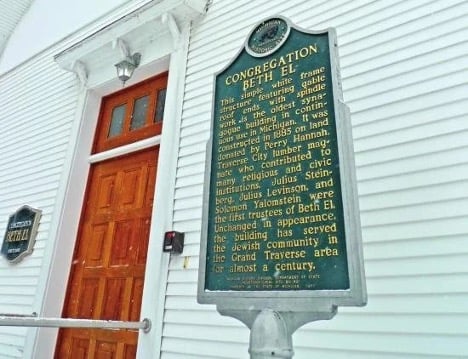
By 1960, growing membership and increased activities made renovations necessary. The sanctuary, basement, and other areas were updated to accommodate the congregation’s needs. In 1977, Congregation Beth El was officially listed on the State Register of Historic Sites in recognition of its distinction as Michigan’s oldest building in continuous use as a synagogue. Governor William G. Milliken unveiled the historic marker during an October celebration.
In August 1997, community leaders formed Congregation Ahavat Shalom with a vision of creating a spiritual, vibrant, active, and welcoming Jewish community in the Grand Traverse area. In 2015, Ahavat Shalom and Beth El merged to become Congregation Beth Shalom.
Today, the congregation offers monthly services and Torah study, educational opportunities, and community events celebrating the High Holy Days, Simchat Torah, Hanukkah, Purim, and Passover.
From its beginnings in 1885 to its present-day role as Congregation Beth Shalom, the synagogue has remained an important part of Jewish life in Traverse City and Northern Michigan. Through generations of change, its commitment to Jewish tradition, education, worship, and community continues to bring people together, preserving its rich history while building a welcoming and meaningful future for generations to come.
Contact Information:
Beth Shalom, PO Box 2445, Traverse City, MI 49685-2445
Email: admin@beth-shalom-tc.org
Website: https://www.beth-shalom-tc.org/