


Mathematics Teaching Professor, Author
A Legacy of Faith and Community: Temple B’nai Israel of Laconia, New Hampshire
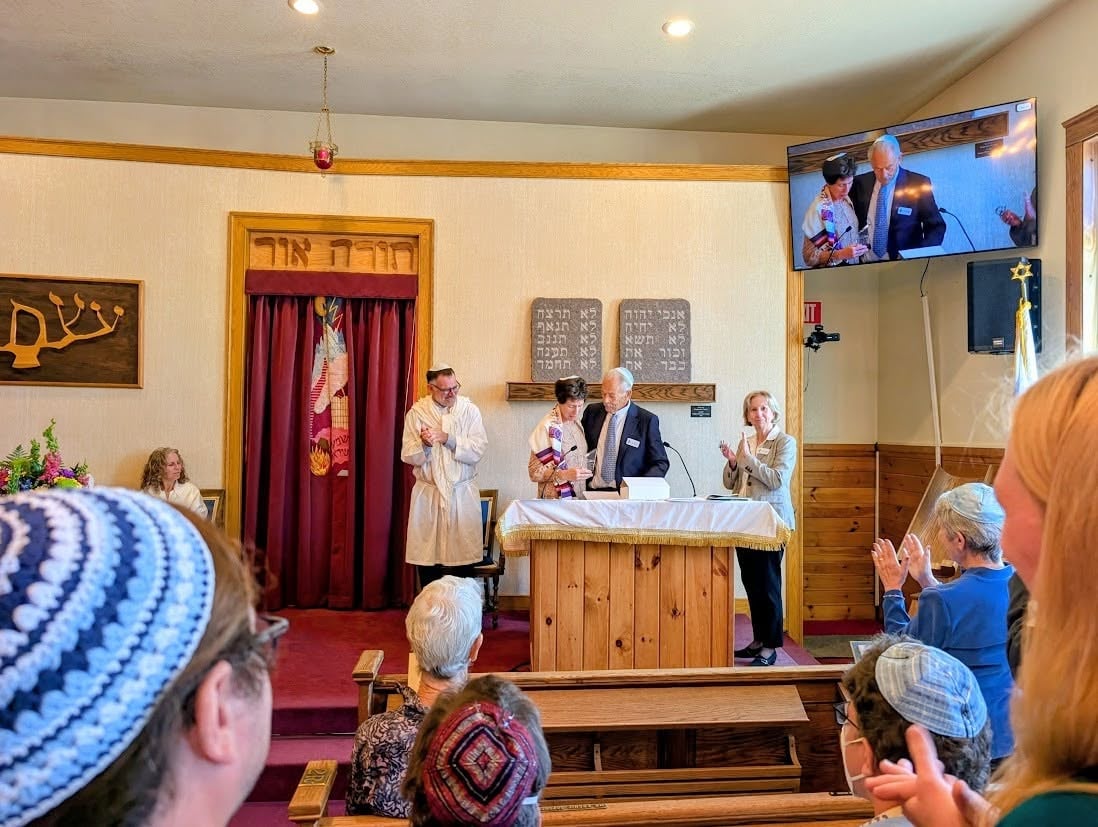
Temple B’nai Israel of Laconia New Hampshire (Source: Temple B'nai Israel of Laconia New Hampshire)
Nestled in Laconia, New Hampshire, Temple B’nai Israel has been a hub of Jewish life in central New Hampshire for more than 100 years. Named the Lakes Region’s “Best Place to Worship” for seven consecutive years, the temple is affiliated with Reform Judaism and welcomes members whose beliefs and traditions range from traditional observance to modern Reform practice.
I would like to thank the esteemed Reva Tankle, President of the TBI Board, for her support and guidance.
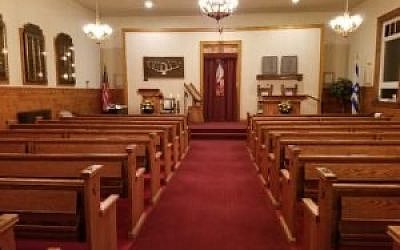
Temple B’nai Israel embraces an inclusive community, welcoming individuals and families whether they are new to Judaism or deeply rooted in their Jewish traditions. The congregation invites all to participate in prayer, study, Tikkun Olam, and support for Israel. Its commitment to the wider community is reflected through the We Care community fundraising program, the New Hampshire Jewish Food Festival, and outreach to local programs and institutions that provide valuable resources and support throughout the Lakes Region.
Religious Events
Temple B’nai Israel of Laconia, New Hampshire, offers traditional Reform Jewish services in its sanctuary and on Zoom, with Shabbat services held approximately every two weeks. The congregation welcomes the community to observe the High Holy Days, including Rosh Hashanah and Yom Kippur, with no tickets required.
As a place of reflection, renewal, and connection, Temple B’nai Israel strives to create a warm and welcoming community where Jewish traditions are cherished, values are passed down, and no one is alone during the most sacred days of the year. Support from members and friends helps sustain the congregation by expanding community outreach and providing programs and support to those in need, maintaining its sacred space so it remains safe and ready for worship, learning, and celebration, and covering essential administrative costs that keep the congregation active throughout the year.
Education
Temple B’nai Israel is pleased with the enthusiastic participation in its Adult Education programs and the positive feedback received from members of the congregation. The strong turnout reflects the community’s interest in lifelong learning, meaningful discussion, and opportunities to deepen their understanding and connection to Jewish traditions and values.
Concerts
Temple B’nai Israel is involved in bringing engaging musical performances to the Lakes Region through its concert series, which has featured tributes such as the Beatles’ pre-Sgt. Pepper era, Elton John’s Yellow Brick Road, the Honky Tonk Chics, and the Jersey Tenors. Through its ‘We Care’ program, the congregation organizes two concerts each year, typically in May and October, with the net proceeds from each event benefiting a different local nonprofit organization.
The program coordinates the performers, venue, logistics, ticket sales, and marketing, while returning the entire net proceeds to the selected beneficiary. Proceeds from one concert benefit the Lakes Region Visiting Nurse Association, which provides accessible, compassionate home health and hospice services throughout New Hampshire’s Lakes Region, supporting individuals and families with care, dignity, comfort, and compassion.
Community/Tikkun Olam
Temple B’nai Israel is an active participant in the Lakes Region Interfaith Council of Religious Groups and plays a positive role in the broader community. The congregation is committed to giving its members opportunities not only to be Jewish, but to do Jewish, putting the values of service, compassion, and Tikkun Olam, repairing and improving the world, into action.
Since 2013, that commitment has been strengthened through the We Care Committee, which has donated more than $400,000 to Lakes Region nonprofit organizations through its We Care Concert Series. The We Care team manages every aspect of the concerts, including hiring performers, contracting venues, coordinating logistics, marketing, and overseeing each event, allowing the selected beneficiaries to enjoy the performances while receiving the entire net proceeds.
Temple B’nai Israel’s commitment to community service extends throughout its congregation and programs. Its Ritual Committee supports a Mitzvah Project requirement for B’nai Mitzvot, while the Building Committee works to maintain a safe and handicap-accessible facility. The Social Action Committee connects members with opportunities to assist under served and disenfranchised individuals, and the Religious School engages students in service projects, including gleaning produce, preparing lunches for the Salvation Army, and visiting the New Hampshire Veterans Home. Congregation members also regularly support “Isaiah 61 Cafe” a shelter for those in need by providing a home cooked meal for the clients at least monthly.
Cemetery
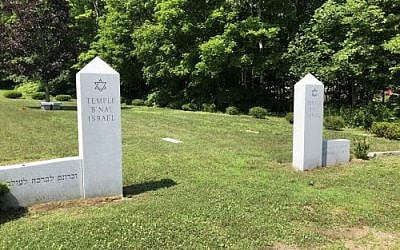
Temple B’nai Israel of Laconia, New Hampshire, proudly opened its Jewish Cemetery in November 1985, providing the Lakes Region with a dedicated place for Jewish individuals and families to be laid to rest. Before the cemetery was established, local Jewish residents often had to purchase burial plots in distant communities or be buried in non-Jewish cemeteries.
Today, Temple B’nai Israel offers members and others the opportunity to purchase individual or group burial plots within a designated Jewish section of Union Cemetery on Academy Street in Laconia. The cemetery is beautifully maintained by a superintendent and board of directors, with perpetual care included as part of the cemetery’s general maintenance, providing families with the assurance that this sacred space will continue to be respectfully cared for.
Historical Backgrounds
Jewish settlement in New Hampshire dates back to the colonial era, with historical records identifying New Castle as the arrival point of the state’s first recorded Jewish settler. In 1693, William Abrams and Aaron Moses reportedly moved from New Castle to Sanbornton, marking an early chapter in the history of Jewish life in New Hampshire. Abraham Isaac, who arrived from Prussia and settled in nearby Portsmouth around 1780, is regarded as the first fully documented Jewish resident of the state. He openly practiced his faith and observed the Sabbath by closing his business.
Larger numbers of Jewish residents began settling in New Hampshire communities during the late 19th century, particularly in Manchester during the 1880s, while Jewish peddlers and shopkeepers also established connections in towns such as Keene. In 1890, Manchester became home to Congregation Adath Yeshurun, recognized as New Hampshire’s first synagogue, marking an important milestone in the development of organized Jewish community life in the state.
Jews began arriving in Laconia, New Hampshire David Sneierson (Snierson) arrived in Laconia, New Hampshire, in 1902, becoming recognized as the first practicing Jewish pioneer and the first Jewish family to settle north of Concord. David Sneierson, a Lithuanian rabbi from Kovno Guberniya, arrived in Laconia in 1902, with official records tracking his family’s residence continuously from around 1905.
Bringing with him a deep knowledge of Talmudic studies, Reb. Sneierson became an important spiritual leader for Jews throughout the Laconia area. He taught Hebrew School, prepared students for Bar Mitzvah, provided guidance on matters of Rabbinic Law and kosher practices, led religious services, and imported and sold kosher meat from Manchester, helping meet the religious needs of the growing Jewish community.
As Laconia’s Jewish community grew and families became more connected, the need for formal religious leadership and a permanent place of worship became increasingly important. In 1920, the community hired its first rabbi under the Orthodox organization that became known as Sons of Israel.
Which brings us to 1936.
In 1936, the United States experienced several significant events against the backdrop of the Great Depression. President Franklin D. Roosevelt was re-elected in a historic landslide, construction of the Hoover Dam was completed, and the nation endured a devastating heat wave that affected communities across the country.
That same year in March 1936, New Hampshire was struck by the Great Flood of 1936, one of the most devastating natural disasters in the state’s history. Governor Styles Bridges described the flood as the worst disaster New Hampshire had experienced at the time. In Manchester, the Merrimack River rose to a record 35 feet, inundating portions of the city and causing widespread damage as powerful currents carried floating ice and debris into buildings and other structures. The catastrophic flooding left a lasting impact on communities throughout the state and became a defining event in New Hampshire’s history.
In 1936, Laconia, New Hampshire, marked an important moment in its local history by celebrating the 200th anniversary of the historic Aquedoctan blockhouse fort. From August 25 to 27, the community held a large three-day festival commemorating the landmark’s history and significance. Laconia also continued its tradition of winter sports, with the annual Laconia Sled Dog Derby drawing attention and community participation. Historic photographs from the era capture the excitement of the derby, including images of the winning sled dog team celebrating downtown, reflecting the community spirit and traditions that characterized Laconia during the 1930s.
It was in that year, 1936, that Max Chertok, Morris Melnick, Samuel Rosen, Kalman Alterman, and Robert Wein came together to provide the resources needed to establish the Sons of Israel Congregation. Before the building was erected, members gathered in one another’s homes or at the local Elks Hall for the High Holy Days. Once the congregation had a building of its own, members quickly recognized the need for additional space and expanded the facility by adding a social hall and small kitchen behind the sanctuary, creating a gathering place that could support both religious services and community activities.
The building they created remains the center of Jewish life in Laconia today as Temple B’nai Israel. The permanent synagogue solidified the Jewish community’s presence in Laconia and continues its legacy as a center of Jewish life, evolving from its Orthodox origins to include Conservative and Reform services.
The Temple B’nai Israel community continued to grow and evolve through the years, with several important additions and milestones. In the 1990s, the kitchen was expanded to accommodate food preparation for the congregation’s popular Jewish Food Festival, which began in 1997 as a hot dog stand and rummage sale. In 2001, the congregation’s commitment to education led to the expansion of its Religious School and the creation of the Nathan and Jennie Brindis Learning Center.
In 1985, the first Jewish cemetery in the Lakes Region was established through the dedication of Irene and Arthur Gordon, both of blessed memory, providing a sacred place for loved ones to rest in peace. Throughout its history, the community has embraced a variety of Jewish traditions, evolving from its Orthodox origins to Conservative Judaism and eventually to Reform services.
Today, Temple B’nai Israel of Laconia remains proud to offer a warm and welcoming environment for individuals and families seeking spiritual connection, meaningful engagement, and a strong sense of community within the Reform Jewish tradition. Its services incorporate both English and Hebrew, creating an inclusive experience that enables members and visitors to participate fully in worship and find spiritual meaning in ways that are personally meaningful to them.
Building on more than a century of Jewish life and community in Laconia, Temple B’nai Israel continues to honor its history while looking toward the future with a commitment to faith, learning, service, and connection.
Contact Information:
Temple B’nai Israel of Laconia New Hampshire, 210 Court Street, Laconia, NH 03246
Phone: (603) 524-704
Email: info@tbinh.org
Website: https://tbinh.org/