


Mathematics Teaching Professor, Author
A Legacy of Faith: Temple Emanuel of Pueblo, Colorado
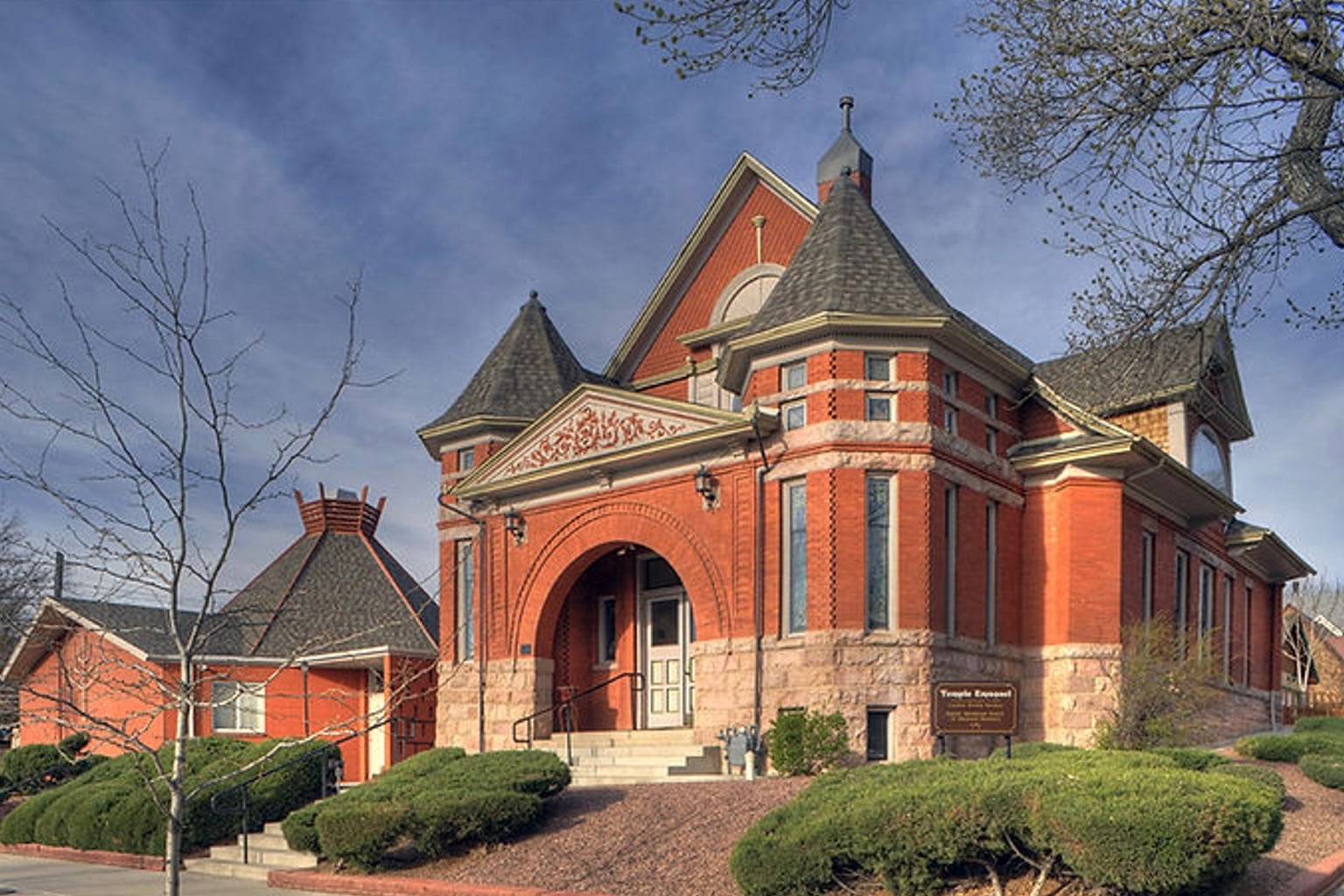
Temple Emanuel, Pueblo Colorado (Source: Temple Emanuel, Pueblo Colorado)
Nestled at 1325 N Grand Avenue in Pueblo, Colorado, Temple Emanuel stands as a remarkable testament to Jewish heritage, perseverance, and community in southern Colorado. As the oldest Jewish house of worship in Pueblo, the synagogue has long served as a spiritual and cultural anchor for generations.
Synagogue
Temple Emanuel Synagogue is a Reform Jewish house of worship situated in one of Pueblo’s oldest neighborhoods, an area rich in Victorian architecture. The building itself is a distinctive and elegant example of Queen Anne style design, enhanced by both classical elements and Richardsonian Romanesque detailing. Its architectural character reflects the aspirations of a community determined to establish both permanence and beauty in their place of worship.
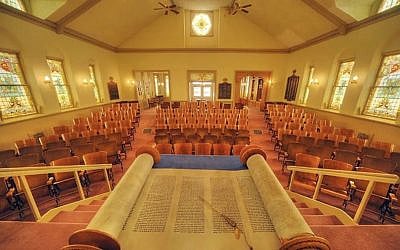
Upon entering the synagogue, visitors are greeted by the raised central platform, known as the bimah, where the Torah is read. As the focal point of Temple Emanuel’s sanctuary, it reflects the central role of worship, learning, and tradition in congregational life.
Torah Scroll
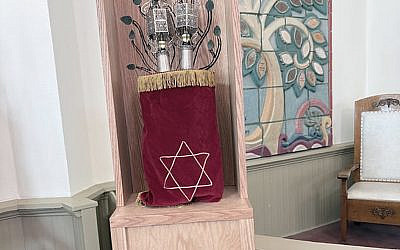
Among the congregation’s most treasured possessions is a remarkable 300-year-old Torah scroll from Romania. This rare and sacred artifact stands as a powerful testament to the rich history and enduring traditions of Jewish life in Eastern Europe. Revered for its age, craftsmanship, and central role in Jewish worship, the scroll connects present-day congregants to centuries of faith, scholarship, and resilience, making it both a spiritual centerpiece and an invaluable link to the past.
Culture
Membership at Temple Emanuel includes weekly Shabbat and holiday services, adult education programs, a congregational newsletter, and a variety of interfaith initiatives that foster learning, dialogue, and community engagement.
History
The year 1857 was a defining and turbulent moment in American history. As the nation edged closer to civil war, it was shaken by landmark Supreme Court decisions, a severe economic depression, and escalating conflicts over slavery, territory, and identity. Amid this period of upheaval, the foundations of Pueblo, Colorado’s Jewish community were quietly taking shape.
Among its earliest pioneers were brothers Henry and Abraham Goldsmith. Born in Bavaria, they immigrated to the United States in 1857 with their wives, Clara and Rosa, seeking opportunity and relief from the persecution faced by many Jews in Europe. After settling in Denver in 1859, the Goldsmiths established themselves as merchants and farmers along Cherry Creek, helping to build the young Colorado Territory.
In 1860, the family suffered a profound loss when Clara Goldsmith died while giving birth to her daughter—the first Jewish child born in Colorado. Her death became a pivotal moment for the territory’s Jewish settlers, who came together to establish Colorado’s first Jewish cemetery, ensuring that she could be laid to rest in accordance with Jewish tradition. The cemetery stood not only as a place of burial but also as one of the earliest institutions of Jewish communal life in Colorado, reflecting the determination of these pioneers to preserve their faith and traditions on the American frontier.
In 1864, a devastating flood destroyed the family’s farm, prompting the Goldsmith family and other settlers to relocate south to Pueblo. This move helped lay the foundation for a growing and enduring Jewish presence in the city. During the late 1800s, many of Pueblo’s Jewish residents worked as merchants, including the owners of Stein Market, as well as outfitters and ranchers, contributing significantly to the city’s economic development.
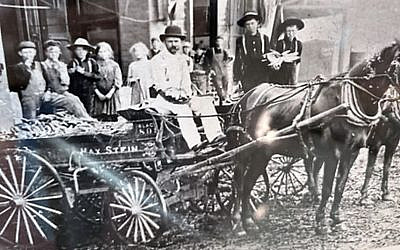
By 1900, the Jewish community in Pueblo had grown to 50 families. That same year, they formally established their congregation and quickly began construction of their synagogue; The synagogue’s original name was Temple Montiforie and the congregation changed the name to Temple Emanuel in 1899.The Temple was built in 4 months between March & July 1900 and was dedicated on September 7, 1900. Today the synagogue remains listed on the National Register of Historic Places.
The congregation reached its peak in 1985, with 65 families actively participating in temple life. Today, approximately 30 families continue to sustain the congregation, maintaining traditions while adapting to the realities of a smaller but dedicated community.
Many of Temple Emanuel’s current members are descendants of Jewish immigrants who arrived in Pueblo between 1864 and 1913, coming from Germany, Poland, Czechoslovakia, and Russia. Their stories—of migration, resilience, and faith—are woven into the fabric of the synagogue itself.
From its frontier-era origins to the present day, Temple Emanuel of Pueblo, Colorado, has stood as more than a historic landmark. It is a living testament to faith, perseverance, and continuity—a lasting embodiment of the vision and determination of the pioneering families who established not only a synagogue, but also a thriving Jewish community. Their legacy endures in the congregation’s ongoing commitment to worship, fellowship, and service, linking generations past and present through a shared heritage that continues to enrich the cultural and spiritual life of Pueblo.
Contact Information:
Temple Emanuel, Pueblo Colorado.
Address: 1325 N Grand Ave, Pueblo, CO 81003, US
Website: https://templeemanuelpueblo.net/