


"Violence can be justifiable, but it will never be legitimate." — Hannah Arendt
A Letter to My Brothers of Every Color
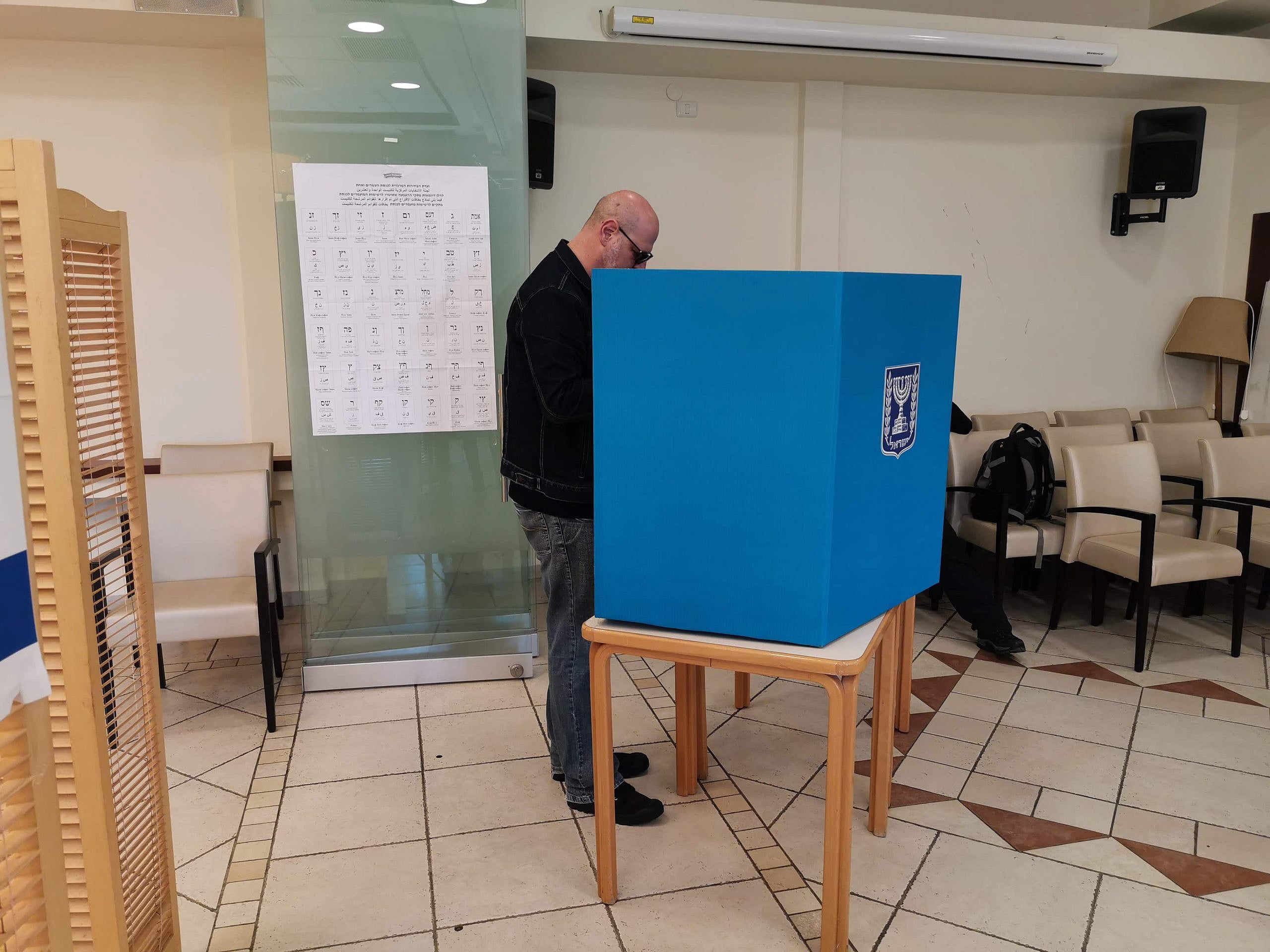
On the twenty-seventh of October, in a nation that likes to sell itself to the world as a start-up, several million of us will vote by the most obsolete method modernity still tolerates, sliding into a blue envelope a scrap of paper bearing a few printed letters. There is no screen, no touch, no app. There is a slip, a booth, and an envelope one licks and seals. Onto that scrap, however, we load far more than a party’s initials. We load the only question that matters, which is what country we wish to find when we wake the following morning.
Before we answer it, a detour of two hundred thousand years is in order. That is roughly when a woman lived, in the savanna of East Africa, her skin very dark, shielded from the equatorial sun by a pigment we have since learned to call eumelanin. She founded nothing and prophesied nothing, and she is the ancestor of every person now drawing breath. We are all of us, with no awkward exceptions, close relatives busily pretending otherwise. Upon that one detail of the body, which on the scale of the species is shallow and of recent vintage, we erected laws, walls, and empires, and there were men who claimed to read a person’s character in the shape of his skull. The science of the past two decades has only completed the embarrassment, demonstrating that European pallor is itself a very late arrival and that the same genes shuffle themselves, without asking permission, among peoples convinced they share nothing.
Here, on this sliver of land, the scattered children of that woman have found one another again after millennia, and a single people, the Jewish one, now runs from Ethiopian dark to Polish pale, by way of Yemen, Morocco, Spain, the Caucasus, India, and the Latin America I myself came from. Beside us live the Muslim Arab and the Christian one, the Druze, the Bedouin, the Circassian, the Palestinian, the whole species pressed into a patch of ground the size of a sigh. We are far too many-colored to afford ordinary racism, and therein lies the bad news. The habit of sorting humanity into the higher and the lower does not die when the material it was made of is exposed. It merely changes materials. Where no color will serve, there are the neighbor’s faith, the grandfather’s origin, the accent, the question of who truly belongs here and who merely lives here. Pigment was only the first pretext, and the laziest.
None of which should be confused with our legitimate quarrel, which is deep and honorable. We argue over the height at which faith is to be placed, above the law or beside it, over the Sabbath kept and the Sabbath free contending for the same sidewalk, over the shape of the state, whether nearer the synagogue or nearer the public square. In a grown-up country both remain standing, side by side, and neither rises on the rubble of the other. The religious man who dreams of a nation in the image of the Torah is not an enemy, and the secular one who wants it to belong to no one in particular is not a traitor. It is precisely to arbitrate between such wishes that a democracy exists.
The danger is the citizen who has wearied of that argument and resolved to cut it short, assigning in advance the roles of who commands and who complies, who owns the house and who is the guest awaiting his eviction notice. We, of all people on earth, ought to recognize that face without needing a mirror, for we were the ones catalogued by a grandfather’s origin and loaded into freight cars by an ideology that filed human flesh the way one files livestock. To watch the same cadence reappear here at home, wrapped now in our own flag, is a spectacle for which the language has no polite word. Nor is the spectacle any monopoly of the fanatic. It belongs, in easy installments, to whoever makes him presentable, to the respectable voter who lends him a ballot and swears the next morning, wide-eyed, that he had no idea where it would lead, to the man in the necktie who distills brutality into a bill and christens the result public order, and to every commentator still calling it an exaggeration on the morning the truncheon knocks at his own door. The hand that raises the club and the hand applauding from across the street end the evening as the same hand, and neither washes clean for having taken the trouble to wear gloves.
That voter, however, is not lost, and I would rather persuade him than bury him. Lending a ballot is not the same as signing a confession, and there is nothing in the world to stop a man from taking his back. Hence the invitation, for the twenty-seventh. Not that you should think as I think, nor that you put my slip into your envelope, since nearly everything, thank goodness, will remain in dispute for the four years to follow. One clause alone goes into no envelope, and it is worth saying without euphemism that the right of minorities simply to exist is not subject to any majority. Whoever intends to revoke it is not offering one opinion among others but requesting permission to lock the door he came in through, and to such a man a democracy owes no courtesy whatever. It owes him defeat. That is the boundary of every victory, the exact point at which the right of the winner ends so that the right of the loser may begin.
To everyone who agrees at least with that, and to everyone still deciding, staying home this year is not keeping your voice but lending it to whoever has already written it off. Vote with your heart, but with a heart that has buried enough not to deceive itself and still refuses to harden. Because that ridiculous scrap of paper inside the blue envelope does not decide whether the color of a man’s skin is worth anything, since the savanna settled that for us long ago. It decides whether we spend the next four years hunting for some new pretext with which to separate our own from the others, or whether, for the first time in two hundred thousand years, we finally stop hunting.