

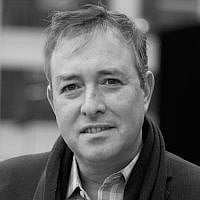
President & CEO, Jewish Funders Network, writing here in his personal capacity.
A Letter to My Fellow Liberal Jews About the NYC Elections
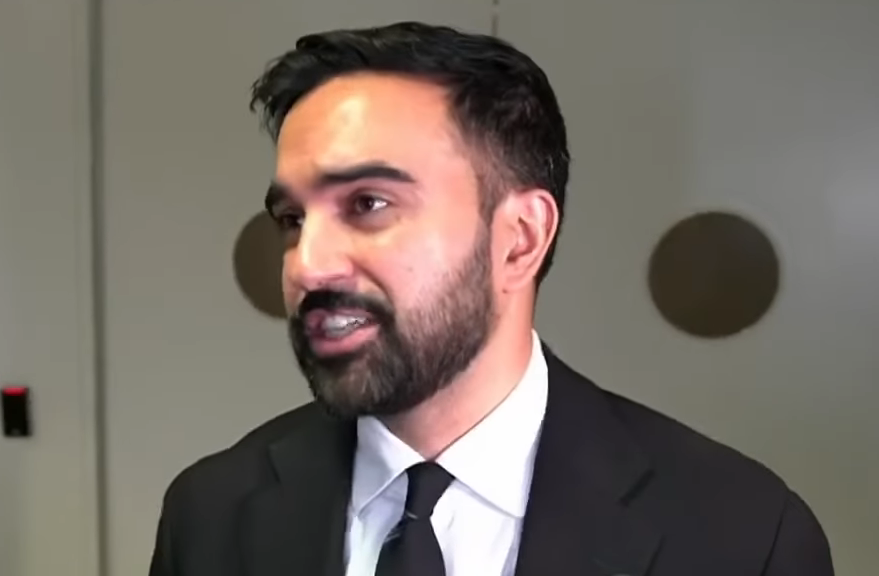
In recent years, America’s political landscape has been defined not only by partisanship but by a deeper realignment—one that pits the institutions of liberal democracy against populist movements rising from both ends of the spectrum. For Jews, these trends are not theoretical. History has shown that whenever liberal democracy weakens, Jews are imperiled. As New Yorkers contemplate electing Zohran Mamdani as mayor, we should understand that his candidacy represents more than a progressive-versus-moderate contest. It is a chapter in a wider struggle over whether reasoned liberal democracy or populist resentment will shape our future.
The Clash Within Civilizations
Political scientist Samuel Huntington famously argued that the post–Cold War world would be defined by a “clash of civilizations,” defined by religion, history, language, tradition and political culture. His model was quickly misused to justify suspicion of entire cultures. The more illuminating framework came from Amartya Sen, who reframed the conflict as a clash within civilizations—a struggle inside every society between enlightenment and obscurantism, tolerance and dogma, rationality and messianism.
Sen’s insight describes today’s America precisely. Both Left and Right are divided internally between democratic rationalists and populist absolutists.
On the Right, traditional market conservatives lost to the populist wave that produced the Tea Party and then MAGA. That movement’s style—resentment, anti-institutionalism, and hostility to nuance—reshaped not only American politics but the global conversation.
On the Left, a similar transformation is underway. The older social-democratic tradition, which accepts free markets tempered by social protections, is challenged by a new populist Left animated by moral purity, ideological zeal, and hostility to liberal traditions.
MAGA is right in at least one ironic sense: Liz Cheney has more in common with liberal Democrats than with Donald Trump. They share not policy but commitment to the same civilizational side—defending Enlightenment values and democratic procedure. In that sense, Trump and Mamdani belong to the same populist revolt against liberal democracy, even if they approach it from opposite poles.
The Populist Mirror
The resemblance is more than stylistic. Both Trump and Mamdani rose from the margins without meaningful administrative experience, portraying themselves as outsiders fighting corrupt elites. Both employ the language of purity versus corruption, of “the people” betrayed by a selfish, cosmopolitan few. Both substitute moral theater for policy detail and treat complexity as conspiracy. Both propose magical fixes—tariffs or rent freezes—to structural problems that require pragmatic compromise.
For Jews, this shared populist ethos is especially dangerous. Every populism eventually turns on us. Its essential narrative divides society into the “virtuous people” and a sinister “elite.” Whether labeled “globalists” or “Zionists,” Jews inevitably find themselves cast as the latter. Liberal democracy, in contrast, has been the only system under which Jews have consistently flourished. No liberal democracy has persecuted Jews; every populist movement has.
Antizionism as the New Antisemitism
Mamdani insists that his opposition to Zionism is a critique of Israeli policy. But antizionism means something far more radical: it asserts that Jews alone have no right to national self-determination. That double standard is inherently antisemitic.
More troubling is the attempt to redefine Judaism itself. Modern antisemitism rarely attacks Jewish religion; it attacks Jewish nationhood. Iran and Turkey, for example, tolerate Judaism as a private faith while persecuting Jews associated with the “Zionist entity.” Mamdani’s rhetoric follows the same pattern. He warmly promises to “be there when your mezuzah falls,” yet remains silent when Jews are assaulted for supporting Israel. He has no issue with Jewish religion but denies Jews the right to define their collective identity. To define another people’s identity for them is, in essence, an act of racism.
Mamdani’s movement also deploys “Zionism” as a floating symbol of evil, much as the far right once used “the Jew.” In his rhetoric, Zionism becomes shorthand for every social ill—racism, capitalism, even climate change. Hence his habit of calling Israel’s war against Hamas “genocide.” The hyperbole is not factual; it is theological. If Zionism is absolute evil, its crimes must be cosmic. But such moral inflation fuels real violence, as seen in Boulder, D.C., and Pittsburgh. When demagogues speak in absolutes, real Jews bleed.
Nor can Mamdani absolve himself by pointing to a handful of anti-Zionist Jews. Every bigotry can find collaborators among the marginalized. His associations with groups such as the DSA and Within Our Lifetime, whose leaders glorified the Hamas massacre of October 7, speak louder than his evasions. When confronted, he hides behind the rhetoric of “inclusivity,” claiming it is not his role to police language—even as he eagerly polices gender pronouns. That selective neutrality is moral cowardice.
Populism in Policy Clothing
Even setting aside antisemitism, Mamdani’s policies exemplify the populist preference for spectacle over substance. His proposed citywide rent freeze would reproduce the failures of every such experiment: shrinking housing supply and discouraging construction. It punishes small landlords while leaving corporate owners untouched. His plan for government-run grocery stores would destroy immigrant-owned bodegas, create monumental corruption, and cost billions—an unscalable model that even Cuba has begun to abandon.
Likewise, his call to tax billionaires ignores mobility. When taxes rise in New York but not in Connecticut or Florida, the wealthy simply move, shrinking the very revenue base needed for social services. Populism thrives on the illusion that resentment itself can fund redistribution.
Slogans like “defund the police” and “globalize the intifada” serve as moral branding for the privileged, what sociologist Rob Henderson calls luxury beliefs: ideas that confer status on those who hold them while imposing costs on others. Wealthy progressives in low-crime neighborhoods can afford to indulge such purity. The working-class Black and Latino voters who overwhelmingly rejected Mamdani cannot.
No Easy Answers
Many Jewish voters are drawn to Mamdani’s rhetoric of social justice, imagining it resonates with prophetic values. But Judaism’s moral vision is not reductionist. It insists on balance—between property and compassion, freedom and responsibility. Jewish law does not sanctify easy slogans; it lives in the tension between competing goods. A rent freeze that undermines small property owners while failing to house the poor violates that spirit of moral complexity.
The desire to make New York affordable is noble, but the pretense that it can be done through populist magic is dishonest. Every great global city—London, Paris, Tokyo, New York—faces the same scarcity. Serious leaders confront limits; demagogues deny them.
The Stakes for Liberal Jews
For Jews, the issue transcends municipal policy. Liberal democracy, however imperfect, has been the only framework that guarantees Jewish safety and flourishing. Populism—whether wearing the red hat of Trump or the socialist pin of Mamdani—inevitably erodes the pluralistic order that protects minorities. The liberal Right has already lost its internal battle to populism; MAGA now owns the conservative camp. If the liberal Left yields to its own populist temptation, Jews will once again be trapped between hostile extremes.
The alternatives are imperfect. Andrew Cuomo, for all his flaws, represents the older centrist tradition that once defined New York: pragmatic, institutional, tethered to the Enlightenment ethos that made America both safe for Jews and a beacon for the world. He may not be your ideal candidate, but politics, as Bismarck said, is the art of the possible.
Choosing Liberalism Over Populism
The coming election is not merely about housing policy or mayoral temperament. It is about whether New York—home to the largest Jewish community outside Israel—will remain anchored in liberal reason or drift toward the populist passions that have undone so many democracies before.
Liberal Jews must remember: every time democracy weakens, Jews suffer. Our task is not only to defend ourselves but to defend the political civilization that made Jewish life in America possible. The clash within our society—between populism and liberalism—is one we cannot afford to lose.