

A liberal democracy must include separation of religion and state
Against the backdrop of our struggle for democracy in Israel, I recently attended a conference in Paris and remembered why the French system of government fascinates me. In France, a liberal democracy was established after many upheavals—the French Revolution in 1789 and the reign of terror that followed until the current Fifth Republic that was founded by Charles de Gaulle in 1958.
One of the most remarkable French phenomena is that a country with a Catholic majority, which fought bloody wars against Protestants, many of whom were expelled to the Netherlands and other Protestant countries, has become a state where secularism is enshrined in the constitution.
The secularism of the state (rather than the secularism or religiosity of an individual or community) was a pillar of the liberalism founded by Locke, Montesquieu, Voltaire, Mill, Rousseau, Spinoza, and others, who argued that in order for a person to be free, they need freedom of religion and freedom from religion.
Some would say that secularism in France has become extreme and turned into a kind of religion, meaning that the rules that uphold it involve anti-liberal coercion. For example, the ban on Muslim women covering their faces in public places is contrary to their religion. It may be argued that this law harms freedom of religion in the name of freedom from religion.
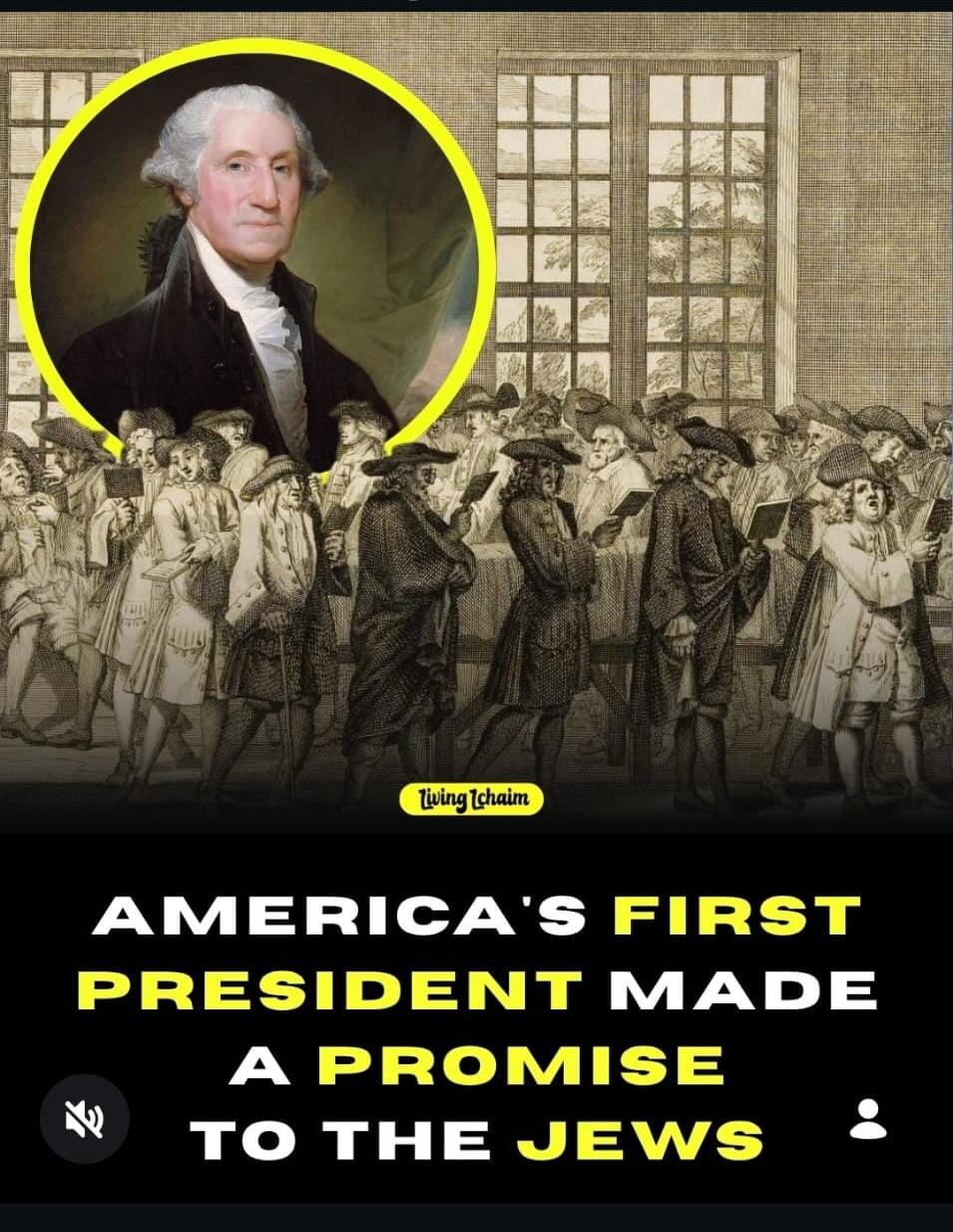
Separation of religion and state has allowed many Jews to find their home in France and the US. France was among the first countries to allow emancipation and provided a home for many Jews from North Africa and Eastern Europe. The United States, despite being a very Protestant country in its early days, allowed Jews to be equal citizens. As the first US president, George Washington wrote in a letter to one of the first Jewish American communities in Newport, Rhode Island, in 1790: “The government of the United States gives no sanction to bigotry and no assistance to persecution.” This tradition of fighting religious coercion originated with the Mayflower and the Puritans, who fled the coercion of the Anglican Church.
In the years I was a diplomat and student in the U.S., I learned to appreciate the fact that American Jews understand what many Israeli Jews do not understand regarding minority rights and the need for the separation of religion and state. Most American Jews expect that their nation-state, as members of the Jewish people, will act in a way that respects others, just as they expect to be treated in the country where they live as a national and religious minority.
I am a secular agnostic who believes there is no empirical evidence for the beliefs of both religious people and atheists. Religion has no role in my life, but my secularism does not contradict the fact that I am very connected to my Jewish identity as a member of a people whom I see as an extended family with a shared past and, I hope, a shared future around values. A people with bonds of solidarity that some call “Jewish peoplehood.”
However, I cannot expect that others adopt my secularism, nor can I impose it on others, as that would contradict my liberal values. Therefore, I prefer American secularism, where there is a separation between religion and state, but there is no hostility toward religion. However, the change in the composition of the U.S. Supreme Court during the Trump era may harm the separation of church and state, as seen in the rulings on abortion.
Secularism was also part of Herzl’s vision for the state of Israel. In his book Altneuland, he wrote: “Will our religious leaders be given influence over the management of the state?” No … “We will leave the priests in their synagogues and the army in its bases. “This was also the approach of Orthodox religious figures like Professor Yeshayahu Leibowitz, who argued that ‘a religion that becomes an instrument of the state ceases to be the service of God.’
Unfortunately, Israel today resembles Iran more than the US or France in terms of the influence of religious leaders. We cannot be a liberal democracy without separation of religion and state. Therefore, this issue must be addressed as part of a future Israeli constitution that preserves Israel as the democratic nation-state of the Jewish people. A state where even those who are not Jewish are equal citizens. A state that does not determine which foods can be brought into hospitals or other public institutions. A state that allows every person and every community to act according to their beliefs and customs.
We need to choose leaders who do not see a contradiction between their faith and the need to respect the secularism of others and the beliefs of people from other religions. The Orthodox establishment in the country is trying to impose a halakhic state on all citizens of Israel, although there are certainly religious people who understand that this harms both religion and the state.
For example, Rabbi Noa Sattath, CEO of the Association for Civil Rights in Israel; Reform Rabbi Gilad Kariv; Shira Ben Sasson, the Orthodox CEO of the New Israel Fund; Rabbi Avi Dabush of the “Rabbinical Call for Human Rights”; politicians from the Religious Zionism movement like Ya’ya Fink, Moshe (Kinley) Torpaz, and Elazar Stern. And last but not least, “Smol Enuni” (The Faithful Left), led by Michael Menkin, all of whom support separation of state and religion.
They differ from me in believing in divine providence, but they are fellow liberals who do not impose their beliefs on others. In this sense, I was also impressed by Mansour Abbas as well. He is a devout Muslim, yet he has no interest in imposing his religiosity on others. These are the allies of secularists like me – Jews, Muslims, and Christians.
Those are the leaders we need, alongside secularists who do not foment antagonism among liberal believers, so that Israel can be a liberal democracy without religious or anti-religious coercion.