Leadership With Heart
A Listening Heart: Guarding the Jewish Future
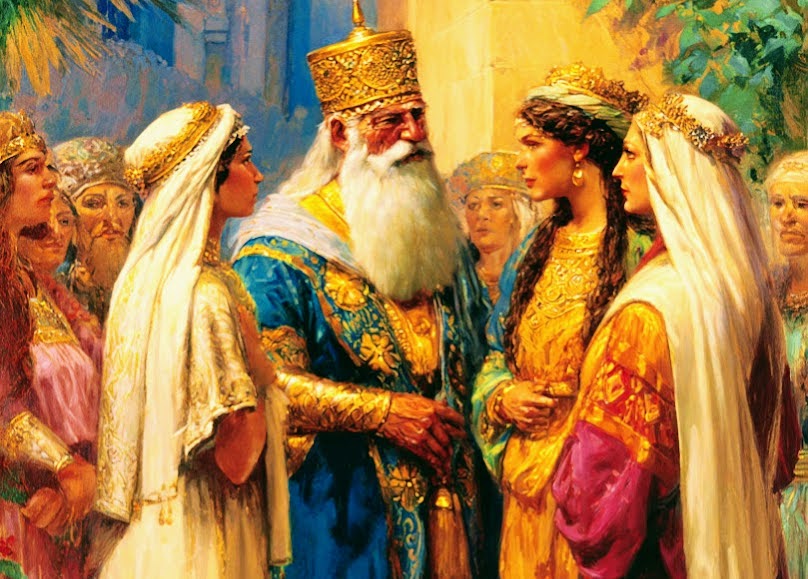
AI generated image via Meta
In the wake of October 7, 2023, the Jewish world finds itself caught in a global “mishearing” of staggering proportions. Across the streets of world capitals, narratives of “occupation” and “resistance” are weaponized to drown out the explicit genocidal intent of Hamas’s charter. We see a cacophony where anti-Zionism and antisemitism blur, threatening to isolate the Jewish state at a moment of profound vulnerability.
Domestically, the lead-up to that dark day revealed a different kind of internal mishearing. Debates over national security, judicial reform, and identity fractured our unity, creating a din where warnings were often dismissed as political noise. This distance between hearing and heeding is not a new phenomenon; it is a haunting echo of a spiritual deafness that has defined the thin line between survival and catastrophe throughout Jewish history.
Biblical Foundations: The Hardened Heart
This week’s Torah portion, Va’era, provides a stark archetype of this deafness. Pharaoh is confronted with the Divine demand to “Let My people go,” yet he remains trapped in a cycle of refusal. Despite the mounting evidence of the plagues, Pharaoh does not hear or heed. Instead, his heart is hardened by a desperate desire to maintain his empire and preserve his power. He chooses the “wisdom” of his own sovereignty over the clear voice of justice, a choice that eventually leads to the ruin of his nation.
This spiritual deafness appears again in Numbers 13. The spies returned from Canaan with a “giant-heavy” report, spreading a contagion of fear that paralyzed the nation. They heard the strength of the walls and the stature of the inhabitants but failed to hear the Divine promise. This mishearing barred an entire generation from entry into the land, despite Joshua and Caleb’s faithful hearing of the promise.
The tragedy reached its zenith with King Solomon. Despite his unparalleled discernment, Solomon’s legacy was defined by a slow erosion of the heart. He sought “wisdom” from God but heard an allowance for unchecked desire for “wives,” amassing 700 wives and 300 concubines who drew him toward pagan altars. By prioritizing political diplomacy over the explicit warning against multiplying foreign wives—from nations like Moab, Ammon, and Edom—Solomon allowed his heart to be turned “after other gods” (1 Kings 11:4). In erecting “high places” for Chemosh and Molech to appease his household, he traded the eternal purity of the Covenant for the superficial peace of his palace, ultimately fracturing a golden age into a divided kingdom.
Historical Missteps: The Seduction of Foreign Echoes
Centuries later, the pattern repeated. During the Maccabean era, Hellenized Jews misinterpreted Greek overtures as cultural progress, eroding Torah observance and inviting Antiochus IV’s desecration of the Temple—until the Hasmoneans reclaimed purity through revolt.
The Second Temple’s destruction in 70 CE stemmed partly from zealots’ overheated rhetoric inflaming Roman ire, as Josephus notes internal strife drowned out calls for restraint. And again, false messiahs like Shabbatai Tzvi in 1666 seduced communities with prophetic words later exposed as delusion, a scandal that bred skepticism and further fractured Sephardic Jewry already reeling from expulsions. Each moment reinforces a singular truth: when we lose the ability to discern the holy from the profane, the community suffers.
Modern Echoes: The Dictator’s Silence
In our own era, we see a contemporary “Pharaoh” in the Ayatollah of Iran. Like the kings of old who ignored the cries of their people, the regime in Tehran remains deaf to the Iranian people’s desperate desire for freedom, prosperity, and peace. While the citizenry calls for dignity and an end to oppression, the Ayatollah pursues a path of hardened isolation—prioritizing a nuclear arsenal, the export of global terrorism, and the rigid imposition of Sharia law. By choosing to build a radical “Islamic Civilization” at the expense of his own people’s humanity, he echoes the ancient error of prioritizing the preservation of a cult of death over the well-being of the nation.
Conclusion: The Vigilance of the Heart
The lessons of Va’era, the Spies, Solomon’s fall, and modern tyranny remind us that the heart does not turn away all at once; it turns one compromise at a time. Whether it is Pharaoh’s ego, the spies’ fear, Solomon’s desire for accommodation, or a modern dictator’s pursuit of power, the result is the same: a failure to hear the truth.
Today, a positive “hearing” is finally emerging within the Jewish world. A historic surge in Aliyah and a renewed sense of shared destiny prove that the Jewish soul still recognizes the call of its ancestral home. For the modern community in Israel and the Diaspora, the challenge remains to maintain a “listening heart” (lev shomea). We must reject passivity and the social accommodation that dilutes our identity. By listening vigilantly to the lessons of the past—from the palaces of Egypt to the streets of modern Tehran—we transform the echoes of ancient falls into a blueprint for enduring strength.
Related Topics
Related Posts