
A Little Courage in a Sea of Cowardice
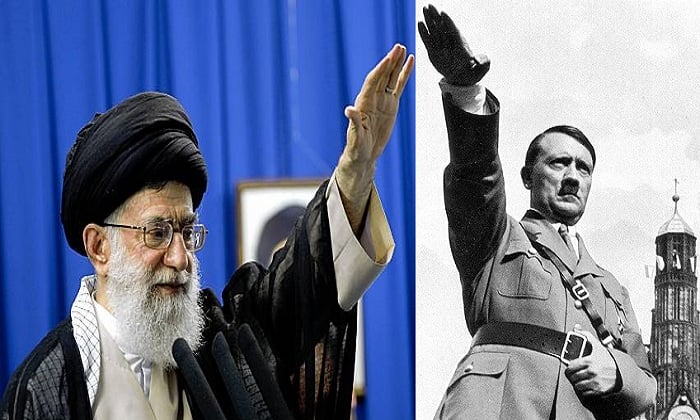
1938, after annexing Austria as part of the German Reich, Adolf Hitler focused his attention on his next target: the Sudetenland, the bordering regions within Czechoslovakian territory. The European community and the League of Nations, both led by the United Kingdom and France, feared that Hitler’s goals would lead to another World War and tried to use diplomacy to halt the German offensives. British Prime Minister Neville Chamberlain struck a deal with Hitler: Germany could conquer the Sudetenland if they agreed to stop any other offensive in the region. The deal was agreed without the knowledge of the Czechoslovakian Government. In September, Hitler conquered the Sudetenland; in the months to come, he conquered the remaining Czech territory and moved on to his next goal: Poland.
Diplomacy was not able to stop World War II from happening and only allowed the Nazi Regime to grow stronger. The lack of checks and balances to those multinational deals showed the fragility of that new international world order that was being formed. Countries preferred to give in to evil rather than attack it. Almost 9 decades later, we seem not to have learned the lesson.
Echoing Nitsche and his concept of the “Eternal Return”, humanity seems to have forgotten that every few decades, a form of evil returns to the surface to threaten the world, leaving no other option than to fight it. In this instance, war becomes moral and valid, yet it requires courage, and again, the international community is lacking it.
While the focus of the world was on the Cold War between the United States and the Soviet Union, the Middle East presented a new threat. In 1979, when the Shah, Mohammad Reza Pahlavi, was deposed from his throne by a radical Islamist group, the Persian nation lost its connection with modernity and the Western world, to start a new mission of destroying it.
The new Islamic Republic of Iran would kick off by taking hostage 66 American and Canadian embassy staffers in response to the asylum request of former Shah, who was being treated for cancer in America. The situation would only be resolved over a year later with the Algiers Accords. This first attack was just a taste of what was yet to come.
In the following years, Iran became the promoter of many Shia Militias across the region, building their terror infrastructure and spreading anti-West ideology. While in the shadows, the Iranian regime saw its main proxy, Hezbollah, globalize the Jihad from Lebanon to Argentina, Saudi Arabia, Singapore, Bulgaria, Panama, and more. Iran kept expanding its proxy list throughout the subsequent years, and with the death of Saddam Hussein in 2006, it took over the responsibility of supporting Hamas.
The Iranian Regime also sought to control its population by any means necessary, enforcing Sharia laws and empowering its morality police to act against any deviation. This led to massive abuse of human rights against anyone who would defy the regime. Women were arrested for not wearing a hijab “properly”, LGBT+ people were murdered, protesters were executed for “treason”, and much more. The once proud Persian people were forced into submission by a foreign ideology.
While the world saw Iraq as the main threat in the region, the Islamic Republic would take another step of empowerment in the 1990s, developing a nuclear weapon program. While the world discussed the feasibility of the program in the United Nations, Iran quietly continued its efforts to elevate its status from regional threat to world threat.
It is not news that Iran is this threat. Back in 2002, U.S. President George W. Bush considered the country to be in the “Axis of Evil”, along with Iraq and North Korea, as countries that sponsored terrorism and sought weapons of mass destruction. In 2017, Saudi Crown Prince Mohammed bin Salman called the Ayatollah Ali Khamenei the “Hitler of the Middle East”, yet the regime continues to spread its terror, without interference.
The threat was personal to Israel, which saw the Iranian regime sponsor terrorism around its borders, with Hamas and Hezbollah being responsible for many attacks, wars, and operations to threaten the Israeli people, while the leaders of the Islamic Republic kept rallying for the annihilation of the Jewish State. In 2015, while addressing the UN General Assembly, Israeli Prime Minister Benjamin Netanyahu criticized the international community for its silence in the face of constant Iranian threats against Israel. A silence that lasted another 10 years.
This deafening silence brought Israel to its darkest hour. As the international community treated the country as a pariah for its war against Iranian proxy Hamas in Gaza, and after suffering two direct attacks from the Islamic Republic, empty calls for diplomacy filled the halls of international organizations. Israel, already mobilized after almost two years of war against 7 fronts, had enough courage to do what it always said was necessary, but no one else was willing to do: On the early hours of June 13, Israel attacked Iran.
The international response was predictable. The UK, France, and the UN reenacted their roles in 1938 exactly, with a word of order: De-escalation. On X, British Prime Minister Keir Starmer did his best Chamberlain impression: “The reports of these strikes are concerning, and we urge all parties to step back and reduce tensions urgently. Escalation serves no one in the region. Stability in the Middle East must be the priority, and we are engaging partners to de-escalate. Now is the time for restraint, calm, and a return to diplomacy.”
While condemning Iran’s nuclear efforts and stating Israel had the right to defend itself, French President Emmanuel Macron also called for de-escalation, as if the war that was brewing for decades was a simple disagreement. The response felt like an embarrassed “Thank you” to Israel for acting where France was not willing.
The United Nations echoed the de-escalation mantra, despite its International Atomic Energy Agency having reported Iran had breached its non-proliferation obligations, something also used as a basis for the attack.
In the Arab world, condemnations were given to Israel, but not much support was given to Iran. The Islamic Republic seems friendless, as it is seen as an antagonist to the Sunni world, and its proxies have lost power following Israel’s war against Hamas, Hezbollah, and the Houthis, and the fall of the Assad regime in Syria. The condemnations also feel empty, as this time, they do not come with pressure or sanctions against Israel. As if the Arab world was also covertly thanking Israel for getting rid of the “Hitler of the Middle East”.
The only European leader with a strong stance on the issue was German Chancellor Friedrich Merz, who in an interview with ZDF praised Israel’s courage:
“This is the dirty work that Israel is doing for all of us. We are also affected by this regime. This Mullah regime has brought death and destruction to the world, with attacks, with murder and manslaughter, with Hezbollah, with Hamas. On 7 October 2023, in Israel, that would never have been possible without the regime in Tehran. Supplying Russia with drones from Tehran: yes, Israel did the dirty work here. I can only say that I have the greatest respect for the fact that the Israeli army had the courage to do this, the Israeli leadership had the courage to do this. Otherwise, we might have seen months and years more of this regime’s terror and then possibly with a nuclear weapon in their hands.”
The courage Merz voiced what most were afraid of saying, yet the “dirty work” done by Israel was performed mostly alone.
Israel’s strongest ally, the United States, appeared full of mixed messages. Last year, under the Biden administration, the country prevented the Israeli government from delivering a heavy blow against the Iranian regime. Now, under the Trump administration, Israel seemed set aside while the US and Iran negotiated a new deal. After two months of empty talks, Israel’s patience ended. If the Israeli attack happened because of US directives, or if Trump joined the Israeli cause after the success of the strikes, is yet to be seen.
As of now (19/06), the US government has refrained from actively engaging in the conflict. While the American president posts “UNCONDITIONAL SURRENDER” on his social media, he also faces a “civil war” between two factions of his government: The conservatives, with a more pro-Israel stance, and the Libertarians, who have an anti-war stance. The Libertarians understand that Israel is not acting on behalf of American interests but is acting as a warmonger paid by tax dollars. They lobby for the liberal world order and the non-engagement of any American force outside its borders. They fail to see that the chant echoed by Iranian proxies is “Death to Israel, Death to America”, and everything they represent, and forget the motto of economist Ludwig von Mises: “Tu ne cede malis, sed contra audentior ito” (do not give in to evil, but proceed more boldly against it).
As the world awaits the American action in Iran, as prophesied by the movie Top Gun Maverick, Israel keeps acting alone.
So far, Israel’s attacks seemed to have surprised even the most optimistic of the Israelis. With most of the military echelon being killed, and most of Iran’s nuclear and offensive weapons capabilities being destroyed. But one more target could forever change the future of the country and region.
Last week, Donald Trump vetoed an attack on Ayatollah Khamenei. Now, it seems to be closer to reality, despite many condemning the possibility. French President Emmanuel Macron said that the fall of Khamenei would lead to chaos, but wouldn’t the alternative also be? Since the start of the Islamic Republic, Shia extremists have taken over a mostly peaceful Persian country and turned it into a terror state. Isn’t returning the country to its people, who have suffered many abuses under the regime, a better option than the status quo?
Ceasefires are for conflicts due to disagreements that could be solved over time, not for ideological conflicts that ask for the annihilation of the other side, and which have been resolute in their mission for over four decades. Since we got this far, why not get rid of a regime that threatens Israel, the Middle East, the Western world, and, most importantly, its population?
While most of Europe continues to rally for de-escalation, Israel continues to fight mostly alone. And while European leaders deem change as chaos, the Middle East seems to be renewed. Since October 7th, 2023, Hezbollah fell, allowing the Lebanese government to reorganize and elect a new president, and the Syrian Assad regime fell after 50 years. It is unclear if all will last or be changed for the better, but sometimes change is necessary and action is required.
But to act, courage is required. Learning from the mistakes of the past to prevent them in the future, and understanding that sometimes war is a means to peace. Perhaps Israelis understand this concept better due to the relentless persecution Jews suffered throughout the centuries. Seeing evil after evil rise and fall, while being unable to act, must have only empowered its people with the advent of the State of Israel. Now Jews don’t need to wait for coward leaders to try diplomacy in the face of evil, and lead to another holocaust. Israel can act on their behalf to defend them, as it also now defends the interests of the Western world. All it takes is a little courage in a sea of cowardice.