

Mathematics Teaching Professor, Author
A Living Legacy: The Story of AKSE and Jewish Life in Wilmington, Delaware
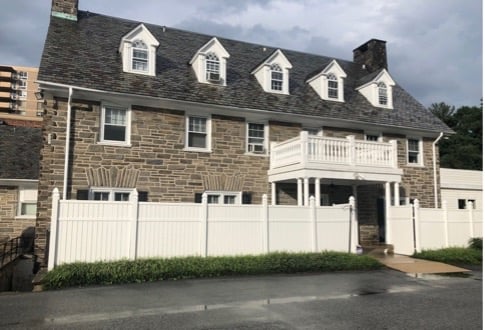
AKSE building 2021-present on Pennsylvania Avenue (Source: Adas Kodesch Shel Emeth, Wilmington, Delaware)
Adas Kodesch Shel Emeth (AKSE) has served Delaware’s Jewish community for 140 years as an innovative, inclusive traditional synagogue in Wilmington. It has a warm and caring congregation that welcomes individuals and families at every stage of life. Through religious, educational, cultural, social, and community service programs, AKSE offers opportunities to grow spiritually and experience the joy of Judaism.
I would like to thank Mark Wagman, VP Community Affairs, Adas Kodesch Shel Emeth, for his support of this article.
Synagogue
Over its 140-year history, AKSE has called four different buildings home—a former church (1898-1907), two buildings constructed by the congregation, one in downtown Wilmington (1908-1962) and one in the suburbs designed by renowned architect and pioneer of modern synagogue design Percival Goodman (1963-2019), and a former mansion (2021-present).
Culture and Religious Events
AKSE sustains a vibrant religious, educational, and cultural life that strengthens both Jewish identity and community connections. Worship traditions remain at the heart of congregational life.
The congregation regularly hosts lectures, discussions, and special programs that explore Jewish history, culture, ethics, and contemporary issues. Notable events have included presentations by distinguished scholars such as Roald Hoffmann, whose lectures examine the relationship between science, religion, and human understanding. These programs provide opportunities for intellectual engagement and lifelong learning within a Jewish framework.
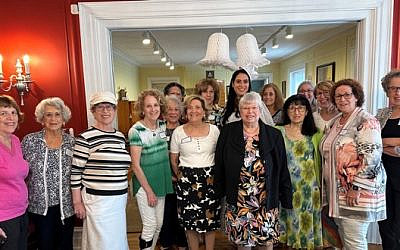
Community support and social responsibility are important aspects of AKSE’s culture. Through the Kesher Committee, congregants assist one another during times of need by providing meals, transportation, visits, and other acts of kindness. The Sisterhood has long been a cornerstone of congregational life, organizing holiday celebrations, social gatherings, fundraising efforts, and community-building activities that strengthen relationships among members.
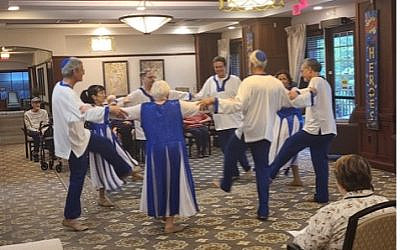
Music and the arts are central to life at AKSE. The synagogue’s High Holiday Choir, active since the 1940s, enriches worship services with traditional and contemporary liturgical music, while Delaware’s only performing adult Israeli folk dance group, Lanetzach Tzi’irim, showcases Jewish culture at community events and festivals.
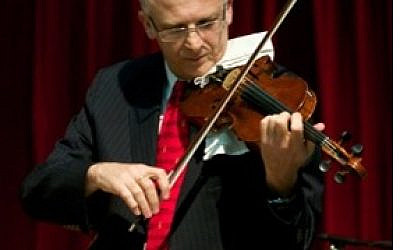
For more than 65 years, AKSE has presented Café Tamar, an annual celebration of Israel featuring music, dance, and cultural performances. Recent programs have featured acclaimed artists including violinist Eliezer Gutman, violist Juliana Castillo, pianist Lotus Cheng, and vocal soloists Cantor Liz Pellen of Congregation Beth Emeth and Talia Goren, highlighting the congregation’s commitment to artistic excellence and cultural engagement.
Educational opportunities for adults include Torah study, Hebrew language instruction, the Chug Ivri Hebrew-speaking club, and Jewish film programs accompanied by group discussions. Together, these religious, cultural, educational, and social activities create a welcoming environment that enriches congregational life and reflects AKSE’s commitment to fostering Jewish learning, tradition, and community engagement.
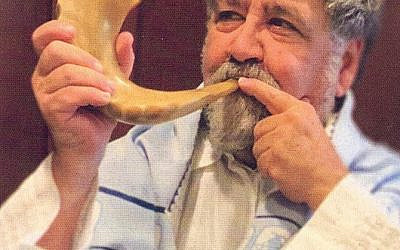
A cherished High Holiday tradition at AKSE is the sounding of the shofar by David Brown, who marked his 50th consecutive year of blowing the shofar for Rosh Hashanah in 5780. His shofar, a high school graduation gift obtained in Israel through Rabbi Gewirtz, holds deep personal significance and connects him to treasured family memories. Over the decades, Brown’s dedication has become an enduring part of the congregation’s worship experience and religious heritage.
Historical Background
Jews first began arriving in Delaware as early as the 1650s, when traders such as Isaac Israel and Isaac Cardozo came to the region to engage in commerce with Native Americans, particularly in the fur trade. During the Colonial era, Jewish settlers were largely merchants and agents of trading companies, including the Dutch West India Company, but their numbers remained small and transient, preventing the establishment of permanent religious institutions.
By the mid-19th century, a modest Jewish population had developed in Wilmington, Dover, and surrounding towns, as Jewish retailers and businessmen opened local shops. The community expanded significantly in 1879 with the formation of the Moses Montefiore Mutual Benefit Society by eighteen Jewish merchants connected to regional trade networks in Philadelphia and Baltimore.
By the 1880s, Wilmington’s Jewish population grew rapidly from fewer than 100 individuals to approximately 500, fueled largely by Eastern European immigration. This growth created distinct cultural differences between earlier, more Americanized and primarily Reform Jewish residents and newer immigrants who maintained more traditional practices.
In 1889, the United States was rapidly expanding and industrializing, reaching 42 states with the admission of North Dakota, South Dakota, Montana, and Washington. It was a period marked by major political shifts, including the presidency of Benjamin Harrison and the Enabling Act that opened the door to new statehoods.
In Delaware, industrial growth and maritime commerce shaped daily life, alongside social change, improved transportation, and the resolution of long-standing boundary issues such as the “Delaware Wedge.”
Having established the congregation four years earlier, it was in this year, 1889, that newcomers chartered Adas Kodesch as a more traditional congregation, reflecting the diversity and evolving nature of Jewish life in the city. Over time, additional congregations emerged, including Ahavath Achim and Chesed Shel Emeth, illustrating both the diversity and occasional divisions within the community. Eventually, shared needs fostered cooperation and consolidation, including the joint purchase of Lombardy Cemetery in 1890.
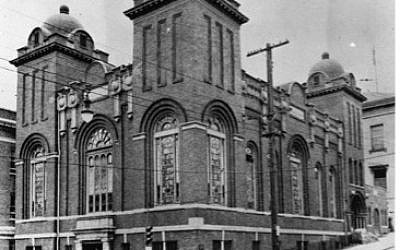
Adas Kodesch’s early home was at Sixth and French Streets, where the congregation purchased the former Zion Lutheran Church in 1898 and later dedicated a new synagogue building on the same site in 1908 as the community grew. This location served as the congregation’s first long-term home and reflected a period of expansion and establishment for Wilmington’s Jewish community.
Beginning in the 1940s, Adas Kodesch implemented a series of changes to meet the needs of an increasingly Americanized Jewish community, including the introduction of mixed seating and the appointment of an American-born rabbi, Rabbi Joseph Singer. Rabbi Singer delivered sermons in English rather than Yiddish and established a Friday evening “late service” at 8:00 p.m., helping to make worship more accessible to a new generation of congregants.
In December 1947, Rabbi Leonard B. Gewirtz became the congregation’s rabbi. Known for his intellectual leadership and dynamic personality, Rabbi Gewirtz worked to make traditional Judaism meaningful within a modern American context. Amid internal debate over whether the congregation should identify as Orthodox or Conservative, he proposed a “Traditional” approach—positioning Adas Kodesch as neither strictly Orthodox nor Conservative, but as a community rooted in tradition while responsive to contemporary Jewish life.
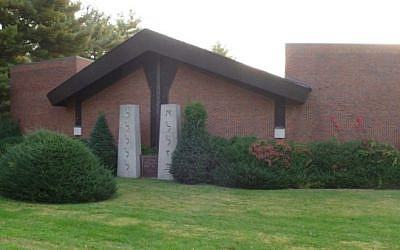
In 1963, following the merger with Chesed Shel Emeth, AKSE dedicated a new synagogue on Washington Boulevard designed by Percival Goodman. The building served the congregation for decades before being sold in 2019. After a transitional period, AKSE moved in 2021 to its current home at 2412 Pennsylvania Avenue, a historic mansion adapted to meet the needs of its present-day congregation.
AKSE’s history reflects a congregation that has continually adapted while remaining rooted in Jewish tradition. From its early beginnings and evolving identity to its changing synagogue homes, the community has grown through periods of change, merger, and renewal. Throughout this journey, AKSE has maintained a strong commitment to religious life, education, and community support.
Today, the congregation continues to thrive through its cultural and artistic programs, educational opportunities, and traditions that bring members together. Whether through worship, music, or community engagement, AKSE remains a vibrant center of Jewish life in Delaware, honoring its past while looking toward the future.
Contact Information:
Adas Kodesch Shel Emeth, 2412 Pennsylvania Ave, Wilmington, Delaware 19806
Phone: 302-762-2705
Email: office@akse.org
Website: https://akse.org/