


A Man Without Counsel
How Florida Turned Justice into a Mechanism of Death
On November 13, 2025, the State of Florida intends to kill a man who has no lawyer.
His name is Bryan Frederick Jennings. He is 67 years old. And unless this execution is stayed, Florida will make history for all the wrong reasons, by carrying out a state-sanctioned killing against a man deprived of his most fundamental constitutional protection: the right to counsel.
This is not hyperbole. It is a matter of record.
Governor Ron DeSantis signed Mr. Jennings’ death warrant on October 10, 2025.
At that very moment, Bryan had been without state post-conviction counsel for more than three years, ever since the passing of his attorney, Martin McClain, one of Florida’s most respected capital defenders. The State knew he was unrepresented. The Attorney General’s Office knew it. Yet the warrant was signed anyway.
Within hours of that signature, the Attorney General’s Office filed a flurry of motions, before any lawyer had even been appointed to defend him. The Capital Collateral Regional Counsel for the Middle Region (CCRC-M) was hastily assigned days later, without access to Bryan’s forty-six-year-old case file, without historical records, without a single prior meeting with their client.
And then came the cruelest stroke of all: the State demanded that the defense file its post-conviction motion within one week. Seven days.
Seven days to study thousands of pages spanning three trials, five state appeals, two federal proceedings, and nearly half a century of legal and human tragedy. Seven days to defend a man’s life, when it took the system forty-six years to decide it was ready to end it.
If this isn’t the definition of mockery, what is?
Florida’s justice system has long justified its death machinery in the name of “finality.” But there is nothing final about a process that drags a man through four decades of isolation only to execute him the moment his lawyer dies. That isn’t justice delayed; it’s justice destroyed.
Bryan Jennings was 20 years old when he was arrested in 1979. Since then, he has endured more than forty-six years of psychological confinement, a punishment the United Nations and the Inter-American Commission on Human Rights both recognize as cruel, inhuman, and degrading. He has survived three separate trials, two canceled verdicts, and endless years of litigation that blurred into a kind of living death.
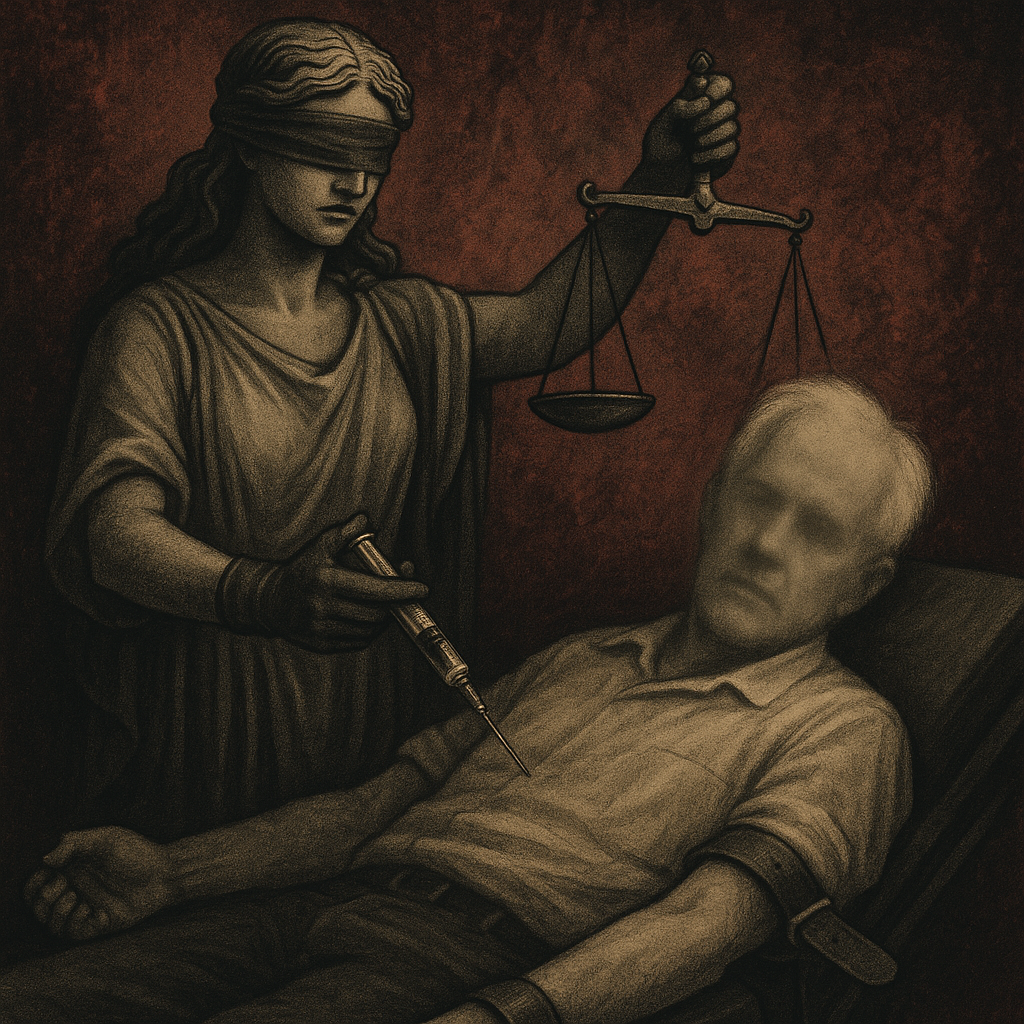
And now, when time itself has already taken its toll, the State seeks to finish what indifference began.
Let us be clear: this case is not about guilt or innocence. It is about whether we still believe in the Constitution we claim to defend. The Sixth Amendment guarantees the right to counsel. The Eighth forbids cruel and unusual punishment. The Fourteenth promises equal protection under the law. Florida is poised to violate all three in a single act.
To execute a man who has no lawyer is not a legal oversight, it is a deliberate collapse of due process.
To choose a defendant precisely because he lacks representation is not justice, it is state opportunism at its most grotesque.
And to demand that new counsel build a defense in a week is not efficiency, it is a bureaucratic execution schedule dressed in the language of law.
We must name this for what it is: a political killing.
In a state where the Governor boasts about the number of warrants he signs, Bryan Jennings is not a person, he is a number in a press release, another body to prove that the machine still works. But that machine is running on moral fumes. It is powered by silence, indifference, and the illusion that this is somehow “justice served.”
If Florida proceeds with this execution, it will send a message to the world that the rule of law in America is conditional, that constitutional rights are privileges for the represented, not protections for the condemned.
It will tell every poor, forgotten, and unrepresented defendant that survival depends not on truth, but on timing. That the death penalty in Florida is no longer a sentence of law, but a sentence of circumstance.
We have seen this before, in the rushed executions of men whose innocence later emerged too late, in the courts that refused to hear final appeals because of filing deadlines, in the Governors who measure justice by political optics rather than human life.
But this case feels different, and darker. Because Bryan Jennings is not simply being killed, he is being erased, legally and morally, by the very system that was supposed to protect him.
Every person who believes in fairness, in law, in humanity, must speak now. Silence, in this moment, equals consent.
Call the Governor’s office. Sign the petitions. Share his story.
Because if the State of Florida kills Bryan Jennings, it will not just end one life. It will declare, publicly and forever, that the Constitution of the United States stops at the death chamber door.
Justice is not vengeance.
Due process is not optional.
And a man without counsel is a man the State has already abandoned.
If we let this execution happen, history will remember it for what it truly is, not an act of justice, but an act of cowardice.