
A Mezuzah Cannot Hide the Dutch Prime Minister’s Hypocrisy
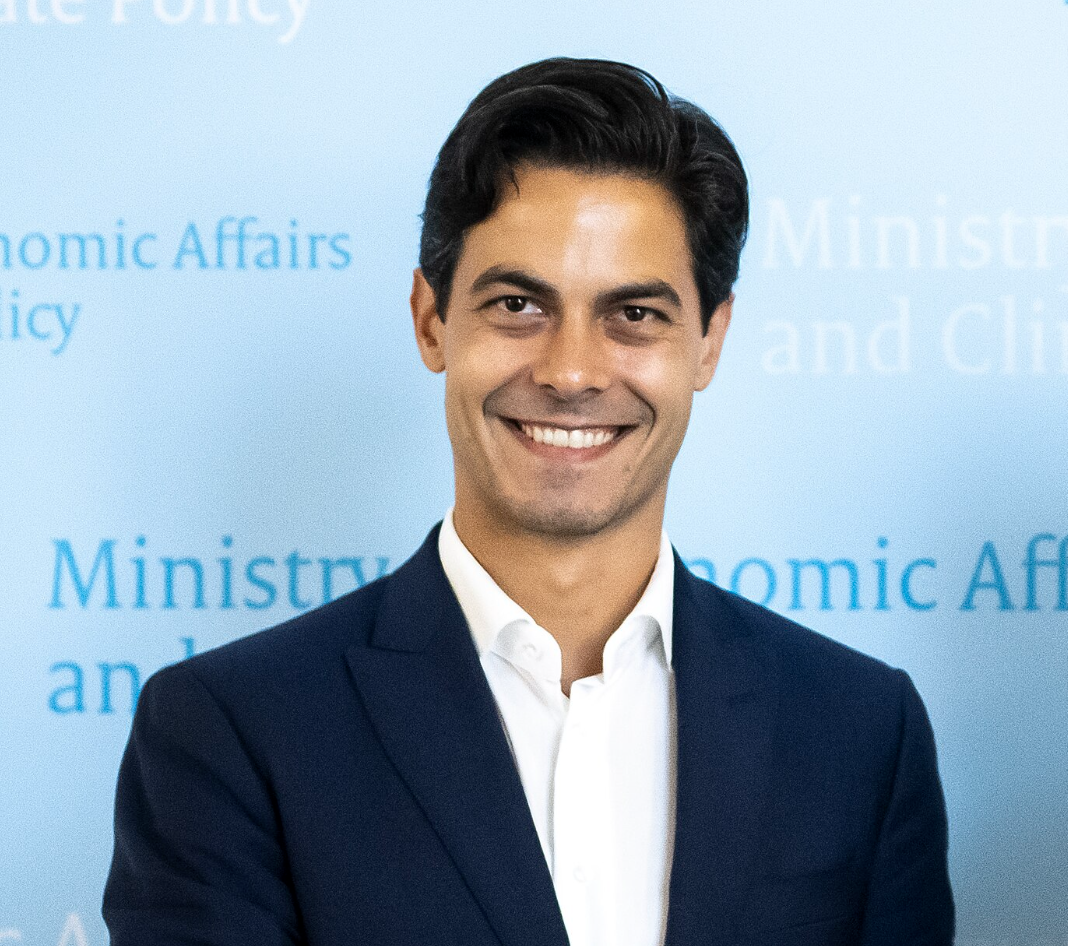
Rob Jetten accused Israel of genocide, demanded sanctions and joined protests against its policies. Now the Dutch prime minister has announced that he placed a mezuzah at his front door in solidarity with Jews. The gesture cannot erase his political record or settle the question of his responsibility for the hostility he helped cultivate toward Israel.
On November 9, during the Kristallnacht commemoration at Amsterdam’s Portuguese Synagogue, Dutch Prime Minister Rob Jetten spoke about the mezuzah he had attached to his front door. Jewish residents, he explained, were increasingly concealing signs of their identity for fear of hostile reactions. His gesture was intended “to show that I want to be prime minister of a country in which Jewish life is visible.” An admirable sentiment. But before celebrating Jetten as a model of solidarity, his own words about Israel deserve to be recalled.
On March 18, 2025, he described Israeli bombardments in parliament as “completely unacceptable and completely inhuman.” He accused the Dutch government of applying double standards by condemning Russian aggression while failing to condemn Israel’s actions with equal clarity. On May 18, he joined the Rode Lijn demonstration in The Hague. Afterwards, he urged the government to do everything in its power to stop Israel from starving and killing innocent Palestinians. The message presented Israel as a perpetrator that had to be compelled to change its conduct. In July, appearing on the Dutch television program ‘Goedenavond Nederland’, Jetten spoke of evidence of ethnic cleansing or genocide. He supported an arms embargo and the withdrawal of trade advantages to force concessions through economic pressure. Even in his October 7, 2025 post marking the second anniversary of the Hamas massacre, Jetten included an accusation of genocide in Gaza.
This was a sustained political position, shared by his party. D66 advocates sanctions against the entire Israeli government, ending purchases of Israeli weapons and terminating the EU’s Association Agreement with Israel. On its official website, the party calls for further trade measures affecting Israel as a whole to stop what it describes as the government’s genocidal policies. In my view, this is a relentless campaign of political and economic pressure that extends well beyond criticism of individual decisions by Benjamin Netanyahu.
Under Jetten’s government, that pressure has also acquired concrete legal consequences. Since September 22, 2026, the Netherlands has prohibited importing, buying and selling goods from Israeli settlements in occupied territories. According to the Dutch government agency RVO, intentional violations can carry a prison sentence of up to six years.
Jetten’s mezuzah takes on a particular significance when set against that policy. Such symbols also hang at the entrances to Jewish homes in places from which his government has banned imports. Had a mezuzah been made in a settlement covered by the restrictions, bringing it into the Netherlands would also fall under the ban, including in a traveller’s personal luggage. The prime minister thus demonstrates solidarity with Jewish life through an object whose import from certain Jewish communities his own government prohibits.
That captures the problem with Jetten’s solidarity: accepting a Jewish symbol is easier than confronting its meaning. For many Jews, identity, tradition and attachment to Israel are inseparable. They cannot be expected to gratefully accept the prime minister’s gesture while politely leaving his accusations against Israel and his sanctions policy outside the door.
Criticism of the Israeli government, including support for sanctions, is not inherently antisemitic. Political responsibility nevertheless includes the language used to conduct that argument and the willingness to confront its consequences when accusations against a state become demands directed at Jewish neighbours, colleagues and classmates.
Three days after Jetten’s synagogue appearance, ‘The Jerusalem Post’ published an interview with Ellen van Praagh, chair of the board of the InterProvincial Chief Rabbinate. She described a country in which visibly Jewish identity increasingly attracts hostility. According to her account, Jews are told to leave the Netherlands and subjected to taunts invoking the Holocaust. The Dutch chief rabbi requires constant security when travelling in public.
Van Praagh also described an exhibition marking the 300th anniversary of Amersfoort’s synagogue that was cancelled over fears for volunteers’ safety, then reinstated after the mayor intervened. She spoke of venues reluctant to host Jewish events and school appearances by Holocaust survivors being cancelled or resisted. These were accounts of Jewish participation in public life being restricted by fear.
I addressed this problem on June 19 in my article ‘The Illusion of Dutch Tolerance‘.
At the same commemoration where Jetten spoke about his mezuzah, Chanan Hertzberger, chair of the Central Jewish Board, addressed precisely this transfer of accusations against Israel onto Dutch Jews. He described people being made to answer for a distant war in their own cities, streets and children’s classrooms. That was Hertzberger’s diagnosis. The prime minister should also have heard it as an invitation to examine his own contribution to the debate.
This is where I see Jetten’s hypocrisy. He has readily attached the gravest moral accusations to Israel, then presented himself as a defender of visible Jewish life without publicly reckoning with his role in intensifying that debate. Solidarity requires confronting people within one’s own political surroundings when they demand declarations from Jews, exclude them or invoke the conflict in the Middle East to excuse intimidation.
A mezuzah at the prime minister’s door can be a meaningful gesture. Its credibility will be measured by whether Jewish citizens can display their own with equal confidence — and whether the man displaying it is prepared to confront the political atmosphere he helped create.