


A Multinational Force in Gaza: UNIFIL Redux?
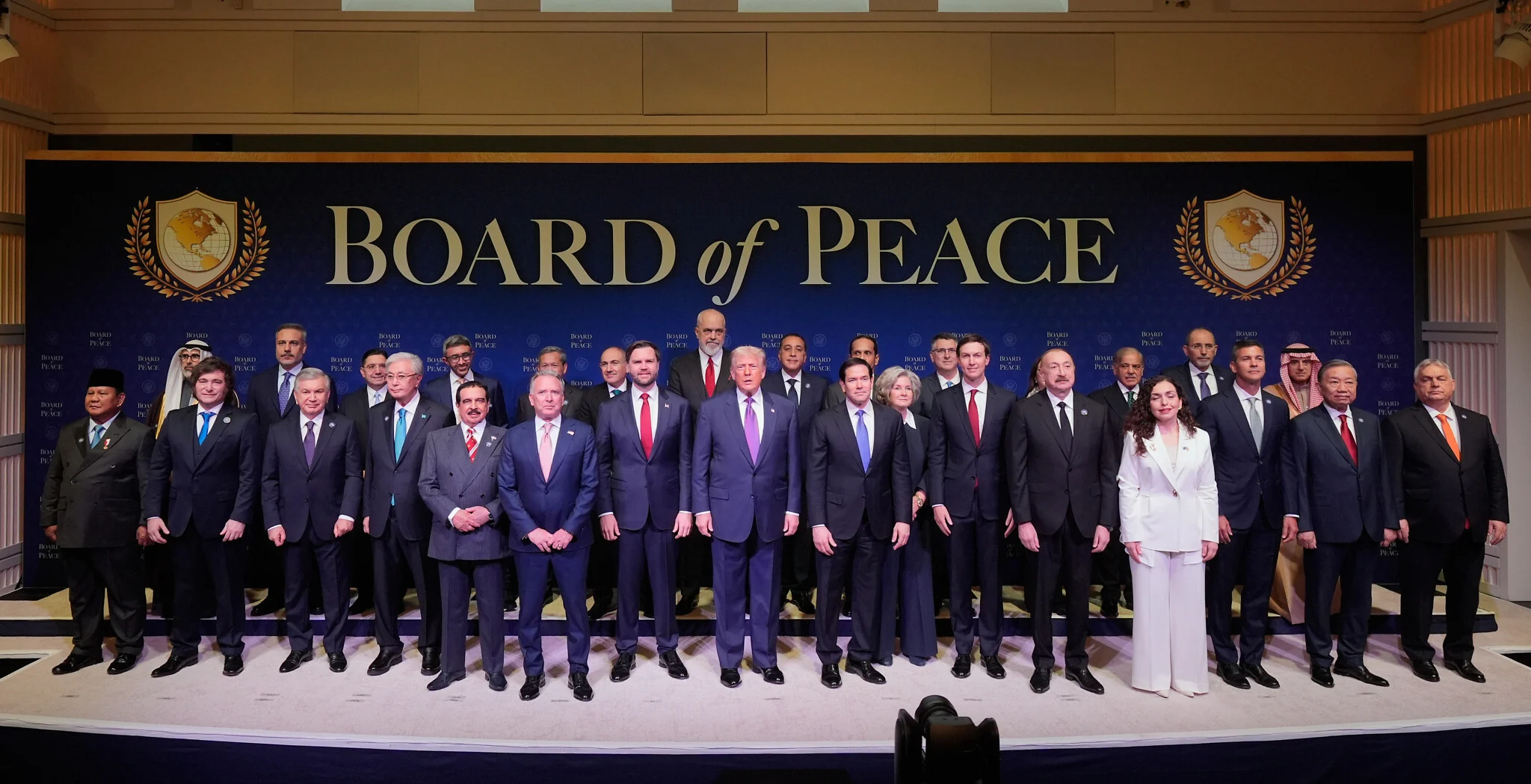
On July 30, the Board of Peace (BoP) surprised the world with its Gaza Roadmap—an agreement with Hamas to implement the second phase of President Trump’s peace plan. To the shock of many, the terror group officially committed to surrendering its weapons, relinquishing any role in governance, and ceding all power to a new Palestinian administration. An International Stabilization Force, or ISF, commanded by U.S. Major General Jasper Jeffers, would play an overarching role holding it all together—monitoring Hamas compliance, training Palestinian police, securing humanitarian aid, and eventually acting as a buffer between the Israel Defense Forces (IDF) and a new Gazan government.
It’s a serious framework that deserves being taken seriously. If successful, it could mark a major turning point in the Israeli-Palestinian conflict. But Middle East history is littered with well-intended frameworks that foundered on implementation. It’s fine to be hopeful about the Roadmap’s promise. It’s essential to anticipate what might go wrong.
The most obvious concern receiving the greatest attention is that the deal hinges on Hamas living up to its word. Are the fanatics who perpetrated October 7—whose entire identity is bound up with their weapons, military infrastructure, and commitment to destroying Israel—really prepared to give it all up and throw themselves onto history’s ash heap? The mere suggestion sounds preposterous. Far more likely that Hamas sees the Roadmap as a necessary tactical retreat, one that provides breathing space to rebuild strength until conditions are ripe for resurgence.
Which brings us to the ISF, which has so far received much less attention—even though its role as the world’s independent, on-the-ground eyes and ears will be crucial not just in verifying Hamas compliance, but in helping prevent its reconstitution in what will inevitably be a fragile effort to build a new Gazan reality.
The first concern is whether the ISF will have the capacity to adequately perform its assigned missions. In February, Jeffers indicated he would command 20,000 foreign soldiers, who would support approximately 12,000 Palestinian police tasked with maintaining internal security. Those numbers are already dangerously low—most guidelines suggest that at least 40,000 to 50,000 personnel would be needed to secure Gaza’s two million people in a post-war environment that will likely remain vulnerable to terrorist remnants for years. But the picture may be much worse than that—we’ve heard from authoritative sources that the ISF could end up with as few as 5,000 soldiers.
Even greater concerns surround how the ISF will perform once deployed in close proximity to both the IDF and the bulk of Gaza’s population. It’s a safe bet that elements from Hamas will eventually try to violate the Roadmap—by rebuilding capabilities and plotting new operations against Israel. Some no doubt will purposefully work to foment situations designed to bring the IDF into conflict with the ISF, with the goal of triggering an international incident that results in condemnation of Israel and the delegitimization of Gaza’s nascent administration.
What happens the first time the IDF gets intelligence that a Hamas planning cell is operating in a populated area, the Palestinian police refuse to act, and Israel demands that the ISF vacate their positions so a raid or precision strike can be conducted? What if the ISF refuses the request—because it doubts Israel’s information, judges IDF action would be too destabilizing, or worries that compliance would jeopardize its relations with the local population? Does Israel back down and compromise its freedom of action? Or does it risk having ISF troops caught in the crossfire and even killed, triggering exactly the kind of blowback Hamas was banking on? It’s not just a theoretical problem. It’s an entirely foreseeable consequence of inserting foreign forces into such a combustible situation, where one of the parties is a terrorist group whose existence depends on the framework’s failure.
The main cautionary tale in this regard, of course, is the United Nations Interim Force in Lebanon, or UNIFIL. Tasked after the 2006 war with supporting the Lebanese army’s efforts to disarm Hezbollah, UNIFIL instead morphed into the buffer Hezbollah hid behind to become the most powerful terrorist army in history. Established with the best intentions, UNIFIL’s multinational contingent invariably ended up prioritizing short-term stability over confronting Hezbollah’s transgressions. Its measure of success became the absence of visible conflict rather than achieving the mission of ensuring disarmament. Israel is still dealing with that failure today.
The risk is real that a small multinational force in Gaza will face the same structural pressures that doomed UNIFIL. Recognizing that danger and dealing with it head on must be a priority for the ISF and BoP. A U.S. general with Jeffers’ credibility is well positioned to manage the risk, but it will require making close coordination with the IDF a permanent operational imperative. That coordination—systematic, detailed, binding—needs to be built into the ISF’s rules of engagement from the start, not negotiated on the fly as problems emerge.
The Roadmap is worth testing. An effective ISF is essential for it to succeed. But UNIFIL’s lesson—that a multinational force can easily slip from being part of the solution to part of the problem—needs to be absorbed before the first foreign soldier is deployed, not after.
John Hannah, a Senior Fellow at the Jewish Institute for National Security of America (JINSA), served as national security advisor to former Vice President Dick Cheney. Rena Gabber, a research associate at JINSA, assisted in compiling this essay.