
A Name, a Strategy, or a Shield? The Curious Rebranding of Yair Netanyahu
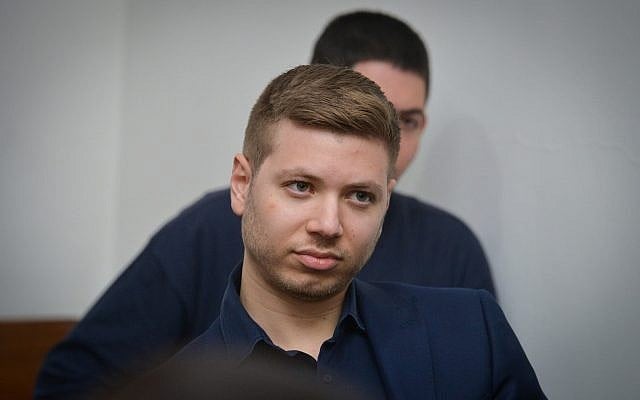
The recent revelation that Yair Netanyahu has legally changed his name to “Yonatan Hun” in official tax filings is more than a mere bureaucratic footnote. It is a striking, if not baffling, development that invites us to examine the psychological and political theater surrounding the Prime Minister’s family. While official name changes in Israel are irreversible for a seven-year period, this maneuver—occurring while the younger Netanyahu remains ensconced in Florida—demands a deeper analysis of the motives that drive the behaviors of a political dynasty increasingly detached from the Israeli public they claim to represent.
The Aesthetics of Identity
The choice of “Yonatan Hun” is heavy with historical and personal symbolism. “Yonatan” calls back to the Prime Minister’s brother, Yoni, the fallen hero of Entebbe whose legacy has been central to the Netanyahu family narrative for decades. “Hun,” conversely, is the original surname of the Prime Minister’s late father-in-law, Shmuel Ben-Artzi.
By adopting these monikers, Yair is effectively curating his own genealogy, grafting his identity onto the most idealized elements of the family tree. This isn’t just a change of nomenclature; it is an attempt to control the brand. For a figure who has built his public persona as a firebrand social media provocateur, this suggests a calculated effort to distance himself from the baggage of his birth name—a name now synonymous with a period of intense societal polarization in Israel—while paradoxically cloaking himself in the mantle of ancestral prestige.
The Florida Distance and Political Accountability
It is impossible to ignore the context of this decision. Yair Netanyahu has resided in Florida for years, largely insulating himself from the very realities—the security threats, the economic strain, and the internal strife—that his father’s cabinet policies have exacerbated.
When we observe this name change in the context of his ongoing political activism from abroad, it raises uncomfortable questions about accountability. If one is to lead a movement, particularly one that has fueled radical rhetoric within the Israeli right, does one not owe it to that movement to stand under one’s own name? By adopting an alias, he gains the luxury of operational anonymity, an “out” that most Israelis, who bear the direct consequences of the cabinet’s policies, simply do not possess.
A Pattern of Detachment
This is not the first time a member of the Prime Minister’s immediate circle has sought the cover of an alias. We have seen similar behaviors before—Avner Netanyahu’s use of “Avi Segal” for property transactions, and even the Prime Minister’s own student-era shift to “Ben Nitai.” While these examples are often dismissed as security-related or for ease of pronunciation, the cumulative effect paints a picture of a family that views identity as fluid, transactional, and ultimately, a tool of convenience.
For the Israeli public, watching a leader’s son undergo such a transformation while the country grapples with existential threats and a deteriorating social fabric is deeply jarring. It reflects a fundamental disconnect. While the average citizen is tethered to the consequences of the state’s direction, the elite in the Prime Minister’s circle seem to move through the world in a state of perpetual reinvention, sheltered by wealth, foreign residency, and legal re-branding.
The Question of Substance
Ultimately, the name change changes nothing. A change on a tax form does not alter the political footprint Yair Netanyahu has left on our society. His rhetoric, his alignments with far-right figures abroad, and his role in stoking division remain unchanged by a new surname.
If this maneuver was intended to obscure or to reposition, it has failed to do the one thing truly required of a public figure: to look the public in the eye. As we continue to hold the current government accountable for its radical course, we must also recognize that these tactical retreats into aliases are symptomatic of a broader refusal to own the impact of their influence. Whether he calls himself Yair or Yonatan, the responsibilities—and the consequences—of his actions remain, anchored firmly to the man himself.