


A Nation Anchored by Her People
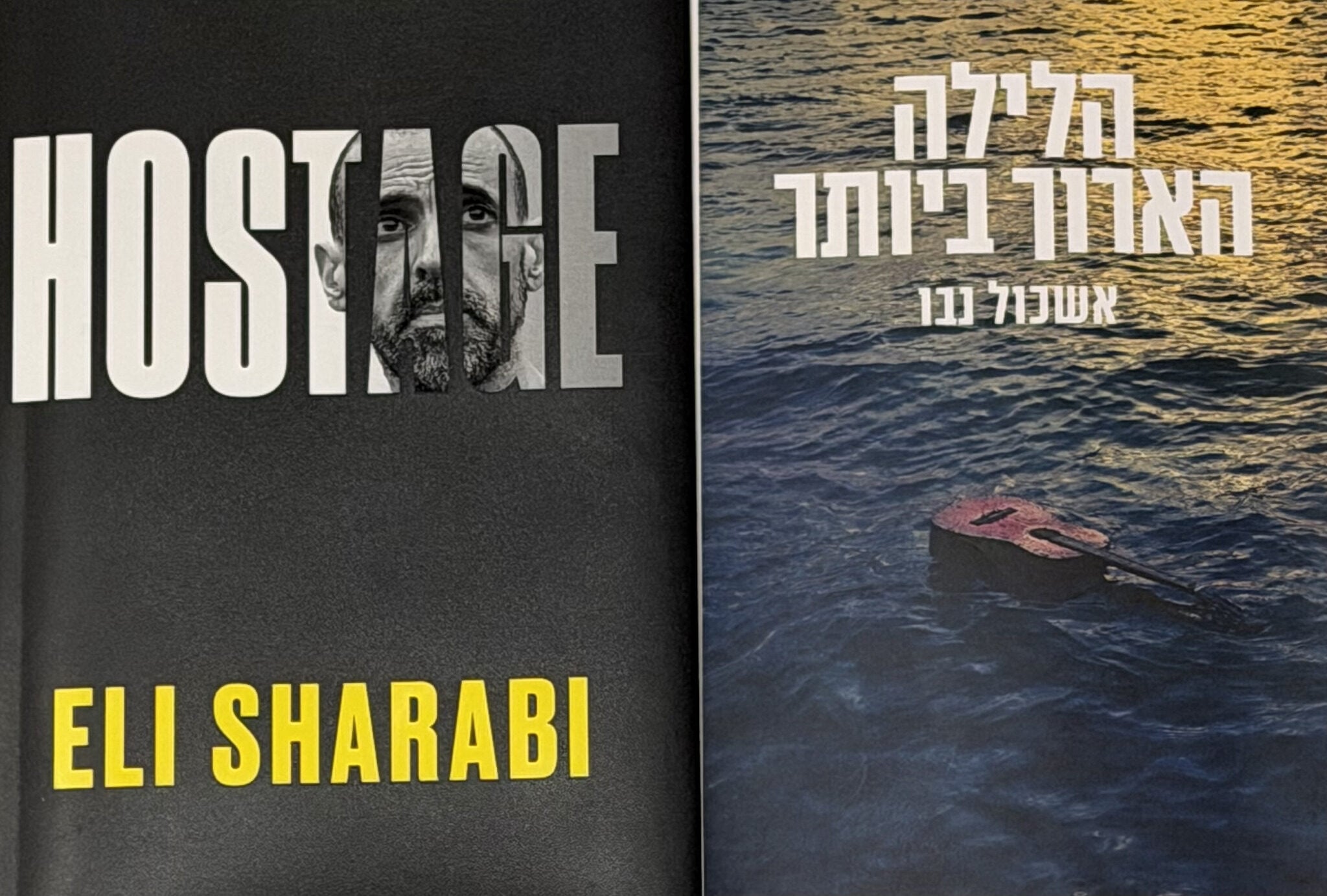
Over the past two months I’ve somehow made my way through four books: Eshkol Nevo’s The Longest Night, as well as the hostage memoirs of Eli Sharabi, Avinatan Or, and Omer Shem Tov.

Though Nevo’s novel is fiction, it serves in its own way as a modern midrash of post–Oct. 7 Israel. An orphaned nation, unanchored (an image he returns to again and again), waiting for the war to end, seeking her way back home.
The book opens with a midrash from the Babylonian Talmud (Bava Batra):
“Rabbah bar bar Ḥana said: Once we were traveling on a ship, and we saw a certain fish with sand settled on its back and reeds growing on it. We thought it was dry land, so we climbed up and baked and cooked on its back. When its back got hot, it turned over, and had the ship not been nearby, we would have drowned.”
The novel plays out the question implicit at the heart of this midrash: At what point will the fish on which we have settled turn over?
That image took me back to the opening days of the war.
When I landed in Israel three years ago, on Oct. 11, just four days after the war began, I was picked up by one of my beloved cousins. On the way to my nephew’s shiva at my sister’s home, I remember my cousin saying something like: אין מנהיג בישראל – There is no leader in Israel.
He spoke of how deafening the silence was from Israel’s elected leadership, and how Biden, who had addressed Israel earlier that day, steadied the ship. My cousin shared how important Biden’s message was for him, and how orphaned he – and the nation – had felt until that moment.
Ironically, Biden did so not only with his words, but by actually sending warships to the Middle East.
I sensed that same desperation among Israelis in the lead-up to Trump’s election – a desperation to find a leader, even beyond the nation’s own borders, who would anchor and deliver it.
Yet in those early weeks in October, while I was still in Israel, my mother said to me on several occasions, with great pain, “Such a great nation, such terrible leadership.” Her words reflected the reality at the time: the country’s social and civic infrastructure had come to a halt, and society was simply being held up by volunteer task forces that had formed throughout the land. An orphaned nation insisting on rising again.
And it is my mother’s insistence – that the nation is great – that I found echoed in the words of Sharabi, Or, and Shem Tov. Each of their stories is unique, but their capacity to make deliberate choices, both in captivity and after, bespeaks a profound wisdom, a love of life, and a love of Israel.
I found myself anchored by their words.
I’ve imagined these three as three of the four sons who attend the Passover Seder, and I have left the fourth seat at the table empty. It represents hostages like Hersh Goldberg-Polin (whose wisdom is felt in Sharabi’s book) or Ori Danino (whose heroism is felt in Shem Tov’s book), who did not come back and who therefore will not tell their stories in their own words.
I’ve also imagined them as the sons whom the Haggadah depicts so differently, realizing that they may well represent very different political parties as well.
Israel may not have had the leaders it deserves. But it has had, and continues to have, many of the people it deserves. People who have anchored all of Israel these past three years.
Avinatan Or’s memoir concludes with these words:
“Israeli society stretches across just 500 kilometers. We are small enough to succeed.
“We are close enough, and crowded enough together, that we can get to know one another, build deeper connections, and eliminate the sense of estrangement and the fear of everything that is different or unlike what we have been told about one another. We are small enough to succeed.
“The event we all experienced on that terrible morning is an event of historic proportions.
“It is only fitting that our social mobilization from this point forward should be on that same scale.
“We must always strive and keep working.
“And we must always remember that tolerance is essential.”
Small enough to succeed. And, as my mother insists, also more than great enough to succeed.
I pray that the leaders who get elected this week – to lead a coalition or to serve in opposition – truly anchor us at this time, and truly prove deserving of the people they are elected to lead.