


A Nation That Dwells Alone? A New Yorker’s Time in Israel During the Iran War
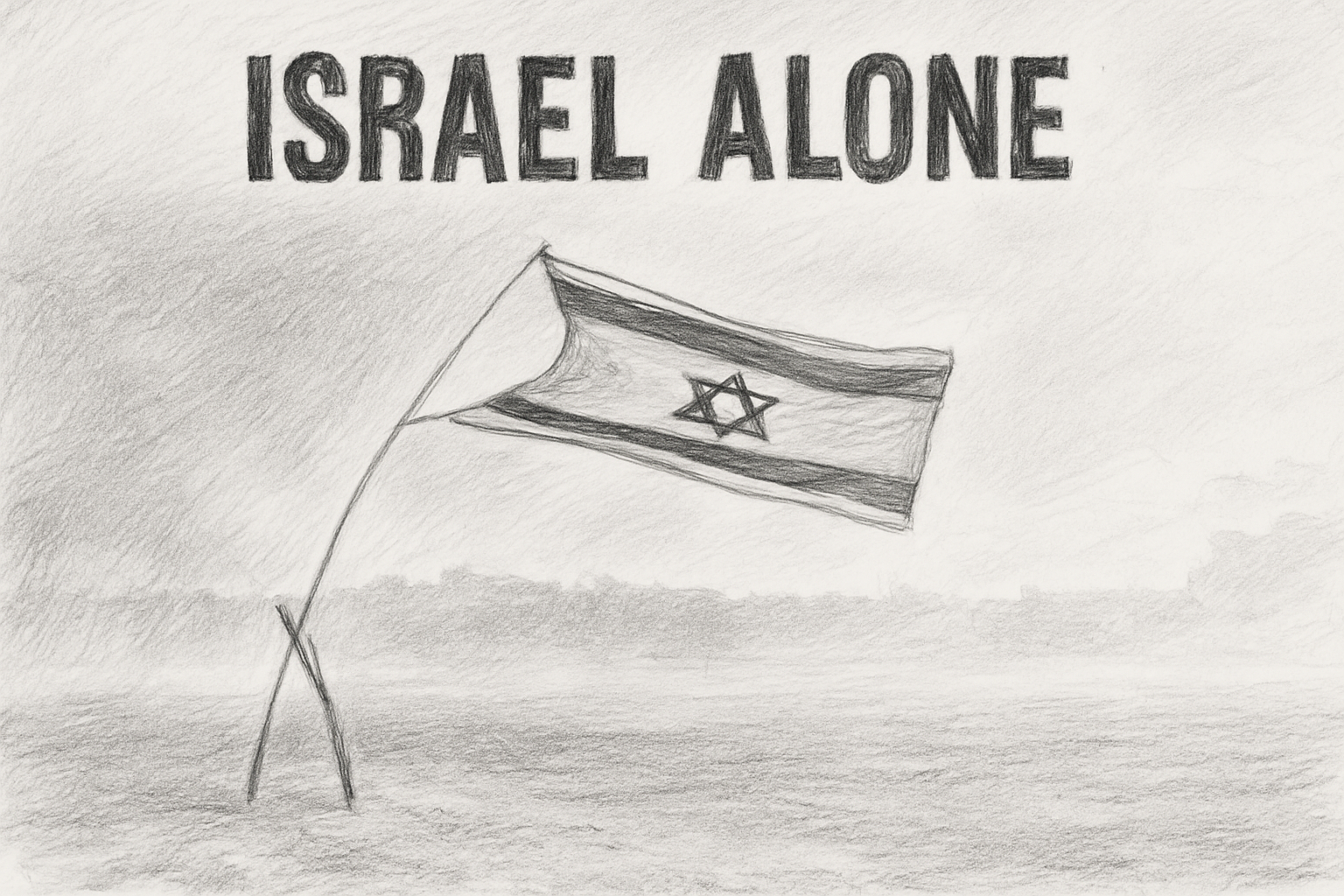
My family and I just got back from a month in Israel.
We arrived on June 10th, excited to spend time in Tel Aviv for a mix of work, vacation and everyday Israel life. Two nights after we landed, we were woken up at 3AM by a siren and a command to get into the nearest safe room. Israel had launched a surprise attack on Iran. Suddenly, we were living through a war (within a war).
Ironically, before we left NYC I kept joking to friends, “Let’s just hope Iran doesn’t attack while we’re there.” I didn’t actually think it would happen. So when it did, as I was moving one of my kids into the mamad where my other was sleeping, I whispered to my husband, “I cannot believe this is happening while we’re here.” I was truly in shock.
Throughout the 12-day war, the two weeks of calm that followed, and once we returned to New York, friends kept saying some version of the same thing:
“I feel so bad for you.”
“I’m sorry it ruined your trip.”
“You picked the worst time to go.”
They were all well-meaning comments, but wrong.
(And no, this is not me just trying to justify an expensive trip that went a bit, let’s say, off script.)
To explain why, I’m going back to a dvar Torah I started writing after October 7th but never finished. Fittingly, it was about Parshat Balak which we just read again last week.
In Parshat Balak, the Moabite king sends the wicked prophet Balaam to curse the Israelites. But God tells Balaam that he won’t be able to curse them and that instead, every curse he tries to deliver will turn into a blessing. He begins with:
“As I see them from the mountain tops,
Gaze on them from the heights,
There is a nation that dwells apart,
Not reckoned among the nations.”
— Bamidbar 23:9
The phrase “a nation that dwells apart” sounds and certainly feels like a curse. And yet, in Balaam’s case, we know that every curse he attempted was transformed into a blessing.
Back in November 2023, I couldn’t see the blessing. I wrote in my dvar torah notes at the time:
“I, like so many Jews right now, feel defeated and alone. We have a homeland, but it doesn’t feel safe. The campuses we worked so hard to be accepted to don’t want us. Our peers don’t believe us. Our politicians wait gleefully for us to slip. We’re screaming into the abyss and no one is listening.
I never finished the piece because I couldn’t convince myself that being alone was a blessing, which is how the dvar torah was supposed to end. I didn’t believe what I was trying to write so I dropped it. But after this trip, I finally get it.
The curse is easy to understand. Feeling alone is hard. But the blessing? I see it now.
Balaam didn’t say we’re a person who dwells alone. He said we’re a nation. And while being alone as an individual is isolating, being alone as a nation is bonding. It pulls us inward – to our people, our stories, our families, our land. It forces us to stop waiting for validation from the outside and start seeing the value within.
The Torah itself says: “Lo tov heyot ha’adam levado” (Bereishit 2:18) – it is not good for a person to be alone. And it’s true. So God created Eve. But a nation? A nation that dwells apart can be stronger, tighter, more alive.
I felt that on 3x speed during the war. There were scary, intense, deeply emotional times. Some days almost broke me. But we were lucky to be surrounded by close friends the entire time. At a point, we were 16 adults and kids in one house: our kids played together, we took turns cooking, we drank wine every night. A kibbutz-style pod, wartime edition. Some of my favorite memories from the trip came from those days.
Beyond our little pod, there was a kind of quiet solidarity everywhere you turned. Even strangers felt familiar. Cab drivers, cafe owners, parents at the park – we all shared the same surreal stretch of days and traded the same stories. I felt a bond with everyone I met.
Of course, that’s not the full story. There were 29 too many deaths, and thousands of people who lost their homes, their belongings, and their sense of safety. Many are still traumatized. I’m not ignoring any of that. That pain is real and lasting and it existed alongside the moments of strength, unity and even joy. Both are true.
And when it “ended”? Within four minutes of restaurants reopening, my husband called one of the hottest spots in Jerusalem to make a reservation. They were already fully booked. We got the last table in the back. This is not a lonely people.
So no, the war didn’t ruin our trip. In many ways, it made it. Only in Israel could living through a war make you want to move there more. I was brought to tears watching videos of thousands of Israelis stranded abroad finally come home. What other nation rushes toward a country in the middle of a ballistic missile war?

I’ll close with one final thought, something my 7th grade teacher at SAR used to yell at us regularly: What is“Kadosh”?
Most of us say “holy.” But at its root, Kadosh means separate.
You shall be holy, for I, the Lord your God, am holy…
And I have separated you from the nations to be Mine.”
— Vayikra (Leviticus) 20:26
It’s not always easy to be separate or alone. But sometimes, it’s the very thing that keeps us together