


A new Middle East could emerge from America’s political upheaval
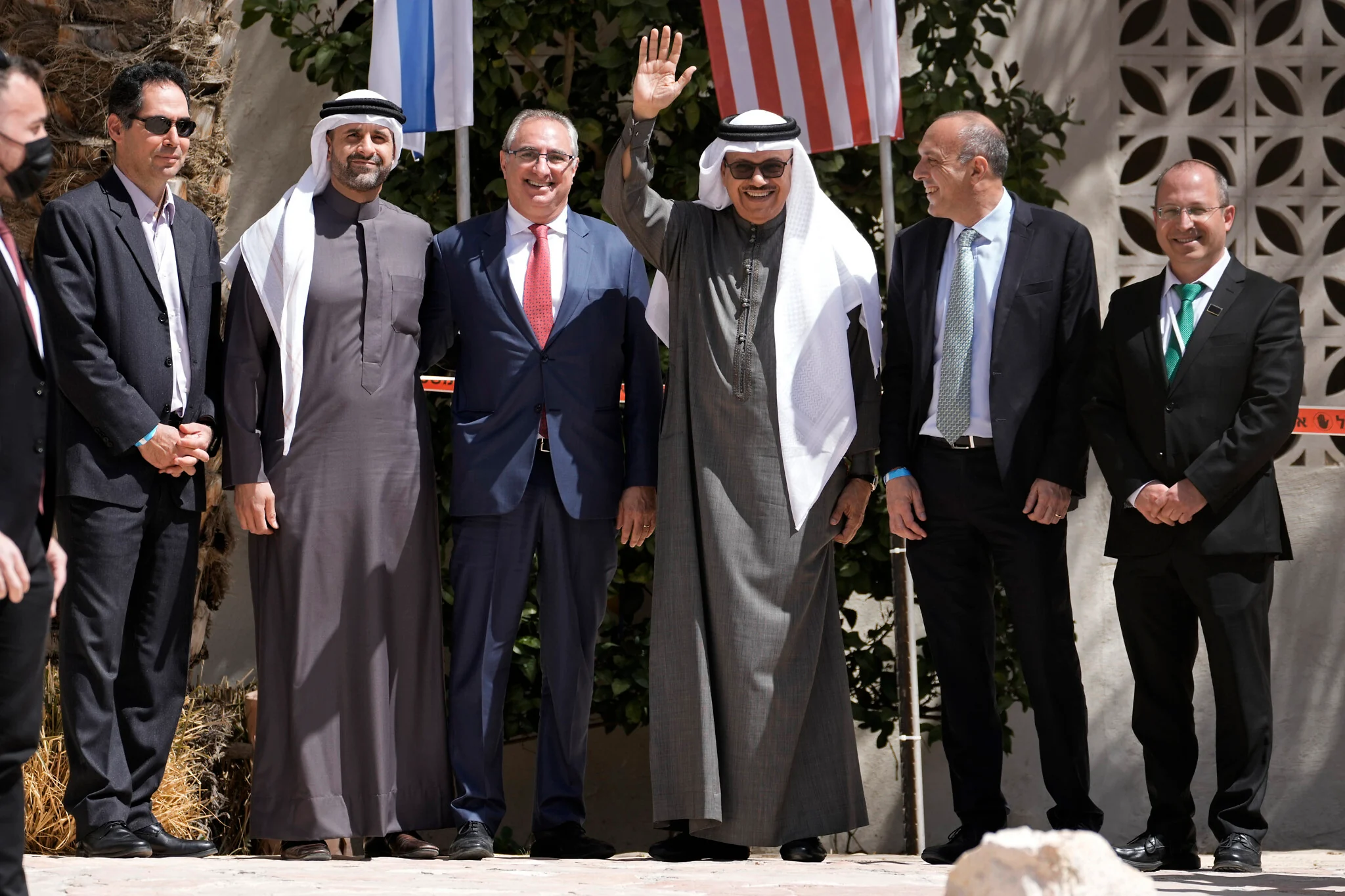
The midterms, which handed Democrats full control of Congress, pose a difficulty and offer an opportunity. The difficulty: America, Israel’s strategic partner since 1948, also partners with Israel’s enemies, Turkey and Qatar, so at the moment of truth it balances rather than decides. The region’s security arrangements rest on Washington, whose priorities are set at the ballot box, and in the Iran war, the Gulf states absorbed missiles and drones from a war they neither decided to enter nor received advance warned about. The opportunity: Israel and the Gulf states can build an independent regional alliance that works with the United States, not instead of it, from a position of strength rather than dependence.
The interests arise from this shared predicament. The UAE and Bahrain need protection beyond Washington, and the UAE fights the Muslim Brotherhood axis of Turkey and Qatar at home. Morocco, whose king is Commander of the Faithful and chairs the Al Quds Committee, seeks regional influence that opens doors in Africa for itself and its partners. Israel, whose US military aid is is under growing threat, needs Arab legitimacy it cannot generate alone to fight both the Iranian axis and the Brotherhood’s Sunni axis, a fight every partner shares. Hence roles no other can fill: the UAE builds alternatives to dependence, from ports and food to AI; Morocco confers legitimacy; Bahrain organizes, hosting a maritime framework without uniform commitments; and Israel contributes expertise in water, health and defense, as a partner rather than a patron.
The alliance works in two spheres. The core is permanent: a secretariat in Manama, joint planning and a lead state for each project. The second sphere is open on a project-by-project basis, without membership, normalization or public appearances with Israel. Saudi Arabia can join this way, protecting infrastructure and trade routes: given its defense pact with Turkey and Pakistan, it would remain in that sphere, without access to sensitive intelligence or strategic planning. The obstacles, from the Riyadh-Abu Dhabi rift to hostile public opinion, require a quiet start.
Israel has two kinds of peace. With the UAE, peace was born of shared interest: no war behind it, leaders who embraced it as policy, with the Brotherhood already out of public life. Hence a peace of trade, tourism and technology. With Egypt and Jordan, peace was born of the end of war and is sustained by leaders, without broad public support. The Brotherhood, rooted in society there, exploits every Palestinian crisis to brand peace as betrayal. Egypt and Jordan are pillars of any regional order, so the alliance must give that peace what peace with the UAE has: shared interest. When peace brings citizens jobs, water and health, alongside a clear path toward resolving the Palestinian question, the Brotherhood loses the welfare networks and public frustration that sustain its influence. Peace then turns from an arrangement between leaders into a national interest.
No Arab leader can justify partnership with Israel without a horizon toward a Palestinian state. The Negev Forum, established by the same states with Washington, collapsed over this issue when Morocco canceled its second summit and Arab capitals shied away from appearing with Israel. The proposed alliance would address this issue from the outset. That is the price, but also an opportunity: better Israel lead with its Arab partners than see terms shaped under European pressure, and perhaps by a new Washington administration. In Gaza the question is which generation grows up in ten years, so UAE tolerance education and Moroccan imam training must anchor change, led by Palestinian professionals. In the PA the question is conditions: its leadership has not faced voters since 2006, most Palestinians see it as corrupt, and an election today would empower the imprisoned Barghouti and Hamas. So the road to statehood, in Gaza and Judea and Samaria, runs through demilitarization, deradicalization and professional institutions, under Arab leadership and subject to Israel’s security.
Peace with Lebanon and Syria, at once or in stages, is a shared alliance goal: uprooting Iranian influence from Lebanon and Turkish and Qatari influence from Syria. The reward is greater than a security arrangement or an eventual Israeli withdrawal: Israeli technology can change their economies as no foreign patron can. Before peace, no government in Beirut or Damascus can openly accept it, so it will arrive through UAE, Egyptian and Jordanian projects. After peace, directly. The same principle applies in Gaza, Lebanon and Syria: a military gain does not hold unless the dependence that sustains the hostile force is replaced.
The first step is not a declaration, but a permanent secretariat and three flagship projects: protecting critical infrastructure and institutions against subversive influence; the next generation in Gaza; and economic benefit reaching citizens, from Jordan and Egypt to Lebanon and Syria.
Even if Iran’s regime weakens or falls, its networks and militias will remain, with Brotherhood-aligned movements ready to cooperate where interests converge. The threat is a network, so the answer must be one too.
The midterms are no reason for alarm, but the moment to choose. The next regional order will be shaped not only by who holds weapons, but by who holds institutions, resources and mechanisms of dependence. The change in America can expose the region’s weakness, or become the moment it learns to stand on its own.