

A People of Blessing, Unapologetically
There is a question I kept turning over in my mind last week, walking the halls of the Waldorf Astoria in Jerusalem during the second annual JNS International Policy Summit.
Not what was said, though we did get to hear from some of the most consequential voices of our moment. The question underneath all of it was simpler, and harder. What does it mean when thousands of Jews and friends of the Jewish people choose to come together, unapologetically, in our own ancient capital, to learn, to argue, to plan, and to count our blessings out loud?
Because that is the part that doesn’t make the headlines.
We have grown so used to measuring ourselves by our enemies; the wars, the rockets, the resolutions, the campus mobs, the lies that travel around the world faster than we can respond, that we forget to notice the sheer improbability of the gathering itself.
Think about it. A people marched to the edge of extinction within living memory, gathering by the thousands in a sovereign Jerusalem, debating not whether we will survive but how we will lead. That is not a summit. That is a verdict on history. A visual representation of prophecy fulfilled.
I came to the summit from my home in the hills of Judea. A generation ago, the grandparents of the people at the summit were stateless. Now we host the world’s foreign ministers and broadcasters and ambassadors, and the conversation is no longer about permission. It is about purpose.
The word unapologetic is the one I keep returning to.
For most of my life, Jewish advocacy carried an apology folded into its first sentence. We led with qualifications. We explained before we were accused. We softened the truth so it would go down easier for people who had no intention of swallowing it anyway.
Even the word Hasbara, which is what pro-Israel advocacy is often called, means to explain.
The rooms I sat in this week were done with all of that. The defensiveness was gone. In its place was something I can only describe as confidence, people who know exactly who they are and have stopped asking whether they’re allowed to say so.
Yes, we spoke about Iran, about Hezbollah, about a war we are still living through, about an antisemitism that has crawled out from under its rock on every continent. These are real, and we named them honestly. But that was never the whole of it. We also spoke about a nation whose economy is booming, whose technology is reshaping the world, whose army just accomplished what every expert said was impossible, whose young people keep choosing to build here despite every reason to be afraid. We did not only inventory our wounds. We counted our blessings. And in this generation, the blessings are staggering.
We are not merely surviving. We are flourishing, and doing it in the one place on earth that was promised to us and taken from us and returned to us against all conceivable odds.
What moves me about a gathering like this is that it stretches across two worlds at once. There were Israelis in that room who live the conflict in their bones, and there were Jews, Christians and others who flew in from across the diaspora because they understand that Israel’s fate and their own are bound together.
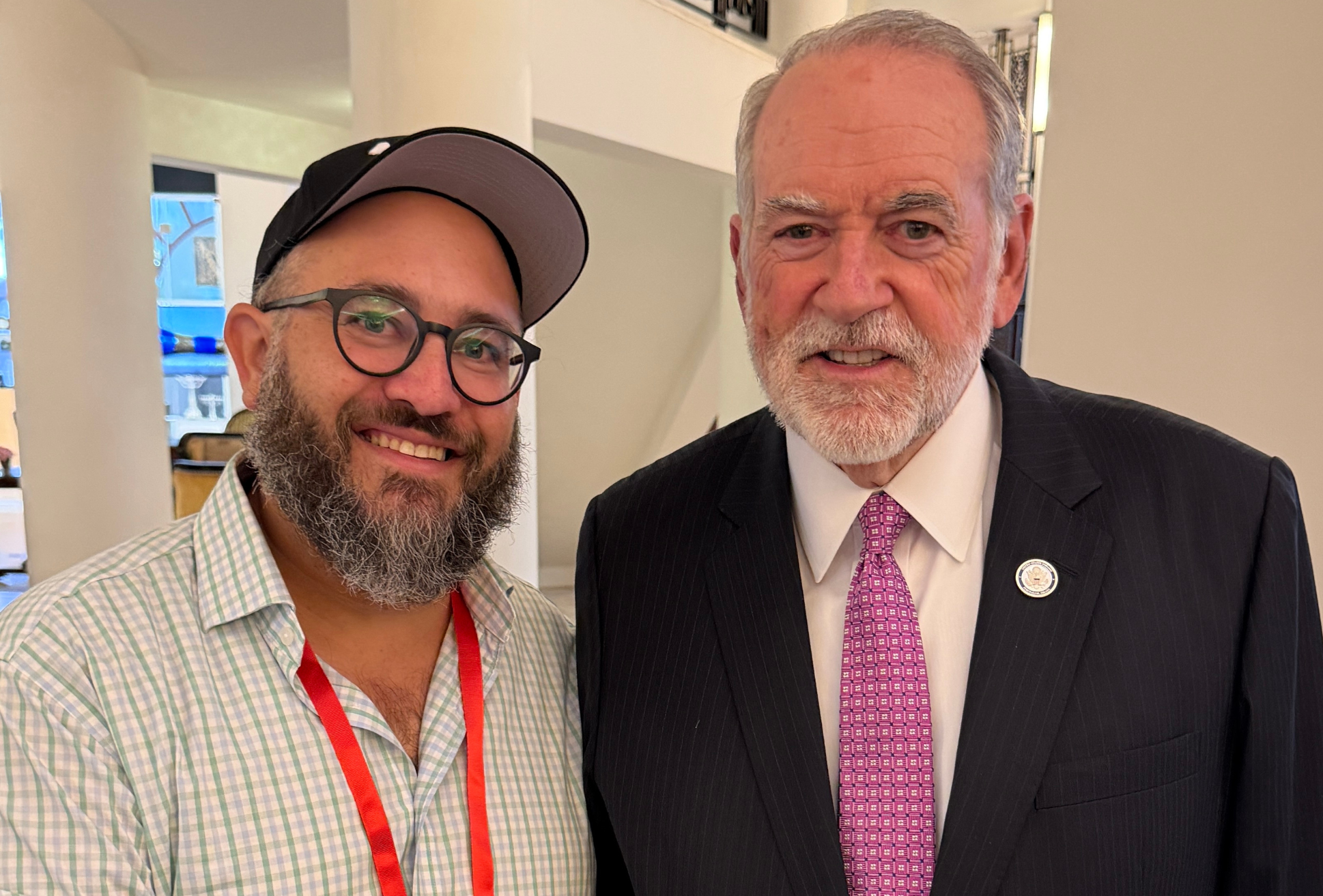
US Ambassador Mike Huckabee said it best. “I want there to be no misunderstandings. Americans, whether they understand it or not, need to be grateful to God for the Jewish people and the foundation upon which freedom and the sanctity of the individual was founded, because that is what separates our values from the values of totalitarianism and dictatorship.”
The Jewish man raising a family on a hilltop in Judea and the Christian woman fighting for Israel on a campus in America are not in separate battles. They are holding two ends of the same rope. To sit in that room was to feel the rope go taut.
I had the privilege of being there representing One Israel Fund, an organization that has spent over three decades unapologetically standing with the communities of Judea and Samaria — not with speeches, but with actions. They show up in the security cameras, ambulances, and the unglamorous daily work of keeping families safe.
Being surrounded by so many people who have devoted their lives to this tiny strip of land, and to the enormous history and significance it carries, reminded me why that work is sacred.
So what does it mean when we gather like this?
It means we are no longer a people waiting to be told whether we have a right to exist. It means we have moved from defending our story to telling it. It means that even in a generation marked by war and hatred, we are still stubbornly, joyfully and yes, unapologetically, a people of blessing.
I came to Jerusalem to learn. I left reminded of who we are.
Juda Honickman is a writer and advocate living in Judea. He serves as a spokesman for One Israel Fund.