


A Midwestern Jewish Politico
Featured Post
A quiet diplomatic earthquake
When the leader of the world's largest Muslim population says 'shalom,' it’s no mere rhetorical flourish – it’s a gesture
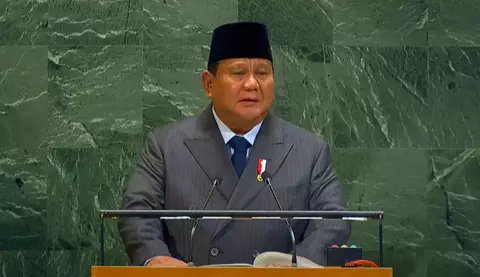
Indonesia’s leader at UN today - Creative Commons
In what may prove to be a surprising breakthrough, Indonesia’s president delivered a speech today at the United Nations that could signal a subtle but meaningful shift in Southeast Asia’s posture toward the Israeli-Palestinian conflict. For years, Indonesia has been one of the most vocal Muslim-majority nations in support of Palestinian rights, often critical of Israel’s policies and actions. Yet today, something changed: Indonesia’s leader affirmed that “Israel’s right to security should be respected.” He then brought a striking and unexpected close to his address with the Hebrew word “Shalom.”
It’s easy to overlook the weight of these words—but they matter, perhaps more than many realize. Why is this so significant?
First, affirming “Israel’s right to security” is not a throwaway line. It reflects a recognition that Israel is entitled to exist without fear of existential threats, a position many nations take for granted, but not always those that have historically been very critical of Israeli policy. By acknowledging that right, Indonesia is signaling a move toward more balanced language—and perhaps more openness to dialogue.
Second, saying “Shalom” at the end of a UN speech is profoundly symbolic. In Hebrew, “Shalom” means peace, but it also carries deeper connotations: wholeness, well-being, friendship. It’s not merely a rhetorical flourish—it’s a gesture. For an Indonesian leader to invoke the Hebrew greeting in that high-stakes international forum suggests empathy, and perhaps an opening for deeper diplomatic contact. It also challenges fanatical narratives that paint relations between Muslim-majority countries and Israel as inevitably hostile.
Of course, words don’t solve conflict. Indonesia’s leader did not lay out a full plan of reconciliation or articulate precise policy shifts. There were no new peace treaties, no dramatic withdrawals, no guaranteed changes in alliances. But sometimes, changing the tone is the first act of transformation. Diplomacy often moves in degrees—almost imperceptible ones. This speech is one of those degrees.
Third, this moment could encourage others. If Indonesia, a large (the largest Muslim population of ANY country), influential Muslim-majority democracy with longstanding public support for Palestine, can publicly recognize Israel’s security needs, it offers cover to other countries that have wanted to moderate their stances but feared domestic backlash. It opens space for regional and global conversations—ones less rigid, more open to compromise, more willing to see multifaceted truths.
In international relations, we often wait for treaties and agreements to measure progress. But today, Indonesia reminded us that sometimes the most powerful steps are those of language and recognition. In saying Israel deserves security—and in ending with “Shalom”—Indonesia has offered a gesture of possibility. Whether it leads to policy change remains to be seen. But at the very least, it gives hope that change may be possible.
Related Topics
Related Posts
