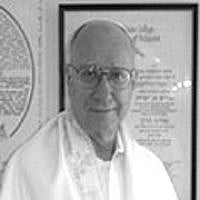
A Rabbi Enjoys the Qur’an’s Understanding of Creation
Astrophysicists at Stanford report spotting a black hole so massive that it’s more than 10 billion times the mass of our sun. More important, this heavyweight is so far away that the scientists think it formed when the universe first began to light up with stars and galaxies, so it may provide a window into our cosmological origins.
The supermassive black hole sits in the center of a galaxy. A disk of stars and gas swirl around the black hole and eventually get sucked in. “That generates enormous amounts of power, enormous amounts of energy,” Romani says. “It’s far more efficient even than nuclear fusion. These gravity-powered sources are the most powerful sources in the universe.”
“Indeed, your Lord is God, who created the heavens and the earth in six Divine Days (or 13.7 billion Planet Earth years).” (Quran 7:54)
Scientists theorize that space, time and matter originated 13.7 billion years ago in a Big Bang. The Quran says: “The heavens (energy) and the earth (matter) were joined together as one unit, before We (God -Allah) clove them asunder” (21:30). Following this “joined beginning”, Allah; “turned to the sky, and it had been (as) smoke. He said to it and to the earth: ‘Come together, willingly or unwillingly.’ They said: ‘We come (together) in willing obedience” (41:11).
Theorists say the first stars were likely over a hundred times more massive than Earth’s sun and extremely hot, bright, and short-lived, each one burning for only a few million years. The ultraviolet light that Population III stars emitted would be redshifted, or stretched to lower energies, by the universe’s expansion. That light should now be detectable in the infrared.
“This deep observation was filled with familiar-looking stars and galaxies,” said Dr. John Mather, senior project scientist for James Webb Space Telescope and a co-author on the Nature article. “We removed everything we knew—all the stars and galaxies both near and far. We were left with a picture of part of the sky with no stars or galaxies, but it still had this infrared glow with giant blobs that we think could be the glow from the very first stars.”
“Verily in the heavens and the earth are signs for those who believe. The creation of yourselves (humans), and the fact that animals are scattered (throughout our planet), are signs for those of assured faith. In the alternation of night and day, and that fact that Allah sends down (rain) sustenance from the sky, and revives the earth after its death (drought), and in the change of the winds, are signs for those who are wise” (45:3-5).
The Quran describes that Allah “made from water every living thing” (21:30). Another verse states: “Allah created every animal from water. Of them are some that creep on their bellies, some that walk on two legs, and some that walk on four. Allah creates what He wills, for truly Allah has power over all things” (24:45).
The first pre-life and very early life forms evolved over four billion years ago in very deep ocean vents and on ocean shores. Since then different pre-human species have numbered in billions of extinct species, and in 10-20 millions of currently living species.
Then: “Certainly We created man from an extract of clay [Adam]. Then We placed him as a sperm-drop in a firm lodging. Then We made the sperm-drop into a clinging clot, and We made the clot into a lump [of flesh], and We made the lump, bones, and We covered the bones with flesh; then We developed him into another creation” (23: 12-14).
“He it is who created the heavens and the earth in six days, then established Himself on the Throne. He knows what enters within the heart of the earth, and what comes forth out of it, what comes down from heaven, and what mounts up to it. And He is with you wherever you may be. And Allah sees well all that you do” (57:4).
“Oh humankind! We created you from a single pair of a male and a female, and made you into nations and tribes, so that you may know each other (not that you may despise each other). Verily the most honored among you in the sight of Allah is the who is the most righteous of you. And Allah has full knowledge and is well acquainted (with all things)” (49:13).
Quran 49:13 states that God created humanity from a single pair of male and female and then divided them into nations and tribes so that they may know (and respect) one another. The verse emphasizes that the most honored in God’s sight are those who are most righteous, not based on their nationality or tribal affiliation.
Qur’an 30:22 states: “ And one of His signs is the creation of the heavens and the earth, and the diversity of your languages and colors. Surely in this are signs for those of ˹sound˺ knowledge.”
Quran 2:213 and 10:19 provide the essential foundations for pluralist societies and religions, that embraces human diversity and encourages peaceful coexistence.
Quran 2:213 states, “Humanity was (pre Adam) one community (universally polytheistic); then God sent the prophets as bringers of good tidings (monotheism), and warners were sent down with them (with) Scriptures in truth to judge between the people concerning that in which they differed.”
This verse acknowledges that, despite humanity’s shared polytheistic origin, differences in beliefs and practices naturally emerged over time. Instead of eliminating this diversity, God sent prophets and scriptures to guide people toward righteousness and to resolve conflicts, thus promoting unity within diversity.
This guidance serves as a reminder that shared ethical principles, rather than uniformity, should be the foundation for cooperation and dialogue among various communities.
In a similar vein, Quran 10:19 emphasizes that human diversity is part of God’s divine will: “Mankind was not but one community [united], but then they differed. And if not for a word that preceded from your Lord, it would have been judged between them concerning that over which they differ.” This verse underscores that the existence of different nations, traditions, and beliefs is not a deviation from divine intention, but a deliberate aspect of human history.
Rather than promoting a singular religious path, the verse affirms that diversity itself serves a divine purpose. This challenges exclusivist claims and calls for respectful engagement with people from different backgrounds. By recognizing that differences enrich humanity’s collective experience, the verse encourages pluralism, wherein diversity is valued as a reflection of divine wisdom.
Additionally, Quran 4:1 reinforces this vision of human unity amidst diversity: “O mankind, fear your Lord, who created you from one soul and created from it its mate, and dispersed from both of them many men and women.”
This verse highlights humanity’s shared origin and emphasizes that all people, regardless of their differences, come from the same source. Together with Quran 2:213 and 10:19, this verse promotes a vision of pluralism that celebrates diversity as a natural and essential aspect of human existence. It calls for mutual respect and cooperation, urging individuals to recognize the shared values of justice, compassion, and righteousness that can unite humanity.
Quran 5:69 emphasizes the concept of shared values. It states, “Indeed, those who believe in God and the Day of the Resurrection and the angels and the Book and the prophets—they will surely have a reward with their Lord, and there will be no fear for them, nor will they grieve.”
This verse reiterates the importance of belief in God, the Last Day, angels, the Book (scripture), and the prophets. It suggests that individuals who adhere to these core beliefs will be rewarded by God and will not face fear or grief in the afterlife.
We have revealed to you ˹O Prophet˺ this Book with the truth, as a confirmation of previous Scriptures and a supreme authority on them. So judge between them by what Allah has revealed, and do not follow their desires over the truth that has come to you. To each of you We have ordained a code of law and a way of life. If Allah had willed, He would have made you one community, but His Will is to test you with what He has given ˹each of˺ you. So compete with one another in doing good. To Allah you will all return, then He will inform you ˹of the truth˺ regarding your differences.” (Quran 5:48)
“God is the Creator of all things and He is the Guardian over all things.” (Quran 39:62) This is perhaps the most important of all the verses about creation. God is not only the creator of the past Universe. God has an ongoing guardian relationship with all living creatures, especially with all intelligent beings in the universe. As it is written: “The heavens declare the glory of God. The universe proclaims God’s handiwork.” (Psalms 19:2) And as the Qur’an proclaims over and over again, “All that is in the heavens and all that is on the earth exalts Allah” (Qur’an 57:1, 61:1, and 64:1)
As the Hebrew Bible says; “ Your (God’s) kingdom is a kingdom of all the worlds; and Your dominion is for all generations.” (Psalms 145:13) and “By the word of the Lord the heavens were made, their starry host by the breath of his mouth.” (Psalm 33:6) and “God has made everything beautiful in its time. He also set eternity in the human heart; yet no one can fathom what God has done from beginning to end.” (Ecclesiastes 3:11)