

A Rabbi Reflects on American Orthodoxy, Torah, and the Environment
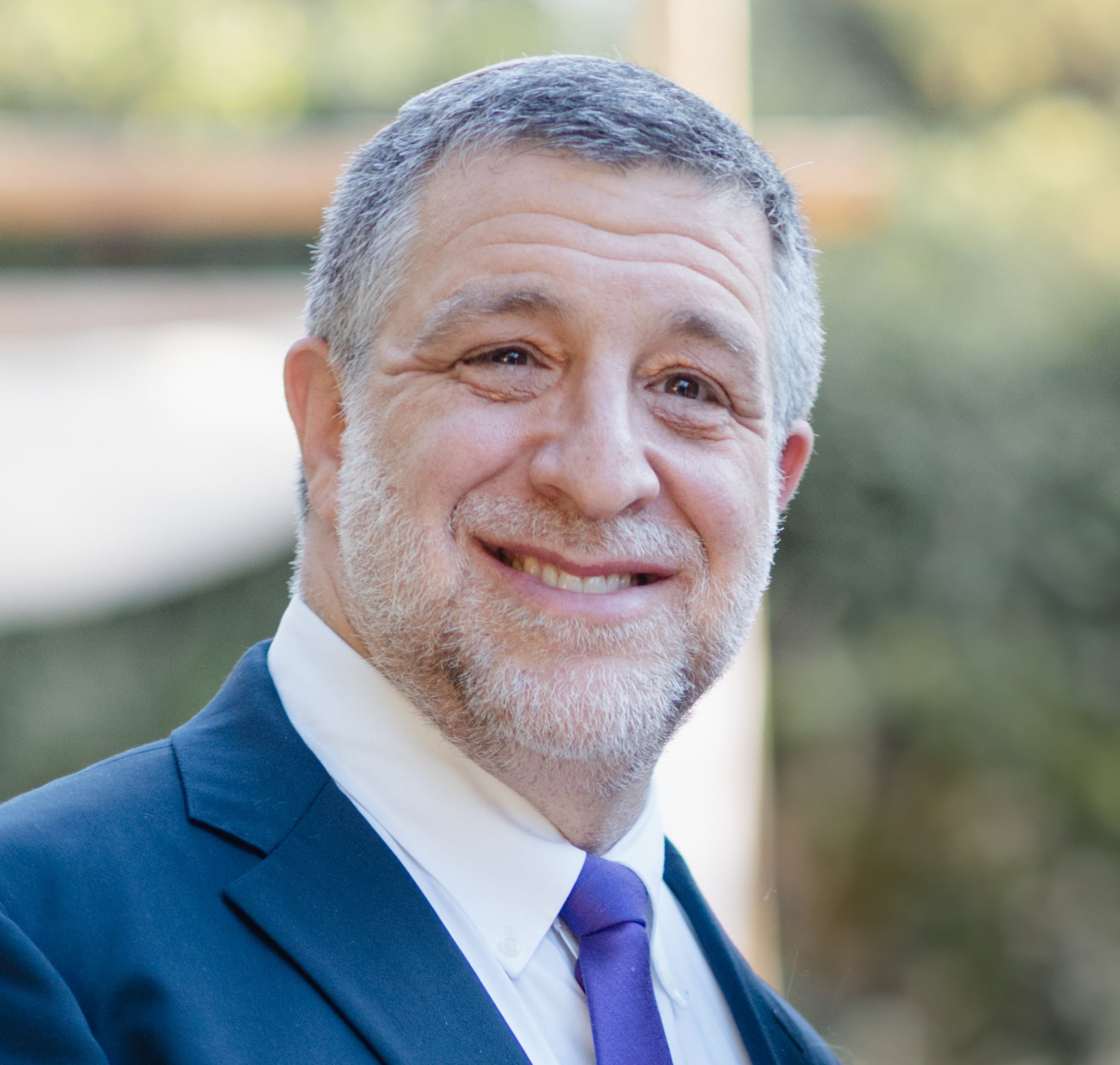
Barry Kornblau is an Orthodox rabbi who cares about the environment from the perspectives of Torah and science. He does not identify as an “environmentalist,” a term that he considers politicized. His message to fellow Orthodox Jews: Ignore the political noise and focus on the actual, deteriorating state of God’s creation, and what can be done to improve it.
Rabbi Kornblau‘s work focuses on the realities of climate change, biodiversity loss, and their wide range of negative consequences for the US, Israel and the world. “Since all stem from human activity, these impacts will deepen unless we change course,” he says. For over 20 years, Rabbi Kornblau has worked to get American Orthodoxy to do its fair share regarding these issues.
To better understand all this, Rabbi Kornblau’s organization, Meisharim, and Nishma Research recently published a survey and report, “American Orthodox Jewry, Climate Change, and Other Environmental Issues: Religion, Science, and Politics (meisharim.org/what-we-ve-done). It finds that Modern Orthodox Jewry is more concerned about climate change than its discourse suggests, a sign of a community out of sync with itself. And, while many Orthodox Jews embrace a Torah duty to steward creation, it is applied inconsistently to climate change.
I had a chance to speak to Rabbi Kornblau about the intersection between environmental issues, halakha, and American Orthodoxy. Below is the transcript of our interview:
Judaism teaches the concept of bal tashchit—the prohibition against waste. How might this principle guide Jewish communities in confronting modern challenges like fossil fuel consumption, single-use plastics, and food waste?
More than a century ago, the leading Sephardi posek, Ben Ish Chai, ruled that bal tashchit prohibits using fuel without benefit, or using more than the minimum amount of fuel necessary for a task (Torah Lishma 76, citing Shabbat 67b). These rulings are particularly consequential today, when fossil fuels power more than three-quarters of worldwide energy consumption and are a major source of air pollution, premature death, and climate change.
At home, work, shul, and on vacation, practical extensions of Ben Ish Chai’s ruling could include reducing energy consumption, including gratuitous AI usage (AI uses an enormous and growing amount of energy); improving building insulation; and increasing the energy efficiency of one’s appliances and vehicles. A home or institutional energy audit can identify the optimal ways to save the most energy and money in these areas.
The noted religious Zionist posek, R. Eliezer Melamed, expansively applies bal tashchit to environmental concerns (Peninei Halakhah, Kashrut). He notes that humanity’s tremendous population growth and powerful technologies have enormously increased its ability to pollute and damage nature and its resources on land and in the seas and atmosphere. Modern society must therefore relate to them and all processes that support life on earth with respect, caution, and responsibility. Remarkably, he rules that bal tashchit requires, as a matter of Torah law, all countries and governments to pass laws to protect nature and its resources, and all citizens to follow those laws. Finally, following the view that God created everything with independent value, irrespective of its value to human beings, he rules that we should not damage, without cause, any living thing. He also notes religious value in preventing the extinction of species, following laws for the protection of wild species, preserving the cleanliness and beauty of nature, and not littering.
Food waste is a major source of greenhouse gas emissions, from farm to store to kitchen (home and commercial) to plate to leftovers. In Israel, Leket does a tremendous job reducing food waste at the national level. In the United States, Orthodoxy is rightfully proud of Shearirt HaPlate of Bergen County and other food rescue groups.
As individuals, many people nowadays can afford to discard food they don’t want. Nonetheless, Sefer Hachinuch (#529) notes that wasting even a mustard seed should anguish a pious Jew, prompting them to exert themselves greatly to avoid its waste or destruction. In this area, halakhah overlaps greatly with what we should also do for environmental reasons and to save money. Indeed, about half of American Orthodox Jews already reduce food waste, and one-third would consider starting or doing more.
R. Melamed applies bal tashchit to food waste (as well as clothing purchases and home furnishing and improvement decisions) in detail. He paskens that one should buy only food that will be eaten (not more) and prepare only an amount of food that will be eaten. One must take enough food only to satisfy one’s hunger and eat all the food one on one’s plate. (In our era of prosperity, however, when sometimes even poor people are overweight and eat unhealthily, one who is satiated doesn’t need to finish food they don’t want to eat. Similarly, one needn’t eat and can properly discard unhealthy foods that are tempting for family members to eat.) He forbids throwing away healthy and tasty leftovers, which instead should be stored in one’s refrigerator or freezer, or shared with neighbors, relatives, or the poor. He applies these laws, as well, to restaurants and catering halls, detailing how much time, money, and effort they must expend to find others to eat leftover healthy food they create.
One could extend R. Melamed’s rulings to include: not discarding food at its “expiration date” but instead smelling and tasting it to determine whether, in fact, it’s still edible; planning menus to prioritize eating leftovers and fresh food before they spoil; avoiding waste during food preparation; and composting inedible scraps to prevent it from generating methane, a potent greenhouse gas when decaying in landfills.
A different environmental perspective on bal tashchit comes from Prof. Tanhum Yoreh, an Orthodox scholar at the University of Toronto. Noting how earlier sources connect bal tashchit to the prohibition of harming oneself, Prof. Yoreh derives a concise Torah environmental ethic: “Wastefulness and destruction are harmful to oneself, and in environmental terms, to harm the environment is to harm oneself.” Similarly, R. Norman Lamm remarked: “Man is clever enough to conquer nature — and stupid enough to wreck it and thereby destroy himself.”
Plastics and microplastics are ubiquitous in water, land, sea, and animals, contributing significantly to pollution around the world and to climate change. They’re also in our bodies; researchers are presently evaluating their health effects. Therefore, reducing plastic usage and recycling or properly disposing of plastic are important, although overemphasis on reducing usage of single-use plastic food items has created anti-environmental backlash among some Orthodox Jews.
The Torah emphasizes the sanctity of life (pikuach nefesh). How should this principle influence Jewish attitudes toward industrial pollution and policies that directly impact human health?
In 2021, prominent Israeli religious Zionist rabbis wrote a public letter to then-Prime Minister Naftali Bennett encouraging his constructive participation, on behalf of the Jewish state, in an international conference on climate change that he attended. Signatories included noted poskim (Rabbis Yaakov Ariel, Shlomo Aviner, Yosef Zvi Rimon, and Yuval Cherlow) and other leading rabbis (Yoel Bin Nun, Yehiel Wasserman, Michael Melchior, David Stav, and others).
They wrote: “The Torah analysis of sustainability is no longer one concerned only with the [halakhic] question of bal tashchit …. Today, it relates to pikuach nefesh klal olami [global preservation of life] in the fullest sense of those words. We are talking about a dramatic impact upon human life in the broadest possible senses — hunger, drought, the human and security aspects of migration — with enormous implications for the quality of life and its very existence. We are no longer discussing a subject relating to the future. Its signs are already recognizable to all via the various parameters by which it can be discerned. The extinction of many species offers a window to the possible reality towards which we are advancing, and [may] cross …. When the vast majority of the world’s scientists working in [the area of climate change] issue extraordinarily severe warnings about what is happening — this obligates us to address this reality.”
The Israeli rabbis’ straightforward acceptance of climate scientists’ conclusions contrasts notably with Nishma’s new report’s findings about American Modern Orthodox Jews: 65% of them do not think that humanity’s activities are the primary cause of climate change, and 40% think climate scientists do not understand the causes of climate change. Indeed, 50% would not trust a statement about chemistry found in a science textbook — i.e., on the textbook’s authority — without first verifying it. Regarding the determination of scientific truth for halakhic purposes in general and regarding climate change in particular, R. Jeremy Wieder, Rosh Yeshiva at RIETS, notes:
“The resolution of seeming conflicts between science and Judaism has a long and complex history – but only when they conflict. When the two do not conflict, our tradition is quite clear that halakhah determines facts by following the view of rov beki’in, a majority of experts — and kal ve’chomer when the alternate view does not even constitute a mi’ut she’eino matzui, a small minority. Therefore, since the overwhelming majority of experts in the field of climate science state that human activities are unequivocally responsible for the rapid warming of our planet and its ever-increasing negative consequences, halakhah demands that we recognize this reality and act responsibly. To ignore it — for one’s own convenience, in accordance with one’s American political affiliation, or for any other reason — is an abdication of our responsibility to Torah, and to future generations.”
Many describe climate change not just as a scientific or political issue, but as a moral one. From a Torah perspective, how should we understand our responsibility to mitigate the effects of climate change? And how do Torah laws like shmita (sabbatical year) or kashrut provide guidance for more sustainable food systems?
We have many moral and halakhic duties regarding climate change and the development of environmentally sustainable societies. When R. Herschel Schachter of RIETS was asked about climate change, his “unflinching” reply concisely summarized the intergenerational moral duty it imposes: “Our grandchildren have to live in this world.” Naturally, his view is reflected in the Talmud (Taanit 23b): “Just as my ancestors planted carob trees for me, I too am planting for my descendants.”
A second, halakhic approach to addressing climate change stems from the Torah’s prohibitions against damaging others’ property, the laws of harchakat nezikin. As described above, our moral obligation to protect and preserve life, and the prohibition not to destroy Earth’s systems that sustain it, are a third and fourth moral and legal framework for addressing climate change.
Finally, stewardship is a fifth moral and religious framework. This “theocentric” environmental worldview is rooted in our faith that the earth and the fullness thereof are the Lord’s. As each individual and each generation — created by God — briefly passes through His world, He grants us usage rights in its resources, to be exercised, as R. Melamed put it, “with respect, caution, and responsibility”, so that future generations — equally created by and important to God — can also benefit from them. This framework supports the need to develop intergenerationally sustainable approaches to agriculture, food systems, energy sources, and consumption patterns that are necessary to address today’s environmental crises.
Shemitah extends this idea, illustrating “the concept of possession without ownership which,” for R. Jonathan Sacks, “is at the heart of Judaism’s social and environmental ethic.” God grants a farmer in the Land of Israel the right to possess a parcel of land, along with exclusive usage rights for six years. In the seventh year, God extends usage rights to all. The farmer must allow all onto the property he possesses to take its produce.
In a similar way, God grants us the ability to eat from His world and His bounty, but the laws of kashruth intensely regulate nearly every aspect of food consumption. The prohibition against eating ever min ha’chai, flesh taken from a living animal, extends this idea to all humanity. Rabbeinu Yonah generalizes this idea to all our possessions: God has ultimate title to all our assets, for which we have only possession and regulated usage rights.
Although halakhah obviously permits kosher meat consumption, R. Melamed and others note that the Torah discourages excessive desire for meat. Additionally, current rates of beef consumption, particularly in wealthy countries, contribute greatly to major environmental problems. A sustainable diet should therefore include smaller portions of beef, eaten less frequently, substituting poultry and fish when possible. These dietary changes also typically save money and are healthier. The Nishma study finds that about half of Modern Orthodox already have made these changes, with a quarter of them willing to consider starting or doing more.
Do you see the move toward renewable energy—solar, wind, hydro—as resonating with Jewish values of stewardship? Could adopting renewables even be seen as a mitzvah in our time?
These renewable energy sources, along with nuclear power and other technologies, are critical for sustainably powering contemporary society. (Nuclear waste that remains radioactive for thousands of years poses an intergenerational moral challenge requiring special attention.) While poskim have yet to rule that using them is a formal mitzvah, some Orthodox shuls and schools already power themselves (and generate income) from solar panels on their roofs. In Israel, a sustained effort is underway to install them in cemeteries, and the Tzohar rabbinical organization recently ruled that it is proper to install solar panels on synagogue roofs. It is surely also proper to install them in homes, businesses, and elsewhere.
More broadly, the Nishma report finds that 10% of American Orthodox Jews, Modern Orthodox and Haredim alike, already power their homes with renewable electricity, and half of all Orthodox Jews would consider doing so. In New York and other states, homeowners can usually switch easily to purchasing renewable electricity that is delivered through the wires of one’s current electric provider.
Our ancient tradition provides startlingly contemporary counsel about the need to make the extra effort required to use sustainable energy sources – or to face national devastation. The Torah requires a pyre to burn on the Temple altar 24/7. The Talmud permits most types of wood to fuel the fire, but disqualifies olive wood and grapevines, the pillars of ancient Israel’s economy, because of “the settlement of the Land of Israel.” R. Yaakov Emden (She’eilat Ya’avetz 1:76) explained that the Talmud’s concern for the land stems from the fact that, left to their own devices, ordinary people will choose to source this large, constant fuel supply the easy way. Namely, they will take the most easily accessible wood without considering the vast, long-term damage this will cause. To counter this, R. Emden states that halakhah requires them to expend great effort to secure this fuel supply sustainably. First, they must shlep to forests to harvest wood of trees that do not produce valuable fruit. Then, they must shlep that wood back to Jerusalem.
Emden’s concern about the devastating impact of lazy fuel sourcing contributed heavily to the collapse of the vast ancient copper industry in Timna, in Israel’s Aravah region. Over time, unsustainable reliance on the wood of nearby acacia trees to create charcoal as fuel for the smelting fires led to ecological and industrial collapse. Then and now, however, other local groups recognized the central role of acacia trees in their ecological systems. From experience and observation, they knew that “when the last [acacia] tree is gone, it is the end of the world.” They therefore avoided these collapses by choosing to never use acacia trees for charcoal.
These ancient problems (deforestation; vast, unsustainable usage of convenient fuel sources leading to ecological and national devastation) are now worldwide crises. It behooves us, as Jews, to heed our own traditions, rooted in our people’s ancient, indigenous connection to its Land, to act upon them, to share them with others – and to learn from others’ connections to their lands, as well.
Some scholars argue that Shabbat, with its weekly pause from work and consumption, offers a powerful model for environmental sustainability. Do you see Shabbat observance as a framework for responding to overconsumption and climate pressures today?
Desisting from fossil-fueled travel on Shabbat reduces one’s travel-related CO2 emissions for the day. Conversely, maintaining a wardrobe sufficient for fancy clothes every week and having multiple elaborate meals each week may also increase consumption and emissions. Regardless, I am skeptical that these transient effects meaningfully impact an individual’s or group’s emissions and consumption patterns at the weekly or annual level. Also, a religious practice particular to Jews is not scalable at the global level; in fact, halakhah prohibits non-Jews from observing Shabbat.
Worse, thinking that Shabbat observance, per se, has a positive effect on the environment correlates strongly with low environmental concern and action. The report cites one Modern Orthodox liberal survey respondent who is dismissive of climate change: “Not driving on Shabbat does more for the environment than we know.” This view of mitzvah observance is much stronger among Orthodox Jews who are dismissive of climate change than others. Among all Modern Orthodox respondents, for example, 28% think that Jews’ observance of halakhah and non-Jews following the seven Noahide laws are the most important things for protecting and stabilizing the environment; 10% agree strongly with this view. Among those who are dismissive of climate change, those figures are two to three times higher (55% agree; 32% strongly).
Moving from actual religious practice to the world of religious ideas, consider, for example, the inspiring thought of R. Jonathan Sacks. He considered Shabbat to be a weekly reminder of God as Creator; that earth and the fullness thereof ultimately belong to Hashem. Creation and all components of the biological and non-biological world thus have independent dignity, beauty, and integrity, entitled to rest and protection. For six days we – not as Creators but as created beings and as guardians of creation – use them for our purposes. But on the seventh, we renounce our mastery over them to live out deeper truths. Nature is not just something to be manipulated and exploited. Human striving must be bound, and so Shabbat limits our economic activity and our intervention in creation. At their root, nearly all the 39 prohibited melachot alter the state of some part of creation for human purpose: to make fire; to make food, cloths and skins; to build and rebuild.
These ideas respond to some of the human causes of our current environmental challenges, such as humanity’s often unrestrained view of itself; conceiving of nature as having only instrumental value, in relationship to humanity; and a resource-hungry consumer culture. And they’re generalizable beyond Shabbat itself, and beyond Jews.
Do you believe the Orthodox Jewish community has a unique role or responsibility in the public discourse on environmental policy, and if so, what should that role look like?
Aspirationally, I think the 2021 letter from religious Zionist rabbis to Prime Minister Bennett got it right. What they wrote about the State of Israel also applies to us Orthodox Jews: Although we may be few, we must participate with dedication in this “global and critical issue [of climate change], upon which the world’s future depends. The eyes of many in the world are lifted towards us, the source of the major [world] religions, ‘For from Zion shall go forth Torah, and the word of the Lord from Jerusalem.’” In principle, Torah Jews can and should lead worldwide conversation on environmental issues.
In reality, though, the Nishma study shows that American Orthodox Jews are notably less engaged on environmental issues than other Americans, their neighbors, and their political peers. And the United States and Israel are among the least environmentally concerned countries in the world. So for now, I think the most important thing for Orthodox Jews to do in these areas is to look inwards to catch up and do our fair share along with our fellow citizens and the rest of the world. The increasing incorporation of GrowTorah.org’s programs in American Orthodox schools are a heartening sign of progress.
Climate discourse is often framed in terms of fear and urgency. What Jewish sources or teachings can inspire hope and resilience in the face of daunting environmental challenges?
We Jews and our tradition know plenty about utter destruction. Noah and Job saw their worlds built, destroyed, and rebuilt. We remember the destruction of the First and Second Temples; Isaiah even prophesied about the destruction of human civilization and the entire world. But our history is also a tale of resilience, resuscitation, hope, courage, and faith. The exiled Jews in Babylon declared, “avdah tikvateinu / our hope is lost.” In response, Hashem sent Ezekiel to tell them: The bones of the dead will once again live! And now – after 2,500 years of blood, faith, sweat, and tears – Israel’s national anthem, Hatikvah / The Hope, declares that our ancestors in Babylon were wrong: “od lo avdah tikvateinu / our hope is still not lost.”
But in addition to hope, present and future environmental challenges require us to embrace the full range of emotions, knowledge, and experience of our people, tradition, and history. Every morning, we bless Hashem as merachem al’ha’aretz, reminding ourselves, too, to act with mercy and love towards His earth. Its marvels inspire us with wonder – mah rabu ma’asechah! Our berachot incessantly remind us of our dependence on ha’etz, ha’adamah, and ha’aretz. Rabbi Soloveitchik said that humanity and nature are inseparable, and their fates are, ultimately, one. Jeremiah and Ezekiel taught us the painful necessity to ignore false prophets bearing peaceful tidings when things are, in fact, falling apart. Chazal teach us chochmah ba’goyim – ta’amin: for knowledge relating to all people, others sometimes know better. We get angry, point our fingers at others – and then, guiltily, at ourselves — in order to improve ourselves. We know the fear of possibly losing what we love deeply — and how to courageously fight for them, knowing that the world’s fate depends on each of our individual actions. When we have lost something precious, our tradition teaches that grief and mourning are necessary and good. After defeat, we know how to cope with new realities, while also remembering and even reliving past worlds that will not return. We know to be stubborn about continuity and resistant to change — until painful crises become opportunities to dream and debate big, even radical, paradigm shifts for the future. We are experts at tenaciously sacrificing, if need be, for generations who come after us. And we know how to be proud and joyful while implementing plans that we must advance but cannot complete alone — or even in our lifetimes.