A Royal Commission into Antisemitism: One Australian’s Submission
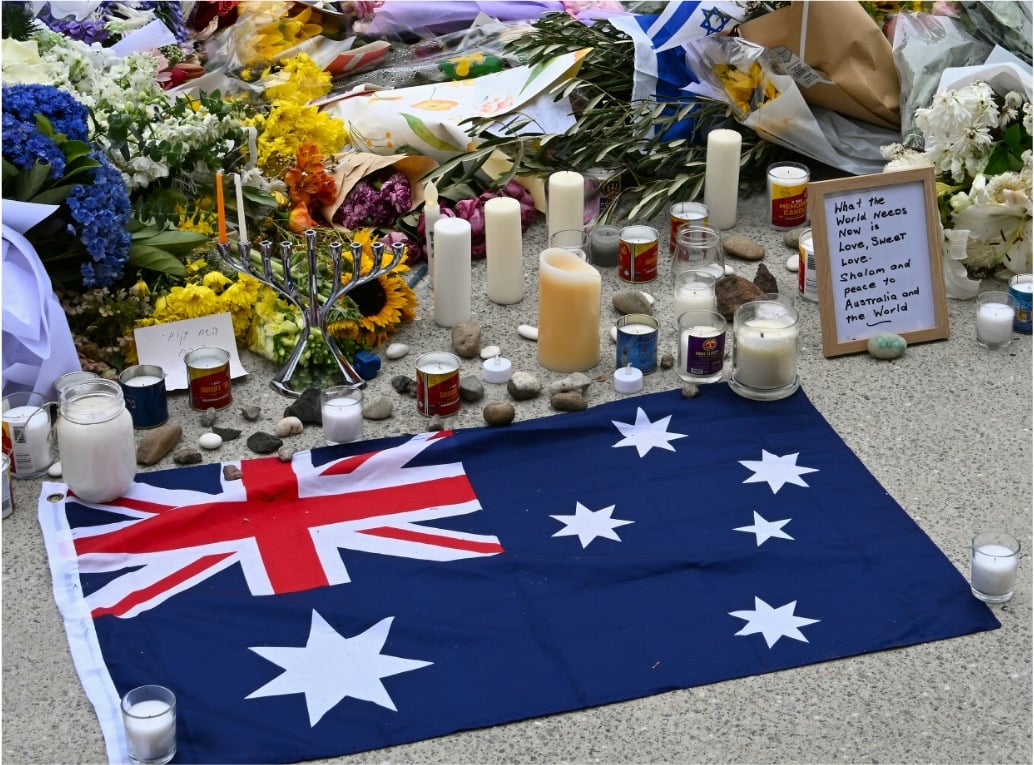
Australia is in the midst of a major enquiry into antisemitism- a Royal Commission- following the terrorist attack at Bondi Beach. The community has been invited to make submissions. Below, I share mine. It is analytical rather than personal and represents my attempt to understand the links between anti-Zionist protest and harms to the Jewish community.
Who I am
I write as an Australian Jew.
I am writing entirely in my personal capacity and do not represent any Jewish communal, political or Zionist organisation. I am an engaged member of the Jewish community and regularly attend a local “egalitarian orthodox” synagogue.
I am a child of holocaust survivors. My father survived Auschwitz and Bergen-Belsen concentration camps and death marches; my mother was hidden in a convent for the latter part of the second World War. All four of my grandparents were murdered in Auschwitz.
I strongly support the right of Australians to advocate for the welfare, human rights and self-determination of both Jewish and Palestinian communities. I have been involved in inter-communal dialogue both in Melbourne and in Israel-Palestine and am commited to a just outcome in Israel and Palestine.
I am a medical specialist in the public hospital system and an associate professor at at Melbourne University.
Aims of this submission
I am writing primarily to reflect on, and critically evaluate, common claims made in reference to the relationship between pro-Palestinian advocacy and harms affecting the Australian Jewish community.
My primary contentions are that:
- The adverse impacts of the protest movement need to be understood as a systemic and cumulative phenomenon- this includes chronic low level psychological harm, social exclusion and the generation of an atmosphere associated with a heightened risk of sporadic violence
- The heterogeneity of participants and their motivations, the ill-defined targets (Israel, Zionists or Jews), and the ambiguity of protest language and symbols, together make attribution of harm and intent difficult. This ambiguity and heterogeneity allow a protest environment that tacitly fosters exclusionary, vilifying and even violent behaviour while allowing protest spokespeople plausible deniability.
- Consequently, the courts and relevant legislation, which assess the protest movement on a “slogan by slogan” or “event by event” basis -that is, through the lens of individual cases – cannot adequately “see” the broad environment as experienced by the Jewish community. It is a case of forest and trees.
Background
The attack on December 14, 2025, was the worst act of antisemitic violence ever committed on Australian soil. Fifteen people were murdered at a Hanukkah celebration at Bondi Beach.
Some have drawn a straight line between the Bondi massacre and anti-Zionist incitement, particularly focusing on the slogan “Globalise the Intifada”. Anti-Zionist advocates, in contrast, attribute blame to the shooters’ ISIS connection and the influence of radical Sydney clerics, insisting that the Bondi shootings have nothing to do with peaceful anti-Zionist activism.
Yet this murder was, in the perpetrators own words, intended to condemn “the acts of ‘Zionists”. It seems implausible that this targeting of Zionists was entirely unrelated to two years of inflammatory anti-Zionist rhetoric or that hate speech played no role in pushing perpetrators, primed by fundamentalist influencers, to cross some threshold to action.
Most Jewish Australians view Bondi against a backdrop of over two years of escalating incitement and a hardening anti-Jewish atmosphere. The Opera House protest in October 2023 marked a turning point. Reported chants, including “Where are the Jews?” and “F*** the Jews”, suggested a real shift in what could be said about Jews in public, seemingly without consequence.
Since then, high-profile incidents, such as arson attacks on synagogues, have attracted significant media attention. Less visible are cumulative, psychologically harmful effects of effects of chronic “low level” stigmatisation.
Many find it hard to avoid the conclusion that this environment may have lowered the threshold for violence. A long-standing vulnerability has been brought into sharper focus, prompting calls for a precautionary response, including greater restraint in protest language.
The Bondi tragedy has produced grief, fear and anger within the Jewish community, alongside shock and sympathy across the wider Australian society. The subsequent critical national conversation has led to the present Royal Commission. Could we, as a nation, have done more to counter antisemitism and ensure Jewish safety? Why did our security services fail? Was anti-Zionist activism a contributing factor for Bondi?
If so, do we need constraints on forms of protest? Should constraints be established through legislation or, at a deeper level, through education and cultural change?
Debate over public discourse and anti-Jewish incidents
Palestinian advocacy organisations have condemned the violence at Bondi and expressed sympathy for the victims. However, Jewish expressions of fear or calls for reassurance and safety have typically been dismissed as “weaponising antisemitism”, silencing debate or even “defending genocide”.
Anti-Israel groups like US Jewish Voice for Peace and the Australian Palestine Advocacy Network insist their activism is guided by justice and human rights and rejects racism or violence. Those claims are in their mission statements. Jewish anti-Zionist commentators and groups have denied any possible relationship between the language of protest and the attack. “Zero evidence”, according to one commentator.
Consequently, they have criticised Jewish calls for safety and protections, and government proposals to restrict aspects of protest, as overreach or an attack on free speech rather than an attempt to provide community safety.
This insistence that no restrictions be placed on the language and forms of protests is accompanied by several claims that warrant critical evaluation:
- That the pro-Palestinian movement is peaceful and simply protesting injustice (including alleged genocide)
- That the language of protest, including terms such as “Globalise the intifada” is inherently non-violent;
- That public protest is directed against Israel and Zionists and not against Jews;
- That consequently activist speech cannot be linked with violence, or harms more broadly, affecting Jews
- That the imputation of violent connotations is simply an attempt to stifle free speech.
How might we reconcile this Jewish experience of harm with claims by Palestinian advocacy groups that the movement is non-violent and explicitly rejects antisemitism?
Below, I address a number of key questions and issues in turn.
1.The pro-Palestinian movement is a complex ecosystem and not accurately characterised as entirely peaceful
Palestinian advocacy groups stress that their activism is grounded in human rights. They claim that violence against Jews cannot be attributed to a movement that explicitly rejects antisemitism or the use of violence. This is a superficially reassuring but incomplete framing. It fails to acknowledge the range of actors (and agendas) within the pro-Palestinian advocacy community and beyond it, not all of whom necessarily share these peaceful ideals.
This heterogeneity is even reflected in the several labels used to describe the movement: pro-Palestinian, anti-Israel and anti-Zionist. While they may be used interchangeably, they represent very different agendas and targets: supporting the rights of a people, opposing the policies of a state and opposing, and often vilifying, those who can be linked with that state- that is, Jews.
A 2014 study of over 20 Palestinian civil society groups by the General Delegation Of Palestine in Australia captures the heterogeneity of the groups – likely a fraction of the number of groups active in 2026.
The study notes that Palestinian organizations “often have multiple desired outcomes and target audiences and undertake different kinds of activities.” The study explicitly distinguishes “advocacy groups” and “activist groups”. The former are the public facing, suit and tie wearing (my words) groups, that speak the language of human rights and engage in, to quote the study, “persuasion, lobbying and negotiation”.
“Activist groups”, in contrast, are described as “denunciative” engaging in “protest, street demonstrations, strike actions, public meetings” and whose desired outcomes are “diffuse and not necessarily … within defined policy and political parameters”. They “articulate messages in different forums, to different audiences” with different “tone, tenor, and language of the message”… “in language that resonates with their niche constituencies.” Of course we are now also increasingly aware of Islamist (and) influences in Australia which we now know to have been connected to the Bondi massacre.
Beyond explicitly Palestinian groups lies a wider ecosystem. It includes direct-action networks, unaffiliated vandals, right-wing extremists, Islamic fundamentalist groups and “old school antisemites”. They often mobilise around the same events, language and grievances or share physical and online spaces with non-violent advocacy groups. Their presence may shape how protests are experienced by those on the receiving end.
Speaking at the Lowy Institute lecture ASIO Director-General Mike Burgess observed that activist groups are often not “centrally controlled” or “uniformly motivated,” and may include “individuals who are increasingly willing to embrace or threaten violence to achieve their goals.”
This heterogeneity within the activist community allows for plausible deniability when violent or threatening behaviour is observed For example, after chants of “F-ck the Jews” and “where’s the jews” were reported at the Opera house protest, Fahad Ali of the Palestinian Action Groups dismissed this as reflecting a “small group of troublemakers” The same disavowal was made regarding a pro-Palestinian bikie group. This allows spokespeople to claim entirely benign aims while wider affiliates of movement take a more aggressive approach to members of the Jewish community.
To put it simply: claims that the Palestinian advocacy community is entirely peaceful is a very incomplete description of reality.
2.The language and forms of protest are not unambiguously peaceful, but rather contain phrases and symbols with the potential to be interpreted as violent by elements in the protest movement and broader society
The language and symbolism of protest span a wide range. Some slogans are political and entirely unobjectionable: “Stop the war,” “Free Palestine”.
Then there are the explicitly or implicitly violent slogans and symbols that often accompany protest. They include phrases such as “where’s the Jews”, “f*** the jews” “death to IDF” and “by any means necessary” as well as symbols (terrorist flags, pictures of the Ayatollah, the Jewish Star of David in rubbish bins) Symbols of Hamas, Hezbollah and Iran can be understood as implying support for their violent and eliminationist goals (described here, here, here, here, here). This celebration of violence was evident immediately after the Hamas massacre at the Opera House protest and the Lakemba celebration (and indeed there was further language of celebration and an anniversary event at Lakemba a year later.)
Slogans such as “Zionists are baby killers” and “all Zionists are terrorists” are clearly intended to, or can reasonably be expected to, incite hatred towards those who support Israel’s existence or are affiliated with Israel, regardless of their views on the conduct of the war.
In between are phrases whose meaning is contested, such as “from the river to the sea” and “globalise the intifada.” Many have expressed concern that such phrases are coded calls for violence or for the elimination of the Jewish state. Palestinian advocates have emphasised the innocent meaning of “river to the sea” and “Intifada” (here, here, here) and some go so far as to argue that attributing violent intent to such slogans is Islamophobic.
It is frequently explained, for example, that “intifada” simply means “shaking off” political oppression and is not inherently violent. But language does not operate through dictionary definitions alone. For many Jews, the word “intifada” evokes, and is inseparable from the Second Intifada — a sustained campaign of terrorism that killed more than 1,000 Israelis. That history inevitably shapes how the term is heard. As Susan Benesch of the Dangerous Speech Project explains, the experience of speech as “inflammatory” depends on the speaker, the audience, the medium and the context.
“Globalise the intifada” may carry one meaning in an academic lecture and quite another in a mass street march. Its impact can shift with the size, tone and location of a protest; with accompanying slogans (“death to the IDF,” “by any means necessary”); and with symbols associated with Hamas or Hezbollah. Such language may land very differently in demonstrations held immediately after the Hamas attacks of 2023 or in the wake of the Bondi terror attack. It will be experienced differently in the public square and outside a synagogue.
The activist community is not an army of philologists. Whatever the linguistic origins of “intifada”, its meaning is contested and may be interpreted differently by different groups. As the Palestinian led report mentioned above states, in some circumstances “…human rights and international law arguments can lose their meaning in inflammatory and, at times, ideological criticisms.”
It is that very ambiguity that allows those who do seek to intimidate (or even provoke violence) to use it with plausible deniability. As Susan Benesch states “One cannot make a list of words that are dangerous, since the way in which any message will be understood – like its effect on an audience – depends not only on its content but on how it is communicated…. The very same words can be highly inflammatory, or benign.”
3.The use of the term Zionist as the target of protest implicates most Jews despite claims by protesters that they are not antisemitic and do not target Jews
Activists claim to target Zionists and not Jews.
The problem is that the vast majority of Australian Jews are Zionists- if you target Zionists you are generally targeting Jews.
A 2023 Australian survey reported 80-90% of respondents indicated personal connectedness with and concern for Israel and 77% identified as Zionist. Most Australian Jews have cultural, religious or historical connections to Israel and support for the security and safety of its citizens, including for many Jews, close family. Some use the label Zionist to describe this connection. It is often an element of cultural identity and for Australia’s substantial post-Holocaust community, it carries connotations of “refuge”. For many Jews, this sense of connection does not imply endorsement of specific Israeli policies or leadership.
Anti-Zionists are well aware of this deep connection between Jews, Israel and Zionism, yet work hard to maintain the fiction that their activism does not target Jews.
They do it by presuming to tell Jews about their identity. (Something that would be considered offensive if directed at other groups. Jews are told that they are a disembodied “faith group” with no sense of peoplehood or organic connection to Israel. Palestinian advocates showcase the tiny minority of antizionist Jews who agree with them. Anti-Zionists insist that Zionism and Judaism are distinct noting that “Not all Jews are Zionist” or “being Jewish is not identical to being Zionist”. This distinction is technically correct but doesn’t negate the connection of the vast majority of Jews with Israel.
Indeed, the identification of Zionists and Jews in the mental landscape of some activists is evoked by the use of classic antisemitic tropes in antizionist discourse. They speak of “…the Jewish Lobby and the Zionist Lobby infiltrating” with their “Tentacles”, of powerful elites (including Jewish Law firms) and conspiracist notions “We already know that Zionists are parasitic upon progressive spaces. It is under the guise of progressivism that Zionists launder their genocidal colonialism, while weaponising their influence to amplify occupation propaganda and steer cultural narratives away from Palestinian liberation.”
Thus, though the protest movement insists its focus is Israel and its policies, the use of the term Zionist does much unrecognised work in redirecting hostility from Israel to Jews. This reflects the multiple and conflicting resonances of the term Zionist in protest culture. In protest messaging, the term “Zionist” is a placeholder for a catalogue of evils: colonialism, racism, apartheid and genocide. It can be loaded with the most inflammatory rhetoric: Zionists as “child killers,” “Nazis” or “genociders.” It functions loosely as a political descriptor, a moral accusation and a marker of identity.
These dual resonances – Zionist as object of hate and Zionist as Jew – ripple through disparate communities, tacitly “criminalising” even the most benign connection with Israel and indirectly reinforcing antipathy towards Jews, without ever explicitly naming them. When “Zionist” functions simultaneously as a term of vilification and as a label many Jews apply to themselves, political critique almost inevitably slides into group-based hostility. The effect is to generate antipathy toward Jews without ever explicitly naming them.
It is not surprising that in some community sectors, a simple public expression of concern for the safety of Jews in Israel may be enough to evoke all the hostility now reflexly associated with the term Zionist. This leaves many Jews uncertain how to speak publicly at all.
Many Australians who support Palestinian rights in good faith may not recognise how protest language may facilitate this “slippage” of anger from Israel to Zionists, to Jews. This slippage blurs the boundary between political critique and hostility toward the Jewish community.
A distressing incident in 2025 illustrates how boundaries between antisemitism and the language of anti-Zionist protest can blur. Year-5 Jewish students on an excursion were reportedly subjected to a barrage of insults from older students from another school including: “dirty Jews”, “baby killers”, and “Free Hezbollah”.
It is tragic that the Bondi attackers, allegedly motivated by opposition to “Zionists”, murdered Jews.
4.The reflex denial of any possible links between protest and violence is based on simplistic and outmoded understandings of causality in complex social systems
In response to Jewish community concerns about protest language and community safety, it is common to hear the reply that the relationship between speech and a specific terrorist act cannot be “proven”. This is technically true, but misleading. In complex systems, causation is a statistical concept.
It is widely accepted in the broader community that certain harms operate probabilistically: for example the relationship between climate change and extreme weather events is well recognised even though one cannot prove causation for an individual bush-fire or storm event. The same applies to the relationship between smoking and individual cases of lung cancer.
Similarly, there is a substantial literature supporting the view that the risk of harm from hate-speech is also probabilistic and operates at a population level. This is true, even though we cannot attribute a given event (such as Bondi) to a specific persons, actions, slogan or protest event.
This phenomenon has been described as “stochastic terrorism” or “stochastic violence”. This has been defined as “…the use of mass communications to stir up … lone wolves to carry out violent or terrorist acts that are … individually unpredictable”. This literature recognises that violent acts are likely related to the emotional and cognitive effects of activism in the media and on the street. Psychological and linguistic studies and a recent major metanalysis of 55 studies on the impact of media messaging all describe similar mechanisms. This literature describes how rhetoric circulates within communities and can lower the threshold for violence in primed individuals. In these systems no one need explicitly call for violence, and no one is individually responsible. Risk arises through cumulative effects rather than direct incitement.
Susan Benesch of the Dangerous Speech Project describes dangerous speech as “Any form of expression (e.g. speech, text, or images) that can increase the risk that its audience will condone or commit violence against members of another group.” She further notes that “Hate speech … uses derogatory group slurs, metaphoric language, exaggeration, images, and symbols. … Its public expression ….allows like-minded individuals to find an echo chamber for their shared beliefs. And it has real and painful consequences for victims.”
Mike Burgess, speaking a month prior to the Bondi massacre, said that “Since October 2023, we’ve seen more provocative protests and a notable uptick in intentionally disruptive and damaging tactics by anti-Israel activists, including multiple acts of arson, vandalism and violent protest…” and “The conflict in the Middle East …. prompted protest, exacerbated tension, undermined social cohesion and elevated intolerance (making) acts of politically motivated violence more likely. …. Inflammatory rhetoric and provocative, disruptive actions had been normalised, and the normalisation of violence and hatred against one community had created a permissive environment for similar behaviours in other communities.”
This is not an argument about direct causation or “collective blame”, but the debate over language and anti-Jewish violence requires the recognition of this well described sociological phenomenon and constructive engage with its policy implications.
The inadequacy of frameworks premised on direct causation is not merely theoretical but regularly surfaces in permissive court findings regarding the right to protest near synagogues, or to display language vilifying “Zionists”.
5.The harms to the Jewish community are not limited to dramatic violent acts but include chronic psychological and social harm
Bondi was a tragic event that finally shocked our community into recognising and responding to a problem that had been evident to most of the Jewish community for two years.
Pro-Palestinian/ anti-Zionist activism had invaded “intimate” Jewish spaces, with mobs outside synagogues or at recreational spaces in Jewish neighbourhoods. There has been vandalism of Jewish homes, schools, synagogues, community centres and of the offices of a university academic. Jews in the arts and other sectors of our community have been marginalised and doxxed and private businesses intimidated and shut down. There have been death threats to Jews and Jewish organisations.
A steady drum beat of vilification: “baby killers”, “genocidaires” and “Nazis” has created a charged and heated atmosphere in which many Jews have come to feel unwelcome or unsafe. For every act that hits the media there are countless stories, often related over the Sabbath dinner table, of personal slights, off-hand comments and slurs. There has been endless on-line hate. This incitement has been marked by episodes of violence, acts of arson and now murder.
The dramatic rise in incidents negatively impacting Australian Jews since October 2023 has been well documented in Executive Council of Australian Jewry (ECAJ) incident reports, as have Jewish experiences of antisemitism (2024 survey ) and antisemitic attitudes held by non-Jewish Australians (2021, 2025, ASECA survey).
Hate speech itself can be profoundly harmful psychologically. This is true for Jews in Australia (and) the US Jewish community just as it was for the indigenous community during the voice debate. For some antizionists, the intimidation and marginalisation of Jews is not a by-product of activism but rather a specific goal. ASIO Director-General Mike Burgess, commenting on anti-Israel activists observed: “Directly or indirectly, their actions can marginalise, stigmatise and frighten sections of the community.”
A 2024 survey conducted in the weeks after the start of the Gaza war (including approximately 8% of the adult Jewish population) reported that 64% felt that antisemitism was a big problem, far higher than in a 2017 survey. One in five had personally experienced an insult or harassment because they are Jewish and a similar number was less open in showing their identity in public. Similar findings have been reported in the UK, Europe and the US.
This is particularly sensitive in Australia’s post Holocaust community. As Jeremy Waldron wrote of hate speech: “It does this not only by intimating discrimination and violence, but by reawakening living nightmares of what this society was like—or what other societies have been like—in the past. In doing so, it creates something like …a sort of slow-acting poison, accumulating here and there, word by word…”
6.Jewish community calls for support and safety reflect genuine grass roots concerns and are not simply political attempts to stifle legitimate debate as often claimed by anti-Zionist groups
Against the overwhelming evidence of adverse Jewish experiences, non-Jewish and Jewish pro-Palestinian and anti-Zionist groups regularly attempt to downplay the issue by:
- disputing definitions of antisemitism, survey methodology and measurement.
- dismissing communal concerns as “weaponising” antisemitism
- claiming Jews are simply conflating antisemitism with criticism of Israel.
- claiming that antizionist slogans and activism have nothing to do with Jews because “not all Jews are Zionists” or “Zionism and Jewishness are not identical”. Such claims, while true, are facile and in no way negate the experiences and views of the vast majority of the Jewish community who have strong connections with and concerns for Israel and are targets for antizionist activism
- focusing on antisemitism from the political right, distracting from the complex and cumulative effects of anti-Zionist speech and activism from the progressive left, religious fundamentalist and anti-Israel groups.
The pattern is one of disputing and distracting rather than engaging with patterns of fear, withdrawal and marginalisation.
This approach stands in opposition to recommendations in the AHRC Framework which stresses that the approach to racism should be “community-centric” and recognise that racism as a “complex and shifting phenomenon”.
7.Claims that antisemitism can adequately be addressed through existing “universal” mechanisms are not supported by evidence
Anti-Zionists resist specific policies to respond to antisemitism, casting their lot with generalised anti-racism frameworks. They reject the Special Envoy’s report on antisemitism, in part for reasons of free speech. The claim that the AHRC Framework is sufficient as the primary mechanism to deal with antisemitism is flawed.
While society-wide approaches to racism are essential, Indigenous Australians, migrants, women, LGBTQ+ communities, Muslims and Jews all have different histories of oppression and face different challenges.
The need for targeted measures for antisemitism is not about moral priority but relates to its specific dynamic. Jews are often not recognised as a minority let alone a vulnerable one, because they are coded “white” and linked with power, money, conspiracy and influence. There is growing ignorance of antisemitism’s history, its genocidal expression within living memory. A UN report highlighting the lack of awareness of antisemitism’s modern manifestations.
It must also be noted that the AHRC document was framed and developed primarily to deal with indigenous disadvantage. Its preamble it states that: “racism operates by racialising various groups of people negatively to maintain the dominance of groups racialised as white….”. This strong conceptual frame around issues of colour raises questions about its suitability as the sole vehicle for addressing antisemitism.
The assertion made by Jewish anti-Zionists, that “general anti-racism” measures, including the AHRC Framework, will be effective for antisemitism does not reflect what is known about antisemitism nor about the AHRC Framework.
As human rights law academic Kenneth Marcus has observed, when antisemitism is subsumed under generalised frameworks of disadvantage, it often disappears from view.
The Special Envoy’s plan, while open to criticism, is consonant with Global Guidelines which have been endorsed by over 40 states and regional groups, and consistent with UN recommendations that addressing antisemitism requires specific strategies in addition to general anti-racism measures.
In public statements the JCA has argued that calls to curb the most hostile forms of anti-Zionist speech risk making Jews less safe, by exposing them to blame for increased state repression. It is worth asking whether reframing such calls as political manoeuvres rather than expressions of communal fear does not itself heighten that risk — by casting concern for safety as bad faith.
8.Minority Jewish voices substantially misrepresent the concerns of the wider Australian Jewish community
The Jewish Council of Australia (JCA) has expressed the intention to engage with the Commission, as is their right. However, public positions taken so far by the JCA and other anti-Zionist Jewish groups raise concerns about the nature and impact of their likely submissions.
The JCA presents itself as an expert voice that provides a counterbalance to allegedly unrepresentative communal leadership bodies such as the ECAJ.
While Jewish peak bodies are not directly elected by the whole of community (what community peak bodies are?), they include a wide range of community organisations across the country and are closely aligned the community’s concerns regarding safety and connection with Israel. Concerns regarding community safety are widespread and a deep connection to Israel and concern for Israel’s welfare are shared by around 90% of Australian Jews. Around three quarters self-identify as Zionist.(2017, 2023 and 2024).
The JCA and other anti-Zionist groups have a small number of high-profile spokespeople, however their views are unlikely to reflect more than a small minority of a Jewish community of over 110,000. The JCA claims over 1,300 supporters. However, many claimed supporters are anonymous and signing on to their website entails endorsing values such as human rights, freedom and equality. not necessarily the anti-Zionist nature of the group. It is far from clear that their those who have signed endorse the JCA’s view that antisemitism is unrelated to progressive and antizionist activism.
This doesn’t delegitimise their participation or views but should have bearing on the weight given these views at the Royal Commission.
Anti-Zionist Jewish positions are often cited by the broader anti-Zionist advocacy community and by segments of the media and civil society. This is not because the JCA is representative of the community, but rather because their views suit the agenda of those who seek to vilify the Jewish community without restriction.
This “spoiler effect” is not without precedent.
The recent referendum on an Indigenous Voice to Parliament, though set in a different political context, is illustrative. Tanya Muscat and Katharina Wolf from Curtin University described how “No” proponents “… were selectively framed by media to present a picture of broad Indigenous opposition, thereby neutralising support for the Yes campaign…(this) illustrates the need for communication strategies that are not only inclusive, but genuinely representative and responsive to the diversity within Indigenous communities.”
The Commission should be alert to the risk that anti-Zionist Jewish voices, amplified beyond their representative weight, may obscure the genuine concerns and aspirations of the wider Jewish community.
9.Jewish vulnerability is not adequately recognised in legal and progressive cultural frameworks
Over the last two years or more, hostile speech targeting Jews has circulated, escalated and become normalised in a manner that seems unimaginable were this another minority.
Cautious responses across government, media, legal and other civic institutions have contributed to a permissive environment in which hostile language and behaviour have gone unchallenged.
In part this has happened because concerns expressed by Jews regarding antisemitism are often understood primarily through the lens of the Israel–Palestine conflict, where they are interpreted as attempts to “silence protest”. They are also contested through disputes over definition or methodology.
At a deeper level, Jews are not widely recognised as a vulnerable minority, despite being one of Australia’s smallest communities and carrying profound collective trauma within living memory. Jews are targeted by “the right” as “non-white” and conspiratorial (with replacement theories proliferating, particularly in the US) as well as by progressives who characterise them as white, European, powerful and conspiratorial. This antipathy from both sides of the political spectrum is not experienced by other minorities, and other vulnerable groups typically do not offer solidarity to the Jewish community.
Existing legal and anti-discrimination mechanisms are designed to deal with harms attributable to individual people and events. As discussed above, much of the harm associated with the protest movement can be understood as cumulative in nature, with risks being statistical. This framing is more akin to climate change than to individual criminal behaviour and so grappling with the cumulative effects and diffuse responsibility of mass movements needs alternative conceptual approaches and mechanisms of mitigation and redress.
The NSW Court of Appeal’s April 2026 decision striking down the Public Assembly Restriction Declaration scheme found that it imposed an impermissible burden on the implied constitutional freedom of political communication. The courts framework assumes that harms from political expression are discrete and traceable, and that a more precisely targeted instrument is always available and always superior.
The stochastic violence framework challenges both assumptions. Where harm operates through cumulative population-level exposure and threshold effects, demanding tight causal specificity as a condition of constitutional validity is demanding something the nature of the harm structurally cannot provide. Where the relevant risk is ambient and systemic rather than incident-specific, a broader precautionary mechanism may be more — not less — consistent with the underlying harm theory than a narrowly targeted one would be.
Legal mechanisms designed to adjudicate individual acts, individual intent and individual causation are poorly suited to harms that are diffuse, cumulative and probabilistically distributed across a population.
The Commission should draw two conclusions from this. First, that the safety concerns motivating the legislation were genuine and documented. Second, that the gap between what existing legal frameworks can address and what the harm actually requires cannot be closed by litigation. It requires policy development grounded in the empirical literature on dangerous speech and probabilistic violence — to develop regulatory responses that are both constitutionally defensible and adequate to the harm being addressed. That is precisely the kind of deeper recommendation this Commission is positioned to make.
10. This is not just another free speech/protest issue- the current protests are the first large-scale human rights protest movement in Australia that explicitly or implicitly targets an Australian minority community
The claim that anti-Zionist protest stands in the tradition of great Australian civic activism deserves scrutiny. Australia has a proud history of protest in the cause of human rights.
Opposition to the Vietnam War targeted government military policy. The anti-apartheid movement targeted a foreign regime. Activism for LGBTQ+ and Indigenous rights targeted discriminatory laws and the Australian state. In each case the object of protest was governmental policy or the policies of a foreign state.
No Australian minority community was targeted, vilified or made to feel unsafe in its own country as a direct consequence of the protest itself.
The anti-Zionist protest movement is different. Its stated target is the Israeli government but, as argued above, the language and conduct of significant elements of the movement extend — through slippage and cumulative normalisation — from Israel, to Zionists, to Jews. The people bearing the cost are not governments or institutions. They are Jewish schoolchildren, Jewish academics, and Jewish families whose synagogues have been vandalised and whose neighbourhoods have been subject to intimidatory protest.
A human rights movement that targets a vulnerable minority undermines its own foundational premise. This not simply the case of speaking truth to power but rather a large movement directing its forces at a vulnerable minority.
Powerful and effective advocacy for Palestinian rights is entirely legitimate and possible without dehumanising language, without intimidation in Jewish communal spaces, and without slogans carrying violent resonances for a community that has known genocide within living memory.
Some notes from personal experience
My parents came to Australia to escape European antisemitism. It was largely a successful migration, and this country has been good to our family and to the Jewish community more broadly.
Antisemitism has nonetheless been a sporadic presence throughout my life. As a child I heard comments about Jews and money. Walking to synagogue in a kippah I have had “bloody Jews” shouted from passing car windows on several occasions. A close friend was beaten in a football ground car park while wearing a kippah . A few years ago a tradesman stormed out of my home after apparently noticing a Jewish artefact, shouting in the street as he left: “the Nazis should have finished you off.”
This was unpleasant but had never risen to the sense of a systematic anti-Jewish campaign.
Since October 2023 something has changed.
Partly it is what has been said and done — the graffiti, the vandalism of Jewish centres, the tearing down of hostage photographs from public walls. Partly it is what has not been said. I have watched colleagues receive institutional solidarity after attacks on their communities over time After October 7th 2023 I received communications from institutional leaders that mentioned Gaza, mentioned the conflict, but did not mention Jews, did not mention what had happened to Israeli civilians and did not acknowledge what the Australian Jewish community was living through. That silence communicated something profound.
I have watched security guards at synagogues and Jewish schools become so normalised that we have largely stopped remarking on it. Soon after October 7th 2023 a Jewish nursing home in Melbourne started to employ guards at the entrance. My uncle, a Holocaust survivor, needs guards to protect him from antisemitic attack in Melbourne in 2026.
The sense that there has been a tectonic shift in attitudes towards Jews is widely shared in my community, and it deserves to be taken seriously.
Conclusions and recommendations
The concerns currently being expressed by Australian Jews do not turn on Bondi.
Rather, Bondi has served to crystallise awareness of the sustained and normalised hostility toward a minority community. This has operated through language, symbolism, social pressure and physical intimidation in a civic environment that has consistently failed to recognise, constrain or respond to it with the seriousness applied to harms affecting other minorities.
There is a moral accounting that has not yet been done. For two years, government and civic institutions sent a series of signals — largely through acts of omission— that shaped the environment in which hostility toward Jews escalated and became normalised. Just two early examples were the silence after the Opera House protest in October ’23 and our Foreign Minister’s refusal to visit the Nova memorial while in Israel. The has been a continuing absence of clear public statements about what forms of protest and language are acceptable — not legally, but morally.
This continuing silence and apathy were read, by the Jewish community and by the protest movement, as tacit acceptance of unconstrained forms of protest. The failure of government to reinforce moral and civic norms has had consequences that no subsequent legislative response can fully undo.
A Royal Commission that focuses narrowly on security failures at Bondi, without grappling with this broader institutional failure of leadership, will fail.
The protest movement should address its own accountability. Palestinian advocacy organisations that present themselves as defenders of human rights carry a particular responsibility. Tolerating, excusing or deflecting attention from dehumanising language directed at Jews is a contradiction the Commission should name directly. “We reject antisemitism” in a mission statement is not accountability. Genuine commitment to human rights principles requires actively calling out vilifying language when it appears, refusing to share platforms with those who use it, and accepting that the credibility of a movement is shaped by what it tolerates as much as by what it explicitly endorses. The question the Commission should put to these organisations is not whether they intend harm, but rather whether they effectively provide cover for unacceptable conduct incompatible with the protection of human rights.
The Commission will hear from minority Jewish voices who are seeking to limit scrutiny of anti-Zionist activism and minimise the widely held concerns of the community they claim to represent. Anti-Zionist Jewish voices are amplified not because they reflect Australian Jewish experience but because they are useful to those who wish to deflect that scrutiny. It would be a serious failure if the genuine and widely held fears of over 100,000 Australian Jews were obscured by a small, unrepresentative minority whose positions are largely indistinguishable from those opposing any restraint on anti-Zionist activism.
The Commission should weigh the asymmetry of what is at stake. On one side of the balance sits some degree of restraint in the most inflammatory language and protest forms — forms that reasonable people can recognise as serving no legitimate advocacy purpose. On the other sits a community that has spent two years reporting fear, concealing identity in public, withdrawing from civic life, and watching its institutions firebombed while being told that its concerns are weaponisation, overreach, or simply the price of free speech. Freedom of speech is a central value. So is the right of a minority community to exist in civic space without being treated as a legitimate target. These are not equivalent considerations, and recommendations that treat them as symmetrical will not address the harm.
This is not a call for censorship, silencing debate or banning protest. It does not equate criticism of Israel with antisemitism. Nor is it a concern about mere Jewish discomfort relating to robust debate. The case for Palestinian rights is legitimate and can be made powerfully without language that dehumanises, without slogans that carry violent resonances, and without forms of protest that target Jewish communal spaces. The question is not whether advocacy is permissible. It is whether the most harmful modes of that advocacy are necessary to it.
What is at stake is not comfort but belonging: whether Australian civic spaces remain places where minorities can live, speak and participate without being treated as objects of collective hostility.
No regulatory or legislative response will be adequate without investment in the civic and educational foundations that make such responses meaningful. The past two years have exposed not only a failure of law and policy but a failure of shared understanding — across institutions, media and the general public — about what antisemitism is, how it operates.
Regulation addresses behaviour but education is needed to address the conditions that make certain behaviours seem acceptable. Any set of recommendations that omits this foundation is treating symptoms. The Commission should recommend that addressing antisemitism be incorporated into school curricula. The media and public institutions require structured guidance on recognising hate speech that operates through political framing.
The Commission is accordingly asked to consider the following recommendations:
- Recognise the systemic nature of the harm. The cumulative, probabilistic character of harm from hate speech and inflammatory protest language should be acknowledged explicitly. A framework built solely around adjudicating discrete incidents and provable individual causation will continue to fail the Jewish community as it has failed it for the past two years.
- Develop regulatory responses adequate to systemic harm. The NSW Court of Appeal’s invalidation of the post-Bondi protest restrictions indicates the limitations of current judicial processes to address the nature of harms experienced by the Jewish community. The Commission should recommend policy grounded in the empirical literature on speech and harm —that are both constitutionally defensible yet adequate to the nature of harms experienced by the Jewish community.
- Require accountability within the protest movement. Advocacy organisations that claim to reject antisemitism and violence bear a corresponding responsibility to actively call out vilifying language and intimidatory conduct within the broader protest ecosystem they share. Passive disavowal after the fact is not accountability. The Commission should consider whether organisations and individuals that claim human rights credentials while tolerating dehumanising language directed at Jews should continue to receive public legitimacy, funding or institutional support.
- Reject the adequacy of generalised anti-racism frameworks as the sole response. The AHRC Framework was developed primarily around racialised disadvantage and the experience of communities of colour. Antisemitism has a distinct dynamic — Jews are simultaneously coded as white and powerful by progressives, and as foreign and conspiratorial by the right — and is rendered invisible by generalised frameworks. Specific strategies, consistent with Global Guidelines endorsed by over 40 states and with UN recommendations, are warranted and should be implemented alongside, not instead of, broader anti-racism measures.
- Weigh community voices accurately. The Commission will hear from Jewish anti-Zionist groups whose positions diverge sharply from those of mainstream communal organisations and most community members. Their right to participate is not questioned. However the weight accorded their submissions should be proportionate to genuine representativeness, and the Commission should be alert to the amplification of minority Jewish voices to serve interests other than accurate representation of the Jewish community.
- Invest in education and civic foundations. The Commission should recommend that antisemitism — its history, its specific character and its modern manifestations — be reflected in institutional training.
- Demand moral leadership, not only legal mechanism. The most important failure of the past two years has not been legislative. It has been the failure of government, universities, media and civil society to say clearly and repeatedly that Jews are a vulnerable minority community entitled to the same recognition, solidarity and protection extended to other minorities; that their fears are legitimate; and that certain forms of language and protest are not made acceptable by being coded. No other minority is expected to bear resentments originating in distant conflict or in the acts of isolated individuals.
The “I’ll ride with you” movement, which supported Muslims who were feeling vulnerable to backlash following the Lindt Café siege, exemplifies our community’s capacity to recognise and respond to minority vulnerability with solidarity. No equivalent solidarity was extended to the Jewish community in the wake of October 7th, or in the two years of escalating hostility that followed.
Randa Abdel-Fattah’s claim that “Zionists (i.e. most Jews) have no right to cultural safety” exemplifies the cloud that has hung unanswered over the Jewish community for far too long. This slogan, and the tragic downstream effects when such views become normalised (and even celebrated in some sectors), represent the deep challenge before the Royal Commission and the Australian community more broadly.