A Shofar Blast: The Universalism our Jewish Community is Forgetting
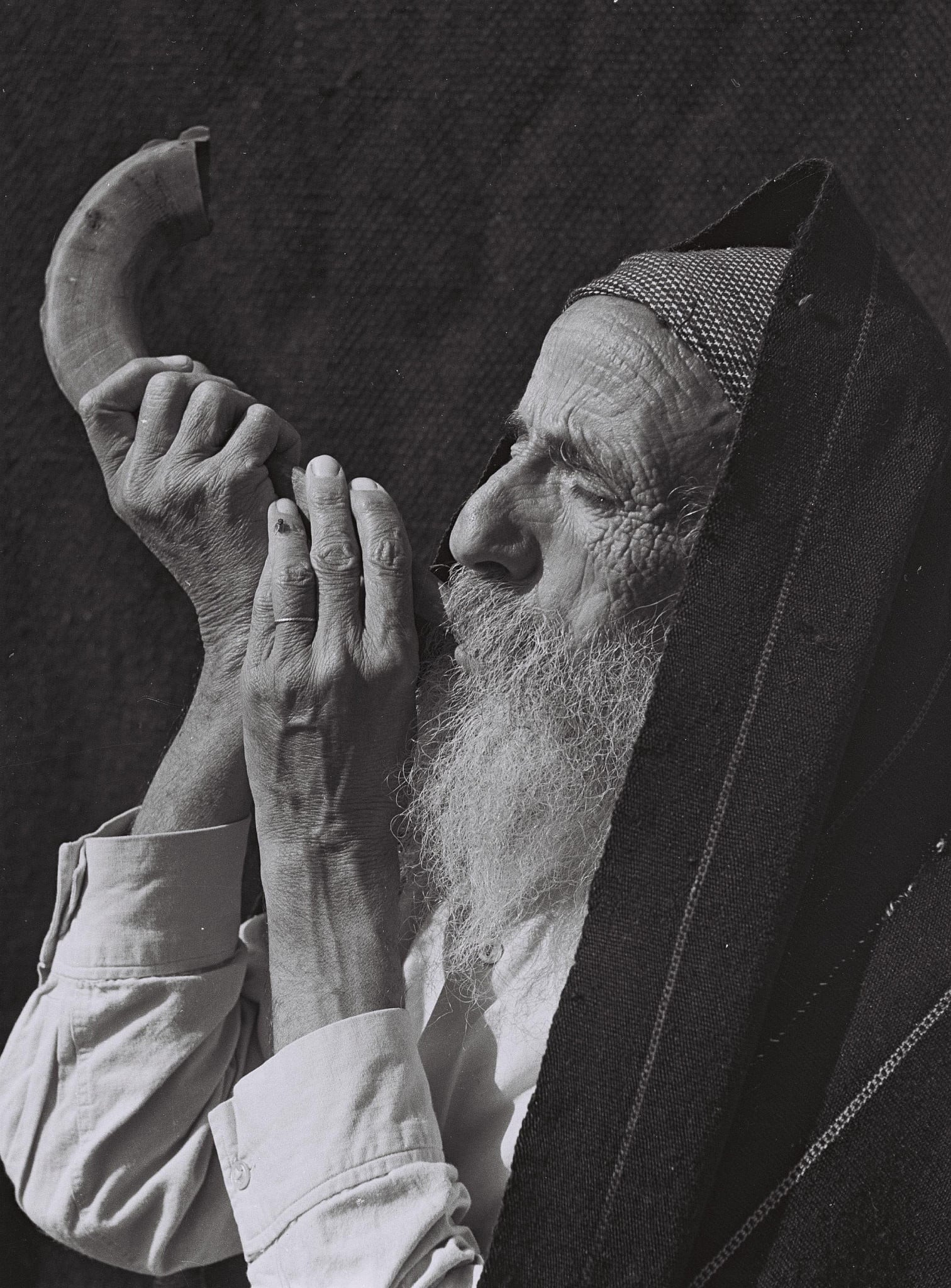
We think of Rosh Hashanah as one of the most Jewish days of the year. We blow the shofar to jolt us awake and eat special fruits to sweeten the mark of the “Jewish New Year.” But what we’re celebrating, really, is the birthday of Adam, who wasn’t even Jewish but is the father of all of us.
Especially now, Rosh Hashanah draws my attention toward the increasingly visible tension in Jewish life between our particularism and our universalism.
When I look at the various segments of the Orthodox world, I see that universalism has receded into the background. If pressed, many will say we should encourage non-Jews to follow the Noahide Laws, but that is a minimal moral framework, not a covenantal vision of humanity participating together in a grand divine project. Universalism becomes what we want from “them” and can teach “them” rather than what we can do for them or achieve together.
Orthodox Jews today have warm relationships with Evangelical Christians, but they’re often based on overlapping political goals rather than a shared sacred vision of an inspired divine plan that includes us all.
Among my friends on the more modernizing side of the Jewish world, I see that the universalism that has carried their movements for decades is also falling apart. The rising prevalence of antisemitism and anti-Zionism has made them feel abandoned by people and movements we once considered allies. A retreat inward is also understandable.
Across virtually the entire Jewish family, there’s a growing sense that too much concern for the wider world is a distraction from where our attention is needed most in this time of emergency. But the dichotomy is false. The challenge is not to pick between particularism and universalism — it’s to recover both.
Our moral imagination can be expansive enough, and our hearts big enough, to contain it all. Hillel famously captured the tension when he said: If I am not for myself, who is for me? But if I am for my own self [only], what am I?”
Yes, we must protect Jewish lives, strengthen Jewish institutions, fight antisemitism, build strong Jewish communities and support the continued security and flourishing of the Jewish state. Yes, we must also avoid partnering with those who dismiss the dignity of Jewish lives or increase the threat, in any way, to Jewish security.
But our defense against outside threats needs to be for something larger. We cannot spend all our time worried about antisemitism and none of our time focused on living Jewish values.
It has seemed almost entirely predictable that Orthodox Jews would align with Republicans and liberal Jews would be loyal to the Democrats. With the growth of Christian nationalism on the right and more radical anti-Zionist currents on the left, both gripping their parties tightly, many more now increasingly feel we have no true friends anywhere. The belief that Democratic liberalism will reliably protect Jews has weakened, as has the assumption that unadulterated American power can guarantee Jewish security around the world.

The good news is that neither of these opinions was sufficient to begin with. We can feel at home among Democrats not necessarily because liberal principles provided protection, but because our fights for racial equality, immigrants’ rights, vulnerable populations and human dignity are an outgrowth of our Jewish morality.
So too, the conservative tenets of freedom, individual rights and personal responsibility do not hinge on whether the Republican Party supports the Jewish People.
When we hear the shofar heading into Rosh Hashanah, we think about what we personally need to do teshuvah for: What did I say? Whom did I hurt? What mitzvah did I neglect?
In these times, though, our cheshbon hanefesh must also involve zooming out to ensure our broader ideological orientation is rooted in our deepest values. We can ask: Have fear, resentment or political convenience distorted my moral vision? How can I return to my foundational values and build a worldview from there, rather than letting politics dictate my values? We can hold political views more humbly while living moral principles more robustly.
The creation of Adam brings us back to those first principles. Before there was a State of Israel or even a Jewish People, there was humanity. The story of our particular family that the Torah goes on to detail only makes sense in the context of the larger human story.
It is only with the spiritual consciousness of our shared humanity that we can be covenantal partners in God’s unfinished creation. We care for the stranger because we’ve experienced being the stranger. We defend religious freedom because we know what it is like to have our religious life threatened or restricted. We stand against prejudice precisely because we know the consequences that come when the image of God within us is not recognized.
As we approach the birthday of Adam, we’re reminded that we’re not seeking merely to survive, but to thrive in our mission.
While defending ourselves is the first and most necessary step, it cannot be the end of the story. Applying our particular story to the needs of a wider, unfinished world is the tachlit (telos) of the Judaism we’re so righteously concerned about defending.