


A Society Obsessed with Hatred Cannot Be Happy
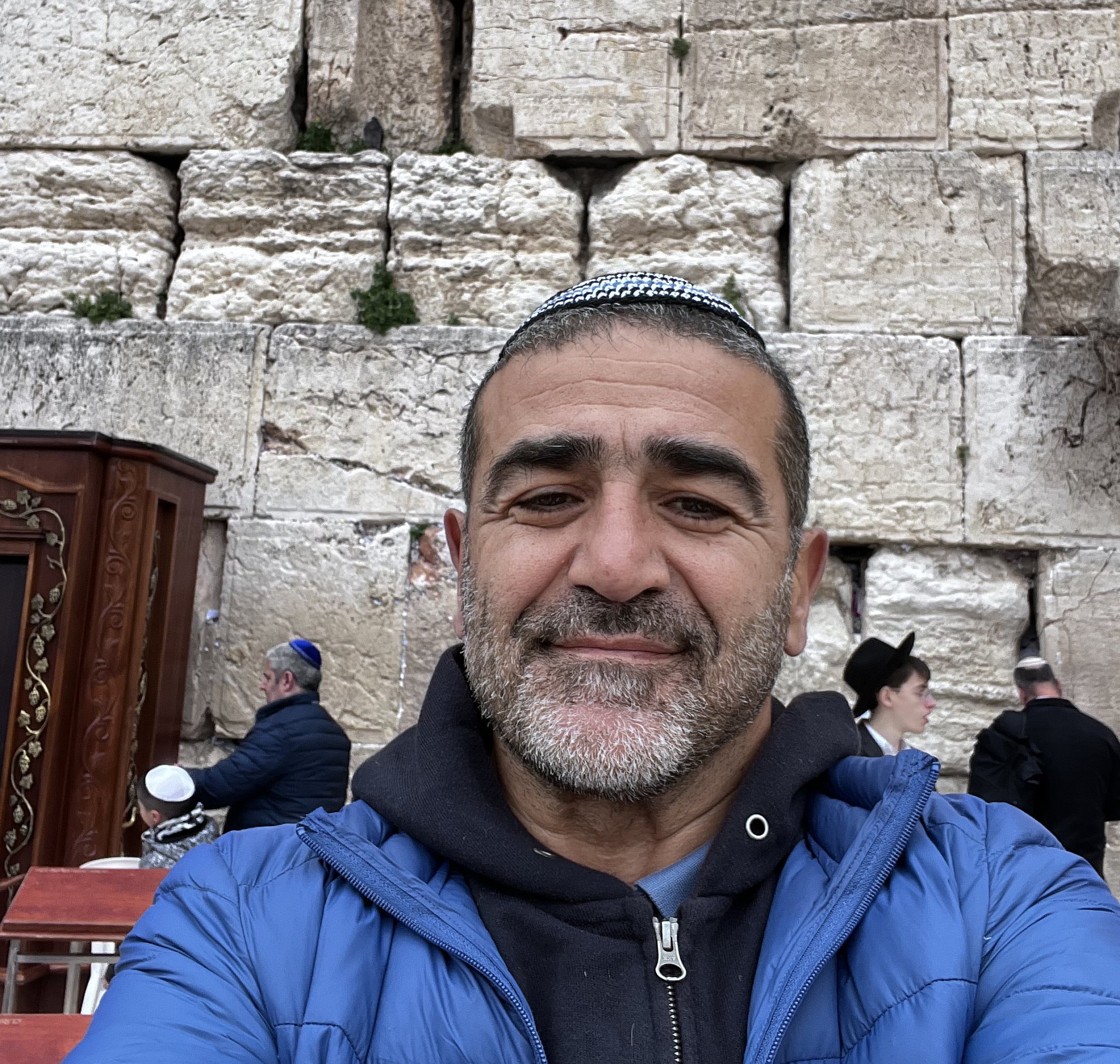
I grew up in a society where hatred of Israel sometimes occupied more space than love for our own lives. Over time, I came to understand something essential: when a society builds its collective imagination around resentment and the obsession with an enemy, it eventually destroys its own capacity for happiness, freedom, and progress.
I grew up in a world where Israel occupied all our minds, far beyond its actual geographic reality. A monster with an abstract face — so close, yet so distant.
In my Syrian childhood, and through the social, familial, and official narratives surrounding me, the “Palestinian cause” was not simply one political issue among others. It had become a religion. A total framework through which the rest of the world was interpreted. An obsession. A permanent struggle. A reason to exist. A collective emotion so deeply internalized that it no longer even needed to be questioned. A collective honor believed to have been violated and humiliated. The answer was absolute hatred.
We were not asked to think. We were expected to adhere. To adhere to a collective hatred. Without understanding. It was written. It was decided. By God or by ideologues.
Hatred of Israel required no neutral understanding of the conflict, of history, or even of Jews themselves. How can one remain neutral when fed only a single version of history? It existed before words, before nuance, before political debate. It structured conversations, school lessons, radio broadcasts, television series, slogans — even silences. Society organized both its daily life and its imagined future around hatred.
And over time, I came to understand something even more disturbing: this hatred never destroyed the designated enemy. It primarily destroyed those who carried it. It led them toward more death and more destruction. It trapped them behind dark and towering walls. It prevented them from seeing even the slightest horizon of hope.
It destroyed us first — before our enemy.
For decades, throughout much of the Arab world, the Palestinian issue served as the emotional and ideological center of gravity. Not as a humanitarian cause — since Palestinians themselves were often oppressed in Arab countries, confined to refugee camps and deprived of basic civil rights worthy of the name — but as an absolute obsession overshadowing everything else.
Dictatorships, political Islam, corruption, repression, political prisons, civil wars, educational collapse, sectarian divisions, the condition of women, the fate of minorities, and the massive brain drain all faded into the background behind a single narrative: Israel was supposedly the primary source of our suffering.
As if Israel’s disappearance would miraculously heal our societies.
In truth, everyone knew — though few dared say it openly — that no one could rival this “monster,” militarily, technologically, or economically, the very monster haunting our collective consciousness. Billions were diverted in its name by successive regimes, while ordinary people survived on crumbs — or on the endless machinery of hatred — convinced that eradicating Israel was somehow nobler, more important even than their own lives.
In reality, hatred had become the only project for the future. Our only dream: to become martyrs for the cause.
Over the years, this logic produced societies imprisoned by resentment. Societies glorifying death rather than life. Societies justifying and celebrating terrorism. Societies incapable of imagining themselves outside this hatred. Incapable of confronting their own failures because the existence of an external enemy spared them from introspection.
Looking back, what strikes me most is not merely the violence of the discourse. It is the mental space it occupied.
People could spend hours talking about Israel by candlelight in countries where electricity vanished every day, where public services collapsed, where young people dreamed only of leaving, where prisons overflowed with dissidents, where Islamist militias proliferated, where dictators slaughtered their own youth, and where fear governed daily life.
Not fear of the enemy — no. Deep down, everyone knew that this enemy had not killed, even in times of war, one-fifth of what dictators and Islamists inflicted upon their own people.
In reality, the collective obsession with Israel served above all to avoid confronting the disaster unfolding within our own societies.
Hatred became a collective refuge.
It offered an illusion of unity.
An illusion of dignity.
An illusion of struggle.
But it prevented any genuine healing.
When people live too long inside obsession, they eventually lose even the capacity to be happy, to create, to think freely, to breathe outside the conflict.
Hatred can generate excitement.
It can electrify crowds.
It can inspire slogans and collective hysteria.
But it cannot produce happiness. It cannot build a civilization. It burdens generations with chains. It handcuffs them and prevents them from moving forward.
Today, I even believe that some Middle Eastern societies have ended up confusing hatred with emotion itself. As if permanent anger gives people the feeling of existing. As if collective rage replaces any meaningful project for the future.
Sadly, this logic no longer concerns only the Middle East. I experienced it in Syria, but I now see it spreading within the very West that welcomed me.
Since October 7, I have watched with concern as parts of the Western world reproduce mechanisms I knew in my childhood: the same slogans repeated by segments of the left without even understanding them, the obsessive designation of a single guilty party without nuance, the recitation of one exclusive version of history, and above all this strange militant exaltation in which hatred becomes a form of social identity — where hatred itself is justified and elevated as a noble form of “resistance.”
These are exactly the same rhetorics that poisoned my childhood in Syria. I believed I had escaped them. Yet Islamists and parts of the French left have reintroduced them into societies that once believed themselves immune to such hatred.
I recognize this mechanism.
I have seen it before.
I know where it leads.
People often believe hatred gives strength. In reality, it mainly diminishes human beings. It reduces their ability to perceive the complexity of reality. It traps entire societies inside repetitive narratives where everything becomes predetermined: the guilty, the victims, the acceptable indignations, and above all the tolerated silences.
Escaping hatred does not mean abandoning causes one considers just, nor ignoring human suffering. It means refusing to let hatred become the organizing center of our existence and our judgment.
Refusing to let hatred become the sole engine and purpose of one’s life.
In truth, I believe real happiness begins with the ability to prevent hatred from entirely colonizing our minds.
I believe freedom begins there: when an individual — or a society — no longer needs a permanent enemy in order to give meaning to its existence.