"These fragments I have shored against my ruins"
A Stone for the Forgotten: Jewish Graves at a Commonwealth Cemetery in Hungary
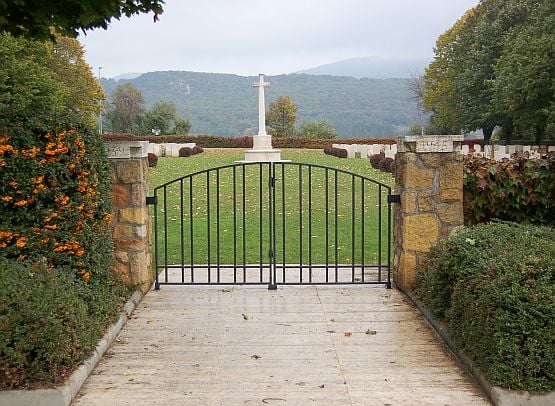
Commonwealth War Cemetery in Solymár, Hungary (Photo: Tamás Szórád / Air Base Blog)
When I married a New Zealander, I inherited a quiet reverence for a holiday I had never observed before: ANZAC Day. In Budapest, that meant attending remembrance services at the Commonwealth War Cemetery in Solymár, just outside the city.
Each year, under a pale April sky, uniformed representatives from the Australian embassy gathered alongside military attachés, diplomats, and the occasional Aussies and Kiwis living in Hungary. The ceremonies were perfectly planned, scripted and choreographed, orderly and dignified, with speeches, wreaths, and a cadence of Christian hymns and prayers that crescendoed into silence.
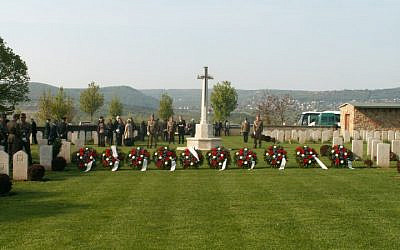 It was in that silence that I began to walk further away. I did not join the prayers. I couldn’t. Not because I didn’t wish to honour the dead, but because I couldn’t speak the names of God in a language and tradition that were not my own. I do not pray to Jesus, and I do not find comfort in Anglican rituals. So, I walked. And in walking, I began to see what the ceremony itself had rendered invisible.
Among the rows of white Commonwealth headstones, most etched with crosses and regimental crests, there were a few with something else: the Star of David. I found two. One marked the grave of Samuel Noah Kwinter, a 23-year-old Canadian. The other, of Ronald Albert Wittenberg, a 20-year-old South African. Both had died in 1944.
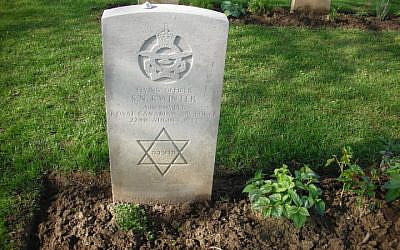
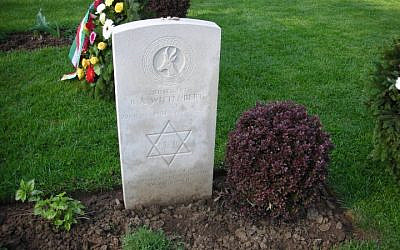
At the time, Kwinter’s grave had no stone; Wittenberg’s had two. I left one on each. I was already a mother by then, and it struck me in a visceral, almost unbearable way, especially just having listened to the heartfelt speech attributed to Kemal Ataturk at the service:
Those heroes that shed their blood and lost their lives… You are now lying in the soil of a friendly country. Therefore, rest in peace. There is no difference between the Johnnies and the Mehmets to us where they lie side by side here in this country of ours… You, the mothers who sent their sons from faraway countries, wipe away your tears; your sons are now lying in our bosom and are in peace. After having lost their lives on this land they have become our sons as well.
There’s no way to truly understand what it must have meant for their parents to be told their sons had died on the other side of the world, in a place they would never be able to reach; behind the Iron Curtain, inaccessible even for mourning. So I did what little I could; I marked the silence, quietly, with stones and prayers.
A few years later, I found some information about Kwinter online: biographical facts, articles, letters, carefully worded notifications from his commanders to his parents, immigrants from Poland. And I saw his name engraved on his parents’ headstone in Toronto. Their mourning, like his death, was transnational. A name split across continents, a grave empty, and a grave unvisited.
In 2009, when I first attended an ANZAC service in Hungary, there was no acknowledgment of these Jewish soldiers. Next year, even a representative of the Holy See offered a prayer alongside Anglican and other Protestant clergy. Not once was the word “Jewish” spoken. Flowers were placed on graves, but stones weren’t. It wasn’t an exclusion, it was worse: absorption. Their presence was not denied but subsumed; folded into a Christian ritual without a murmur of dissent. It was not silence from above or below; it was everywhere. I was not expecting a shofar to be blown, but I was hoping for recognition.
Years passed, and in Sydney, I heard an Australian chaplain address a multi-faith audience with these words:
Would you join me in prayer, and if prayer is not part of your faith or spirituality, can I invite you to reflect on these words? As we pause in reflection, people of faith often turn their thoughts to prayers. If it is your will, please join me as I pray in my tradition, or in silence, reflect on your own way.
It was dignified. It was inclusive. And it was something I never heard in Hungary.
Today, ANZAC Day services are no longer held in Budapest, since the closure of the Australian Embassy in 2013. Remembrance Day is still commemorated, but the ceremonies remain exclusively Christian. No mention is made of Jews who died in uniform. No stones are placed by diplomats on their graves. No Kaddish is said.
This absence becomes starker when we consider how Jews who died as victims are remembered. The Holocaust is carved into public consciousness, and rightly so, in Israel, in Europe, in every diaspora where survivors rebuilt their lives. Their names are spoken, their lives documented, their deaths mourned collectively. But Jewish soldiers who died in Allied uniforms are often remembered generically, if at all. They are not Hannah Szenes, Mordechai Anielewicz, or partisan heroes. They did not die Jewishly enough. And so, they disappear again.
The tradition of leaving stones on one’s grave is a signal of presence and the quiet weight of remembering. It resists the soft amnesia of time. It endures. But what happens when no one comes? And what happens when those who come, bring flowers, and say the wrong prayers?
The phrase “Lest we forget” is spoken each year at these ceremonies. And yet, some are forgotten with ritual precision, even if we echo the lines:
They shall grow not old, as we that are left grow old:
Age shall not weary them, nor the years condemn.
At the going down of the sun and in the morning
We will remember them.
I do. I remember them.
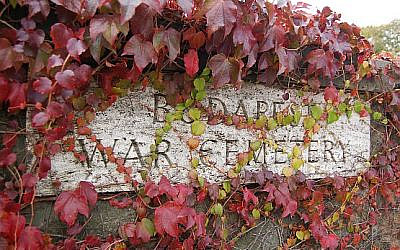
If you ever find yourself near Budapest on a damp April or a foggy November morning, take a quiet walk through the Commonwealth War Cemetery in Solymár. Bring stones and look for the graves with the Star of David. Because no one should have to die twice: once in war and once in silence.
Related Topics
Related Posts