
A Story Not About Jews
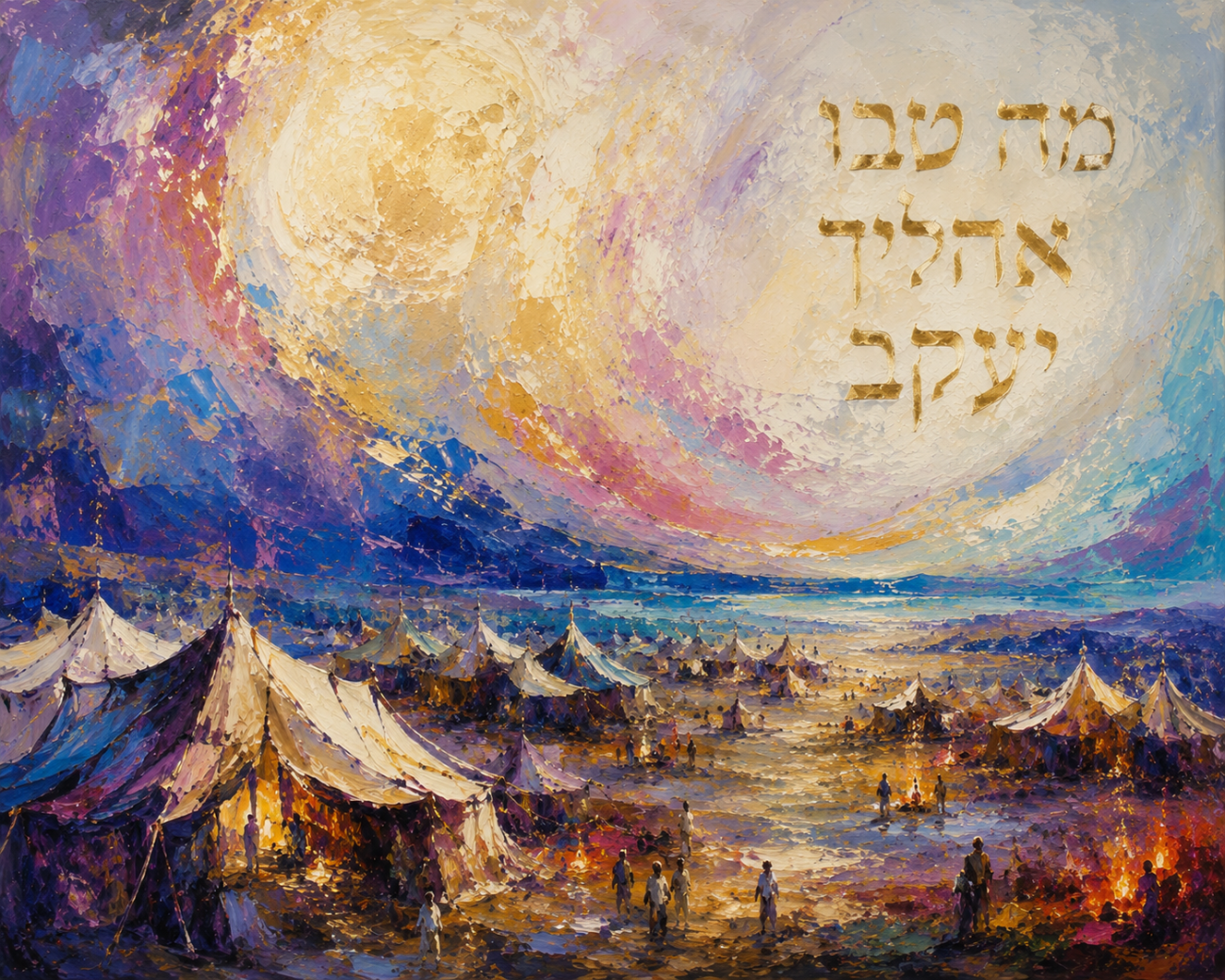
It is a story all about the Jews, yet the Jews play no role in it. It contains some of the most common phrases in Jewish life, yet they are not the words of any Jew. This week’s Parasha tells the fascinating story of Balak and Bilaam. Balak, King of Moav, sees the Jews camped at his borders, and is consumed by sickly fear. The Jewish People have recently defeated two local military superpowers. They have reached their final stop before crossing into their promised land. They pose Balak no danger, but he feels threatened. Cannily, he observes that military means will not succeed against the Jews, so he tries an alternative method. He engages the services of Bilaam to curse the people. Bilaam’s spiritual prowess is known; his blessings and his curses work. After a series of delays, two dreams and one talking donkey, Bilaam arrives, desperate to curse the Jews, but with no Divine mandate to do so. He tries and fails three times: he blesses the people he was hired to curse.
There are two questions we must ask: First, why? Why is this story even included in the Torah? Were it not mentioned, the Jews would not have even been aware of it. How would they know that on a distant hill there were two men trying and failing to curse them? It is safe to assume that over the long and rocky course of Jewish history there have been numerous attempts to inflict harm upon the Jews that we will never know about. Why are we told of this one? Secondly, why now? This tale acts as a strange interlude in the middle of Sefer Bamidbar. The stories before and after involve the Jews, as expected. Parashat Balak is a sudden, unprecedented change of tone. Why this, and why now?
Lurking beneath the details of this story are many references to a character mentioned earlier in the Torah. The Rabbis often[1] contrast the personality traits of Avraham and Bilaam. This is more than just a pedagogic tool. The text of this week’s Parasha is replete with cross-references to incidents in Avraham’s life:
First, both Bilaam and Avraham hail from the same place: Aram Naharaim (Bereishit 24:4, 10 and Devarim 23:5). Second, they both saddle their own donkeys and have two attendants when they travel on their most fateful missions (Bereishit 22:3 and Bamidbar 22:21–22). Third, and most significant, consider the words of Balak when describing to Bilaam why he wanted him for this task:
For I know that whoever you bless is blessed and whoever you curse is cursed. (Bamidbar 22:5)
This clearly echoes a promise made to Avraham at the very beginning of his journey:
I will bless those that bless you, and those who curse you I will curse, and all the nations of the world will be blessed through you. (Bereishit 12:3)
This parallel continues in an even more profound way: Across Parashat Balak, Bilaam has three failed attempts at cursing the Jewish People, blessing them instead. These three blessings bear an uncanny resemblance to three blessings that Avraham received centuries before:
Bilaam’s first blessing:
Who can count the dust of Yaakov, and the number of the seed of Israel? (Bamidbar 23:10)
When Avraham returns to Israel after leaving Egypt, he is promised:
And I will make your seed as the dust of the earth: so that if a man can number the dust of the earth, then so too your seed will also be numbered (Bereishit 13:16)
Bilaam’s second blessing:
God brought them out of Egypt… Behold, the people shall rise up as a young lion, and lift up himself as a great lion: he shall not lie down until he eats prey, and he will drink the blood of the slain (Bamidbar 23:22, 24)
In the Brit Bein HaBetarim, God tells Avraham:
He said to Avram, surely know that your seed shall be a stranger in a land that is not theirs, and shall serve them; and they shall afflict them four hundred years… and afterwards shall they come out with great wealth… On that same day God made a covenant with Avram, saying, To your seed have I given this land… (Bereishit 15:13–14, 18)
The Torah then lists the many nations they will defeat.
The third and final blessing resembles the final blessing that Avraham receives in his life:
God brought him (Israel) out of Egypt with the supreme power that is His: he (Israel) shall eat up the nations, his enemies, and shall break their bones, and pierce them through with his arrows… Blessed is he who blesses you, and cursed is he who curses you (Bamidbar 24:8–9)
After Akeidat Yitzchak, God tells Avraham:
I will exceedingly bless you, and I will exceedingly multiply your seed… and your seed shall possess the gate of its enemies; and through your seed shall all the nations of the earth be blessed; because you obeyed My voice. (Bereishit 22:17–18)
The blessings of Avraham reverberate across Parashat Balak.
This theme explains our earlier questions: God promised Avraham that although he was childless at the time, nations would descend from him. That although he had left home, the land he was a stranger in would become his land. These promises remained unfulfilled. Until now. The story that began with Avraham begins to end in this week’s Parasha. The Jews are at their final stop of their long journey to Israel. Over four hundred years have passed, but Avraham’s family will now live in Israel again. They are not an individual, but a nation. There is not a tent, but there are tents. They have been blessed and have become a blessing. The Parasha is riddled with references to Avraham for this reason. This is a story of a promise made and a promise kept.
The Jews are passive in this story because that was the promise made to Avraham. Unlike Bilaam, who went about blessing and cursing, Avraham was told: “I will bless those that bless you, and those who curse you I will curse.” He did not have to chase blessings or dodge curses. He just had to go on his journey, do his duty, and the blessings would come. The Jews do not do anything in this story; they just live as they are supposed to live. Bilaam sees them, and he cannot help but bless them. They are the successors of Avraham. All they need to do is live like him, and the blessings will come.
[1] See for example Avot 5:19