Building a safer Israel for the next generation.
A Sweet New Year Isn’t Enough. We Need a Stronger One.
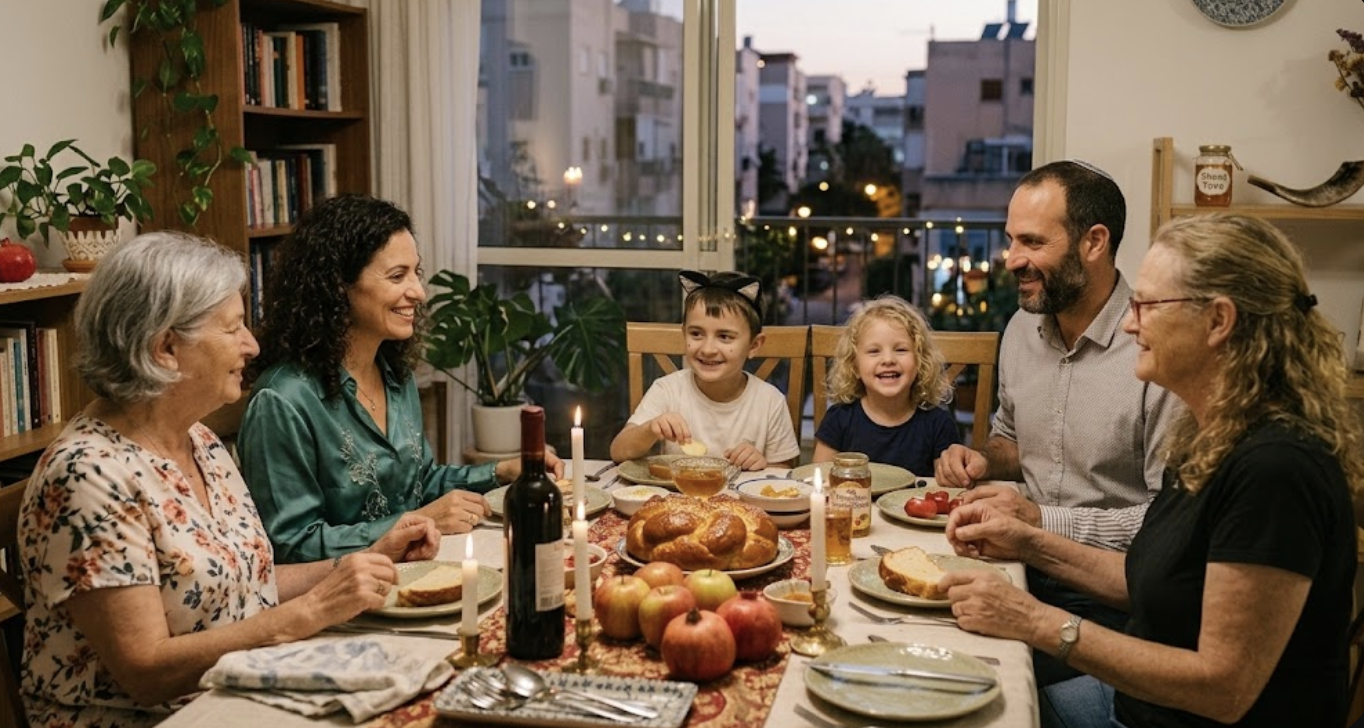
If this season is genuinely about becoming stronger, it's worth being precise about what strength means.
There’s a moment every year, a few days after Rosh Hashanah, when the dishes are put away, the relatives have gone home, and the house goes quiet. The new year has technically started. But nothing about our lives has actually changed yet.
That gap is not an accident. Jewish tradition doesn’t let the new year arrive and simply be declared good. It builds in ten days, the Aseret Yemei Teshuva, between the Rosh Hashanah shofar and Yom Kippur, and asks us to do something harder than celebrating: to look honestly at the year behind us and decide, specifically, what we’re going to do differently. I’ve come to think this is one of the most useful ideas in the entire Jewish calendar.
Reflection is what you do with it
In business, nobody improves their quarterly results by feeling bad about them. Improvements are made by looking at what actually happened, being honest about what didn’t work, and changing something specific before the next one starts. Teams that skip that step repeat the same issues year again with different dates on it.
For a lot of families right now, that difference isn’t theoretical. This has been a year of real pressure on households across Israel. Parents are stretched thinner than they’d admit, children carrying an anxiety they don’t have the words for yet, a school routine that looks normal on the surface while something heavier sits underneath it. A vague hope for a better year doesn’t do much for a child who’s still having trouble falling asleep, or a parent who’s out of patience by six in the evening.
What actually helps is specific: a parent who decides, concretely, to handle the next hard bedtime differently than they handled the last one. A teacher who changes one thing about how she checks in with the quiet kid in the back row. A therapist who takes what last year’s hardest case taught her and does something different with the next child who walks through the door. That’s what teshuva looks like as a discipline rather than a mood, not a feeling about the year that passed, but a decision about the one family, the one classroom, the one child in front of you now.
What “stronger” should mean this year
If this season is genuinely about becoming stronger, it’s worth being precise about what strength means. It isn’t toughness, and it isn’t the absence of struggle, this has been an exhausting stretch for a lot of families, and pretending otherwise wouldn’t be honest. Real strength, the kind this season is built to produce, looks more like capacity: the ability to keep showing up for the people who depend on you, especially when things are hard, and to build something sturdy enough that it doesn’t collapse the next time they need it.
That question, “What are we building sturdy enough to hold up under real pressure?” is one I think about constantly with children in mind, because children are where the gap between our intentions and our actual capacity shows up first. Wanting to be there for the next generation and actually having the trained people, the funded programs, and the durable institutions to do it are two very different things.
That’s part of why ELI – The Israel Association for Child Protection is opening something new: a center, carrying my late mother Dr. Hanita Zimrin’s name, built to take nearly fifty years of frontline child-protection work and turn it into training and research that strengthens the whole field, not just the families ELI happens to reach directly. Although it officially opens next year, I mention the opening of the new center because it’s an example of the same principle the holidays are trying to teach all of us. That strength for the next generation isn’t a feeling you build once a year.
Coming into the year sturdier than we entered it
So here is what I’ve been asking myself during these ten days, and what I’d gently offer to anyone reading this: not “was this a good year,” but “what did it teach me, and what will I build differently because of it.” Not for the sake of feeling better about 5786, but so that whoever is counting on us is measurably stronger in the coming year.
That’s a heavier ask than a sweet new year. But I think it’s the more honest wish, and ultimately the more hopeful one. A year isn’t good because it was easy. It’s good because we came out of it more capable of caring for the people who need us most.
Related Topics
Related Posts