

Mathematics Teaching Professor, Author
A Synagogue Reimagined as a Cultural Hub: Sixth & I, Washington DC
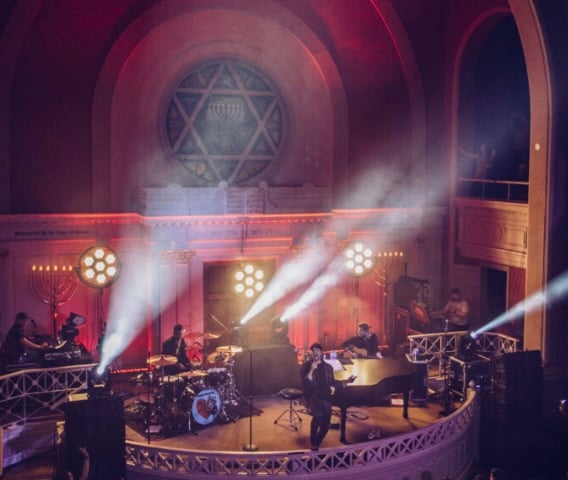
Live Entertainment (Source: Sixth & I Synagogue)
Located in downtown Washington, D.C., Sixth & I Synagogue occupies a unique position as both an active Jewish religious institution and a prominent cultural entertainment venue. Operating under a hybrid model, it intentionally blends spiritual life with secular arts, culture, and public discourse, using its historic sanctuary as a multi-purpose civic space.
As a synagogue, it hosts weekly Shabbat services, High Holiday celebrations, educational programs, and interfaith lifecycle events within a pluralistic framework that welcomes diverse Jewish denominations. At the same time, the sanctuary serves as a respected performance venue for concerts, comedy shows, live podcasts, author talks, and appearances by notable artists, intellectuals, and public figures. This dual identity has made Sixth & I a distinctive example of how historic religious spaces can be adapted to meet both spiritual and cultural needs in contemporary urban communities.
I would like to thank the esteemed Michelle Eider, Director of Marketing and Communications, Sixth & I, for her support of this article.
Synagogue

Sixth & I Historic Synagogue is a beautifully restored historic synagogue in downtown Washington, D.C., distinguished by its grand domed sanctuary, soaring arches, and colorful stained-glass windows. Built in 1908, the building combines Moorish Revival, Romanesque Revival, and Byzantine architectural influences, giving it an elegant and monumental appearance.

Inside, the sanctuary features a high vaulted ceiling beneath a striking central dome, intricate decorative details, and warm natural light filtered through stained glass, creating an atmosphere that is both majestic and welcoming. A recreated stained-glass rose window featuring a menorah motif serves as one of the sanctuary’s most distinctive features, and antique glass was incorporated wherever possible during the restoration to preserve the building’s historic character.
The Torah scrolls at Sixth & I Historic Synagogue are housed in the building’s central ark, where they serve as the most sacred ritual objects in the sanctuary. The Torah scrolls sit within the historic sanctuary’s striking architectural setting, framed by the building’s restored early-20th-century design, stained glass, and elevated bimah.
Originally constructed as a synagogue, later used as a church, and eventually restored to its Jewish roots, the building today serves as both an active place of worship and a vibrant cultural center. The sanctuary seats approximately 750 guests across two levels, while the social hall can accommodate up to 250 people. In addition, two flexible multi-purpose rooms can each host up to 75 guests. Its blend of historic beauty, spiritual significance, and versatile event spaces makes it one of Washington’s most distinctive religious and cultural landmarks.
Jewish Life
Sixth & I Historic Synagogue’s Shabbat services are designed to build community, particularly for people in their 20s and 30s, through spiritually uplifting experiences, with advance registration encouraged and additional resources such as a music library and newsletter available for those seeking deeper engagement. As a multi-denominational center for Jewish life, Sixth & I also maintains a kashrut policy intended to accommodate a broad range of observance levels; its kitchen operates as kosher-style pescatarian, meaning it avoids explicitly non-kosher ingredients while not maintaining strict kosher supervision, as there is no mashgiach on site and the cookware and utensils are not kept fully kosher.
Classes
Sixth & I Historic Synagogue offers a range of Jewish education programs designed primarily for people in their 20s and 30s, providing opportunities to explore Jewish learning, spiritual growth, and contemporary discussions of an ancient tradition. Its offerings include “Basically Jewish,” a five-session introductory course for Jews and non-Jews seeking to explore or reconnect with Judaism through different frameworks of American Jewish identity, as well as an Interfaith Couples Workshop that provides a supportive, nonjudgmental space for partners of different religious backgrounds to navigate identity and relationship questions.
For those seeking deeper study, the Jewish Welcome Workshop offers a 38-week immersive introduction to Judaism that can prepare non-Jewish participants for conversion, while “How to Be a Jewish Adult” provides a 12-week community-based series focused on applying Jewish values and teachings to adult life. In addition, Hebrew Literacy courses help participants learn to read Hebrew, particularly for use in prayer and cultural engagement, making Sixth & I’s educational programming both accessible and comprehensive for learners at different stages of Jewish exploration.
Religious Annual Engagement
The Sixth & I Historic Synagogue reports strong annual engagement across its programs, including approximately 6,328 High Holiday attendees, 5,188 Shabbat attendees, 14,400 registrations for Jewish life programs, and 417 one-on-one meetings with staff members.
Synagogue’s Dual Role
Sixth & I Historic Synagogue in Washington, D.C. operates in a distinctive dual role as both a religious institution and a cultural entertainment venue, blending sacred Jewish life with contemporary arts and public programming within the same historic space. On the religious side, it functions as an active synagogue offering Shabbat services, High Holiday observances, Jewish education, lifecycle events, and community programs led by staff rabbis. These services are intentionally pluralistic and welcoming, creating space for Jews of different denominations—as well as interfaith participants—to engage with tradition in a modern, inclusive setting.
At the same time, Sixth & I serves as a major cultural destination for the broader city, hosting concerts, comedy shows, author talks, live podcasts, and conversations with artists, writers, and public intellectuals. Its historic sanctuary is transformed into an intimate performance venue known for strong acoustics and close audience-performer proximity, even while maintaining its architectural and spiritual character. Rather than separating these two identities, Sixth & I integrates them, treating the building as a shared civic space where spirituality, culture, and ideas intersect and reinforce one another.
Live Entertainment: Music & Comedy

Though originally intended as a house of worship rather than a house of entertainment, Sixth & I Historic Synagogue has evolved into an unexpected platform for legendary artists, emerging bands, and rising voices in comedy. Even when filled to its capacity of around 800 people, performances in the historic sanctuary retain an intimate and inviting atmosphere. The space’s warm ambiance and distinctive acoustics create a setting that feels both personal and immersive for performers and audiences alike. Seating is general admission on a first-come, first-served basis in the building’s original pews, further enhancing the sense of shared experience within this unique venue.
Talks and Entertainment

Sixth & I Historic Synagogue serves as a dynamic cultural forum, hosting engaging and often thought-provoking conversations with world-class thought leaders, bestselling authors, and pop culture influencers. Its programming features accomplished actors, producers, and writers in dialogue-driven events, as well as performances by highly regarded musicians including pianists, string quartets, and musical directors. In addition, the venue regularly presents comedy shows featuring established and emerging comedians, creating a diverse entertainment lineup that ranges from serious discussion to music and humor, all within its historic sanctuary setting.
Social Experiences
Sixth & I Historic Synagogue offers a range of social experiences designed to foster community and connection, whether participants are new to the space or have been engaged for years. Regular programming includes “Small Groups, Big Questions,” a series of five-week, salon-style gatherings hosted in private homes and apartments where participants explore life’s big questions through a Jewish framework while building friendships through meaningful conversation. The organization also hosts Shabbat Happy Hour on select Fridays before services, providing a casual setting to gather, share a drink, and welcome the weekend together. In addition, Grief Groups offer supportive spaces for people in their 20s and 30s who have experienced loss, helping reduce isolation through shared understanding and community support
Sixth & I Historic Synagogue places a particular emphasis on engaging people in their 20s and 30s, offering a space to discover or rediscover Judaism, explore identity, and connect with arts, culture, spirituality, and tradition on their own terms and without judgment. This focus reflects the reality that these years are often marked by major life transitions—leaving home or college, moving to new cities, starting careers, and navigating questions of identity, belonging, and purpose. In a transient city like Washington, D.C., many young adults arrive without established social networks and seek meaningful connections with peers who are experiencing similar changes.
Talks and Entertainment Annual Engagement
At Sixth & I Historic Synagogue, talks, entertainment and religious life programming draw strong audience engagement, with nearly 26,000 tickets sold annually for talks and entertainment events and more than 14,000 tickets sold for Jewish life programs. These figures reflect the scale and reach of its cultural programming, which brings together audiences for conversations, performances, and events featuring a wide range of voices and ideas.
Historical Background
In 1795, just 19 years after the American Revolution, the United States was a fragile but rapidly growing agrarian republic. The nation had expanded to 15 states. The nation was led by President George Washington, who was then in his second and final term. During this time, the majority of Americans worked as farmers or tradespeople, and the national capital was temporarily located in Philadelphia while Washington, D.C. was under construction.
The year 1795 also marked a milestone for the new federal city with the arrival of Isaac Polock, the first known Jewish person to live in Washington, D.C. A young land speculator, Polock built six stately homes in the Foggy Bottom neighborhood—the current site of the Department of State, which eventually hosted several notable historical figures. While Polock was a pioneer, it took more time for a broader Jewish community to establish permanent roots in the area.
By 1820, the United States had expanded to 23 states and was a rapidly growing, predominantly agrarian nation of about 9.5 million people, marked by intense political division over slavery and the early stirrings of industrialization. Around this time, individual Jewish merchants—many of them German immigrants—began settling along 7th Street NW, where they established small shops and furniture stores.
This wave of immigration continued for roughly two decades, from 1820 to 1840, gradually laying the foundation for a more organized Jewish presence in the city. By 1852, the community had grown enough to establish the first synagogue, the Washington Hebrew Congregation, founded by 21 German-Jewish immigrants.
Before the Civil War, Washington, D.C.’s Jewish population remained small, numbering around 200 residents, but the war dramatically transformed the city. During the Civil War era (1861–1865), the Jewish population surged alongside the broader wartime boom in Washington. By 1865, it had grown to roughly 2,000 residents, fueled by the arrival of Jewish soldiers, Union government clerks, and merchants who came to support the war effort.
It was during these years, in 1863, that the Washington Hebrew Congregation secured its first permanent home by purchasing a converted Methodist church at 8th and I Streets NW, marking a significant milestone in the establishment of enduring Jewish communal life in the nation’s capital.
Then in 1869, Washington, D.C.’s Jewish community split when 38 members founded Adas Israel Congregation, an Orthodox congregation. In 1876, Adas Israel dedicated its first synagogue at 3rd and G Streets NW, attended by President Ulysses S. Grant, marking the first time a sitting U.S. president took part in a synagogue dedication.
Meanwhile, 7th Street NW developed as the center of Jewish commercial life, with German-Jewish families running shops and groceries throughout the city. From the 1880s, a major influx of Eastern European Jews fleeing persecution expanded the population to about 4,000 by 1900, prompting the creation of charitable organizations like the Hebrew Relief Society, Jewish Foster Home, and Hebrew Free Loan Society to support new immigrants.
The building known today as the Sixth & I Historic Synagogue was originally constructed by the Adas Israel Congregation, which broke ground in 1906 and officially dedicated the sanctuary on January 5, 1908. Its opening ushered in a vibrant era of Jewish life in downtown Washington, as Adas Israel became the third synagogue in a thriving Jewish neighborhood that included Ohev Shalom and the Washington Hebrew Congregation nearby.
The new synagogue was widely praised, with The Washington Post noting that “from an architectural standpoint, the new temple ranks with the best church edifices in the city.” During the High Holidays, the area around I Street became so crowded with worshippers moving between synagogues that streets were closed, creating a bustling public scene that one congregant later compared to “Broadway.”
Sixth & I Historic Synagogue was created in 2004 when that historic 1908 synagogue building at 6th and I Streets NW was restored and transformed into a multi-use institution combining Jewish worship, cultural programming, and community events.
It all happened this way. By 2002, the Turner Memorial A.M.E. Church, which had occupied the historic synagogue building at 6th and I Streets NW for more than five decades, put the property up for sale as much of its growing congregation relocated to Prince George’s County, Maryland. In late 2002, three local Jewish developers purchased the property and began an extensive restoration effort that preserved its historic character while repairing decades of wear.

Working with firms such as Shalom Baranes Associates and EHT Traceries, Inc., the renovation included roof stabilization, dome repairs, and the recreation of the building’s copper Star of David, which was reinstalled in 2004. Interior restoration also reconstructed key architectural and liturgical features, including the rose window, stained glass, and bimah, using archival photographs and surviving materials. Following the completion of renovations, the building was rededicated in 2004 as the Sixth & I Historic Synagogue, marking its return to Jewish communal use after decades of change.
Following its rededication on April 22, 2004, as the Sixth & I Historic Synagogue, the building quickly reemerged as a vibrant civic and cultural hub. In 2005, President George W. Bush visited the site on September 14 before delivering remarks at the National Dinner celebrating 350 years of Jewish life in America, underscoring the building’s renewed national significance.
Later that year, Sixth & I launched its public programming with its first major event, Ask Dr. Love: A Conversation with Loveline’s Dr. Drew on September 22, 2005, initiating its “6th in the City” series for young professionals. Just weeks later, on October 29, 2005, reggae artist Matisyahu performed to a sold-out crowd, signaling the start of Sixth & I’s role as a dynamic venue for contemporary music and cultural events in downtown Washington, D.C.
Sixth & I Synagogue demonstrates how a historic religious institution can successfully bridge the worlds of faith, culture, and community engagement. By functioning simultaneously as a synagogue and a cultural venue, it creates opportunities for people to explore spirituality, ideas, and the arts within the same space. Its diverse programming, from Shabbat services and Jewish education to concerts, comedy performances, and public conversations, reflects a commitment to serving the multifaceted identities of contemporary audiences.
Housed within a revitalized 1908 synagogue, Sixth & I has become a distinctive gathering place in Washington, D.C., where culture and Jewish life intersect, fostering curiosity, connection, and meaningful community for both Jewish and broader public audiences.
Contact Information:
Sixth & I – 600 I Street, NW – Washington, DC 20001
Phone: 202.408.3100
Email: meider@sixthandi.org
Website: sixthandi.org/