

Mathematics Teaching Professor, Author
A Synagogue’s Journey: The Story of the Capital Jewish Museum in Washington D.C.
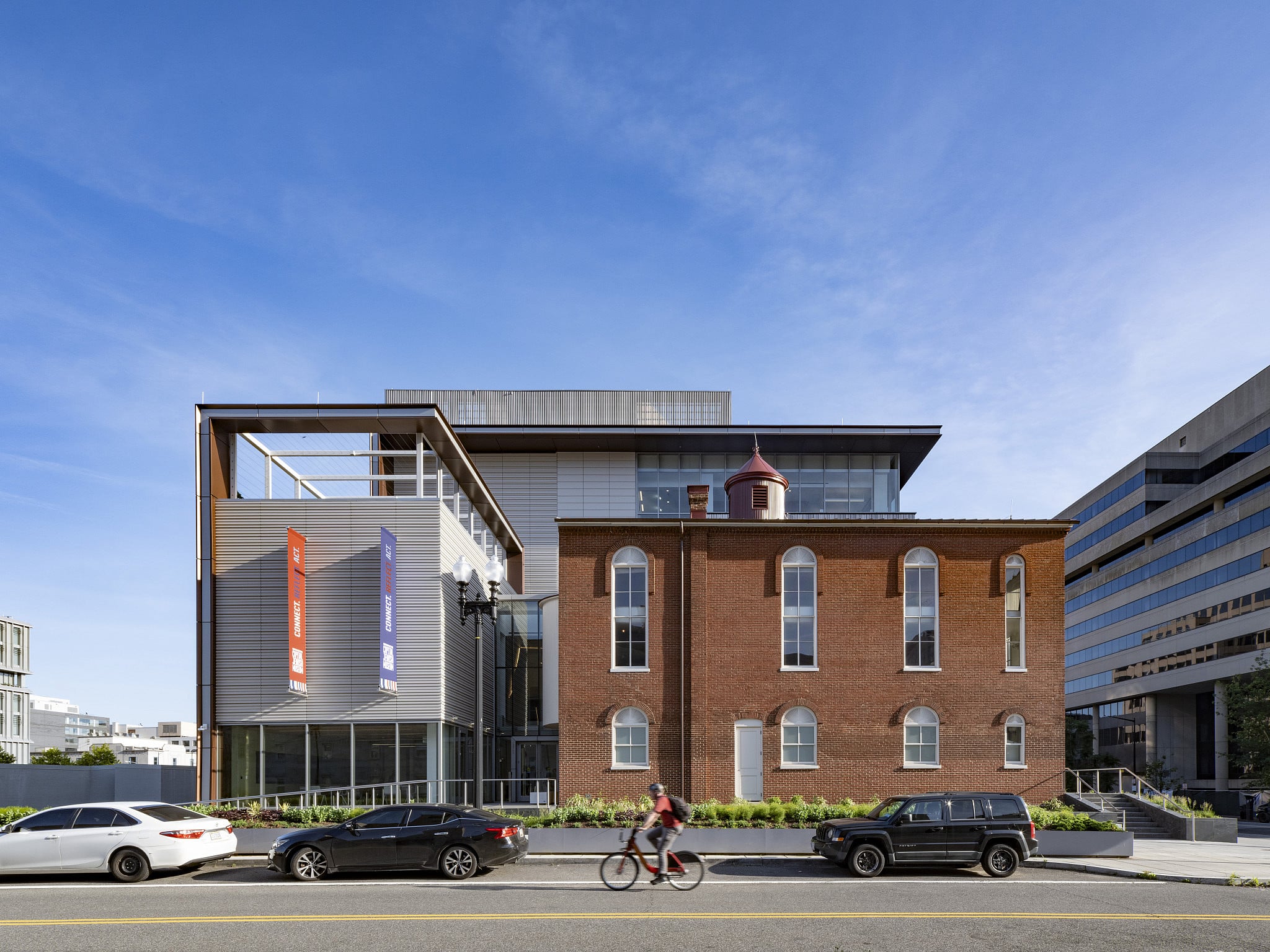
Capital Jewish Museum (Source: Alex Fradkin Photography)
At the heart of Washington, DC, stands a remarkable building that tells the story of the city’s Jewish community, its history, and its enduring connection to the nation’s capital. The historic Adas Israel synagogue, built in 1876, is the oldest purpose-built synagogue in Washington, DC, and serves as a powerful reminder of the generations of Jewish families, leaders, and community members who helped shape the city. In 2026, it celebrated its 150th anniversary, honoring a century and a half of faith, heritage, and community.
From the arrival of early Jewish residents in the 18th century to the growth of congregations, businesses, civic involvement, and cultural institutions, Jewish Washington has played an important role in the region’s history. Today, the historic synagogue is the centerpiece of the Capital Jewish Museum, where visitors can explore the stories, traditions, and contributions of Jewish communities throughout Washington, DC, Maryland, and Northern Virginia.
I would like to thank the esteemed Clara de Pablo Senior Manager of Marketing, Lillian and Albert Small Capital Jewish Museum, for her support and guidance.
Museum
The Capital Jewish Museum in Washington, DC, is built around the city’s first purpose-built synagogue, which marked its 150th anniversary in June. The 32,500 square foot, LEED Silver-certified museum combines historic preservation with contemporary design, featuring exhibition galleries, education spaces, a lobby atrium, and a terrace overlooking the U.S. Capitol.
The synagogue, Washington’s oldest purpose-built Jewish house of worship, is the museum’s centerpiece. Carefully moved, restored, and renovated, it preserves the building’s original character while connecting visitors to the history of Jewish life in the capital.
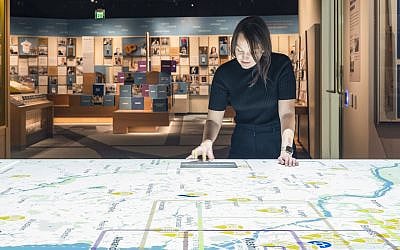
Designed by Smith Group, the museum’s modern addition surrounds the historic structure with a light-filled design that blends new materials with references to the synagogue’s brick architecture. A lobby exhibition features a map and reader rail that explore the building’s many uses before it became part of the museum, as well as its remarkable journey through the city, including the three times it was moved.
Programs
The Capital Jewish Museum in Washington, DC, offers a variety of programs and events, including Sunday afternoon DC Drop-In Mahjongg, free public tours of its galleries and historic spaces, and Community Days featuring activities and guided tours of ongoing exhibitions.
Special programs such as “Commemorating History Then and Now” explores Jewish and American history through discussions, including a conversation with Professors Laura Schiavo and M.J. Rymsza-Pawlowska marking the 250th anniversary of the Declaration of Independence and the 150th anniversary of the historic Adas Israel synagogue.
Exhibitions
The Capital Jewish Museum in Washington, DC, features exhibitions that explore Jewish history, American identity, and important moments in the nation’s past. “Blacklisted: An American Story” examines the Hollywood blacklist and federal loyalty investigations during the Red Scare, highlighting the connections between politics, antisemitism, free speech, and national security. “What Is Jewish Washington?” takes visitors through the history of Jewish communities in DC, Maryland, and Northern Virginia from 1790 to today through photographs, artifacts, oral histories, maps, and timelines.
The Museum also presents programs such as “Author Talk with Michael Auslin: The Hidden Jewish History of the Declaration of Independence”, exploring Jewish contributions to preserving and sharing the ideals of America’s founding document. Opening in October, “Esther Bubley: Photographing the Homefront” showcases the documentary photographer’s images of 1940s Washington during World War II, pairing her photographs with Museum artifacts to reveal life in the nation’s capital during a pivotal era.
Collections
The Capital Jewish Museum in Washington, DC, preserves collections of historic artifacts, personal and family papers, archival documents, and photographs that tell the story of Jewish communities in Washington, DC, suburban Maryland, and Northern Virginia from the 1850s to today. These collections reflect a history that is both local and connected to broader national and international events.
In 2025, the Museum launched an initiative to collect and explore the stories of Jewish federal workers, highlighting the important role Jewish Americans played in the growth of the federal workforce throughout the 20th century, from World War I mobilization through the New Deal and World War II eras.
Learn
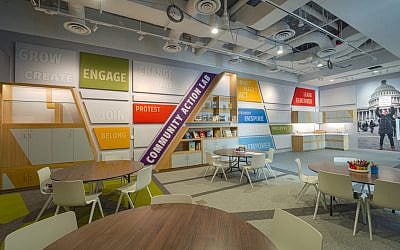
The Capital Jewish Museum offers engaging opportunities for visitors of all ages through its Community Action Lab, a maker space featuring hands-on activities, workshops, games, and resources that connect exhibitions and programs to creative action.
The Museum also provides Educator Resources and school group programs for Pre-K through Grade 12, including lesson plans inspired by its collections, holidays, and exhibitions, such as DC’s first synagogue and the story of Isaac Polock.
Family programs include monthly drop-in story times, Fourth Saturdays with free activities for young children, and holiday-inspired events that provide families with meaningful and creative ways to learn and explore together.
Historical Background
In 1795, the President of the United States was George Washington. The nation had 15 states and was a young, fragile republic of just over 4 million people. Its borders stretched from the Atlantic Ocean to the Mississippi River, but most citizens lived east of the Appalachian Mountains.
In 1795, Washington, D.C. was mostly an undeveloped swamp and woodland. In reality, it was a massive building site. Workers were just starting to build the White House and the U.S. Capitol. The government did not officially move there for five more years, in 1800.
It was in this year, 1795, that Jews first arrived in Washington, D.C. in 1795. Isaac Polock was a land speculator who built six famous brick homes in the Foggy Bottom area. His homes later housed U.S. Secretaries of State.
The Jewish population grew slowly at first. It included only about 25 people in 1847. Most early arrivals were German-Jewish merchants who set up shops on 7th Street to sell goods to the new federal city. In 1852, 21 of these men started D.C.’s first synagogue, the Washington Hebrew Congregation.
Later, during the Civil War in the 1860s, the Jewish population jumped to 2,000. Many new families arrived seeking business and government work.
Which brings us to 1876.
The president in 1876 was Ulysses S. Grant. The country celebrated its 100th birthday as an independent nation. A massive Centennial Exhibition was held in Philadelphia, Pennsylvania, to show off new inventions like the telephone and the typewriter.
That same year, 1876, Washington, D.C., was a muddy, chaotic boomtown undergoing massive changes. Still recovering from the Civil War, the city transitioned from a disjointed town with unpaved roads into a modern capital, complete with newly paved streets, gaslights, and an unfinished Washington Monument. The United States Capitol had its dome, but much of the rest of the city was made of wooden shacks. The National Mall was still a rough, weedy, open field.
It was in this year, 1876, oldest standing synagogue building in Washington, D.C., now home to the Capital Jewish Museum, was built. Originally located at 6th and G Streets NW, this historic brick structure was dedicated by the Adas Israel congregation on June 9, 1876, in celebration of the United States Centennial.
Adas Israel, founded in 1869, was the second Jewish congregation established in Washington, D.C., following the founding of the Washington Hebrew Congregation in 1852. The members of both congregations were primarily families of German descent who helped establish the foundations of Jewish communal life in the nation’s capital.
As Washington’s Jewish population grew over the following decades, Adas Israel and Washington Hebrew Congregation were joined by additional synagogues and Jewish organizations.
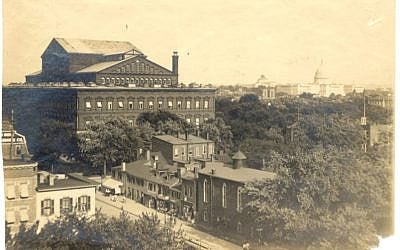
By the early 20th century, the Jewish community had become increasingly diverse, including immigrants from Eastern Europe, Turkey, and Morocco, as well as real estate developers, government workers, grocery store owners, small business owners, and social and political activists. Together, these individuals and families shaped a vibrant Jewish presence in Washington, D.C., contributing to the city’s cultural, economic, and civic life.
After Adas Israel moved to a new building at 6th and I Streets NW in 1908, the original synagogue at 3rd and G Streets NW continued serving the community for decades as a place of worship, businesses, and community activity.
In the late 1960s, plans for the Metro system threatened the demolition of the historic Adas Israel synagogue building. In 1969, a group of Jewish Washingtonians organized to save the structure, successfully arranging for the building to be lifted and moved down the street. Restored by the Jewish Historical Society of Greater Washington and listed on the National Register of Historic Places, the synagogue continued to serve as a cultural and educational resource for more than four decades.
To protect the historic building from further downtown development, the community moved the synagogue again in 2019 as part of the Capitol Crossing project. After a temporary relocation during construction, it was moved to its permanent home at the corner of 3rd and F Streets NW.
Today, the 1876 Adas Israel synagogue serves as the centerpiece of the Capital Jewish Museum, which opened in 2023 and combines the historic sanctuary with modern exhibition spaces exploring Jewish history, identity, and the community’s contributions to Washington, DC.
The historic Adas Israel synagogue stands as a lasting symbol of the growth, resilience, and enduring presence of the Jewish community in Washington, DC. As the oldest purpose-built synagogue in the nation’s capital, it preserves the stories of generations who built and shaped Jewish life in the region.
As part of the Capital Jewish Museum, the building continues to welcome visitors to explore the traditions, experiences, and contributions of Jewish Washington and their important place in the city’s history.
Contact Information:
Capital Jewish Museum, 575 3rd Street, NW, DC 20001
Phone: 202-789-0900
Email: info@capitaljewishmuseum.org
Website: https://capitaljewishmuseum.org/