
Middle East Analyst
A Tale of Two Elections – and One War
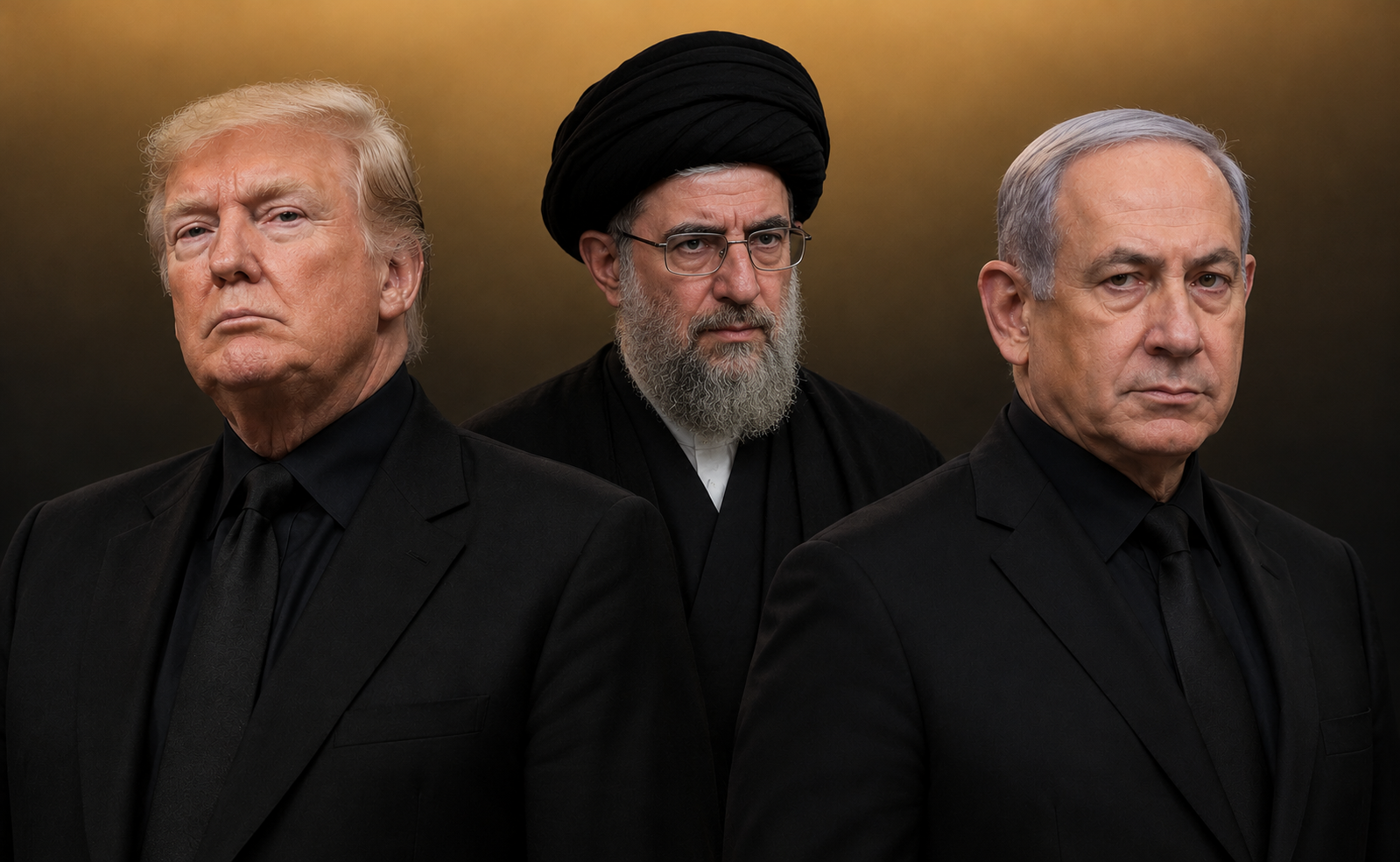
by author (AI)
The final stretch?
In ten days, Israelis will vote in one of the most consequential elections in the country’s history. The results will determine the composition of the next Knesset and, ultimately, whether Benjamin Netanyahu remains prime minister. Six days later, Americans will vote in midterm elections that will determine control of Congress for the final two years of President Donald Trump’s presidency. At first glance, these appear to be two separate democratic exercises conducted an ocean apart. In reality, they are increasingly intertwined by a single issue: the ongoing war with Iran and its proxies.
For Israelis, the conflict is the latest chapter in a struggle spanning more than four decades, encompassing Iranian support for Hezbollah, Hamas, the Houthis, Palestinian Islamic Jihad, and Iraqi Shia militias. For Israelis, the threat became especially immediate and personal with Hamas’ October 7, 2023, attack and the multi-front war that followed. The question is not simply whether Iran represents a threat, but whether the military campaign can produce a more durable security environment.
For Americans, the war is experienced differently.
Most Americans do not face missile strikes, mobilization orders, or air raid sirens. They experience the conflict through higher gasoline prices, rising diesel costs, increased fertilizer expenses, and higher grocery bills and other household expenses. The war has also revived concerns about another open-ended Middle Eastern commitment whose ultimate costs and objectives remain controversial. Thus, while Israelis and Americans are evaluating the same conflict, they are asking fundamentally different questions.
Can we afford not to continue? Increasingly, that is the Israeli security dilemma.
Can we afford to continue? Increasingly, that is the American political and economic dilemma.
The same war may therefore produce very different political effects in two allied democracies. That divergence could become one of its most consequential strategic consequences.
A Shared War, Divergent Politics
The political debate in Israel largely revolves around security, although Israelis remain divided over strategy, leadership, and the costs of continuing the campaign. The October 7 attack fundamentally changed how most Israelis understand the dangers posed by Iran and its regional partners. That experience may sustain support for confronting Iran even when voters disagree over Netanyahu’s handling of the conflict.
In the United States, the political calculation is different. Military operations become questions about their cost, duration, and purpose. Discussions of strategic objectives become debates about gasoline prices, inflation, the prospect of another prolonged war, and concerns over readiness to deter global adversaries far more capable than Iran.
This does not mean that Americans necessarily oppose confronting Iran or that Israelis uniformly support continued military action. It means that the two electorates currently are experiencing different consequences and are drawing different conclusions.
Israel fears strategic defeat. America fears strategic exhaustion.
Those concerns are not mutually exclusive, but neither are they automatically aligned. A military campaign can produce meaningful security gains while imposing economic and political costs that make its continuation increasingly difficult for one of the partners. That is the underlying asymmetry. It is not simply a difference of opinion about Iran. It is a difference in the domestic political conditions required to sustain a common strategy.
The Possibility That Neither Election Resolves Anything
Neither electorate is guaranteed to deliver a decisive political outcome.
In Israel, current polling points toward a potentially fragmented Knesset in which neither major political bloc secures an outright majority. If that pattern holds, coalition negotiations could prolong uncertainty over the next government and Netanyahu’s political future.
In the United States, control of Congress is also in play. Democrats are appear to be positioned to regain the control of the House and possibly the Senate. The outcome will shape Trump’s ability to advance his domestic agenda and could affect the political environment surrounding continued military operations.
A change in congressional control would not automatically end the war or prevent the president from directing military action. It could, however, complicate the administration’s ability to secure funding, maintain political support, and manage the broader consequences of a prolonged conflict.
The two elections may therefore produce less clarity than voters expect. Israel could face an extended period of coalition bargaining while the U.S. could face weeks of contested close elections and lawsuits. Even once the outcomes are resolved there could still be razor thin majorities – especially in the Senate. That possibility matters because the war will not necessarily pause while the two political systems work through their respective uncertainties.
Tehran’s Invisible Vote
The most consequential actor in both elections may not appear on either ballot. It may be found in Tehran. This does not mean Iran can determine the outcome of either election, nor does it require an assumption of direct electoral interference. The more important question is how Iranian actions shape the strategic and economic environment in which voters make their decisions.
For Israeli voters, missile attacks and proxy operations reinforce perceptions of an enduring security threat. For American voters, maritime disruption and higher energy prices add to the perceived cost of continuing the war. The same action can therefore produce different political effects.
A Houthi attack in Saudi Arabia that reinforces Israeli concerns about Iran’s regional reach may also spike oil prices that affect American consumers. An Iranian decision to sustain pressure on maritime traffic may preserve Tehran’s leverage while adding to the economic pressures facing the United States.
From Tehran’s perspective, that asymmetry may be strategically useful. Iran does not have to control the political consequences of its actions to benefit from them. Nor must every action be designed with elections in mind for its effects to influence electoral calculations. The more limited inference is also the more important one: if continued confrontation imposes different political costs on the two allies, Iran may be able to exploit the resulting divergence.
Hormuz and Bab el-Mandeb: Two Strategic Pressure Points
The Strait of Hormuz has become a central instrument of economic pressure. Its importance extends beyond oil exports to liquefied natural gas, fertilizer supplies, and other commodities moving through the Persian Gulf. Even without a permanent closure, uncertainty about safe passage can affect energy markets, shipping decisions, insurance premiums, and transportation costs. The economic effects can travel far beyond the region.
A second pressure point lies to the west. Houthi operations threaten shipping around Bab el-Mandeb, the gateway to the Red Sea and the Suez Canal. The Houthis are not simply an extension of Iranian command, and their decisions reflect their own interests. Nevertheless, Iranian support and the broader alignment between Tehran and the Houthis create the potential for complementary pressure on two critical maritime routes.
Viewed separately, developments around the two straits can appear to be distinct military or regional problems. Viewed together, they expose the vulnerability of global commerce to sustained pressure at strategically important chokepoints. The objective need not be to shut down every route completely. The possibility of disruption can itself raise costs and discourage normal commercial activity. If both routes become less reliable, alternative transportation options become more important, and the economic consequences can multiply.
This is where the military and political dimensions converge. Israelis encounter the threat through their security assessments. Americans encounter part of its cost through energy prices, transportation, and affordability. The two effects are different, but they arise from the same regional conflict.
The Politics of Strategic Uncertainty
Recent reporting has highlighted conflicting accounts of discussions between Trump and Netanyahu about the possibility of renewed military operations against Iran before the elections.
Axios reported on October 13 that U.S. and Israeli sources described discussions about a potential joint operation, while the White House disputed the account that the two leaders had discussed resuming the war. Earlier, Trump publicly stated that the United States would not attack Iran before the November midterms, even as the Pentagon prepared military options for a possible resumption of major combat operations.
These accounts do not establish that a decision to resume the war has been made. They do, however, illustrate the uncertainty surrounding the next phase of the conflict and the political considerations accompanying it.
Netanyahu has an election approaching in which national security is central. Trump faces a midterm election in which renewed combat, higher energy prices, and the prospect of a prolonged war could carry domestic political consequences. Tehran must consider the possibility of further attacks while weighing the consequences of continued resistance. Each actor faces a different calculation. Their interests overlap in some areas and diverge in others. A military operation could strengthen perceptions of Israeli resolve while reviving American concerns about the war’s duration and cost. Restraint could reduce immediate economic pressure while leaving Israeli voters concerned that the underlying threat remains unresolved.
The analytical challenge is to distinguish intentions from consequences. Military decisions may be driven by operational requirements and intelligence assessments while still producing significant political effects. Public warnings may communicate genuine threat assessments, serve deterrent purposes, or accomplish both simultaneously. The competing accounts tell us less about what decisions have definitively been made than about the pressures surrounding those decisions. The uncertainty itself has become part of the strategic environment.
The Gaza War
The war in Gaza is something of an anomaly in the political dynamics shaping the U.S. midterms. Although Gaza and U.S. support for Israel have figured prominently in political debate over the past two election cycles, polling suggests they remain secondary to the economy and affordability for most voters. A notable exception may be Michigan’s Senate race, where Democrat Abdul El-Sayed faces Republican Mike Rogers. The contest is close enough that Republican efforts to make El-Sayed’s opposition to Israeli government policies a campaign issue could matter at the margins, even if it does not displace economic concerns as voters’ primary motivation. The race is one of the key tight races in the broader battle for control of the Senate, making it a potential hinge point in the national election. Gaza may not define the midterms, but in a contest this close, it could still help determine the outcome.
The Real Question
Most coverage of the coming weeks will focus on electoral outcomes. Will Netanyahu remain prime minister? Will Democrats regain control of Congress? Will either country emerge with a clear political mandate? Those questions matter, but the deeper issue may be whether the war will continue to pull Israeli and American public opinion in different directions.
Israelis are evaluating the conflict primarily through a security lens. Americans are increasingly encountering it through an economic lens, alongside questions about military objectives, duration, and the limits of American commitments. Neither perspective is inherently incompatible with the other. But maintaining a shared strategy requires more than agreement that Iran poses a threat. It requires sufficient agreement about what the war is intended to accomplish, what constitutes success, and how much each country is prepared to pay to achieve it.
Iran may be able to exploit differences between those calculations without determining either election or controlling the decisions of either government. If the economic costs continue to rise while the security threat remains unresolved, the political room for maneuver may narrow in Washington even as the perceived need for continued action remains strong in Jerusalem.
That is not a prediction about either election. It is a strategic dynamic that is unlikely to be resolved by either of the elections.
Related Topics