
A Tale of Two Ships
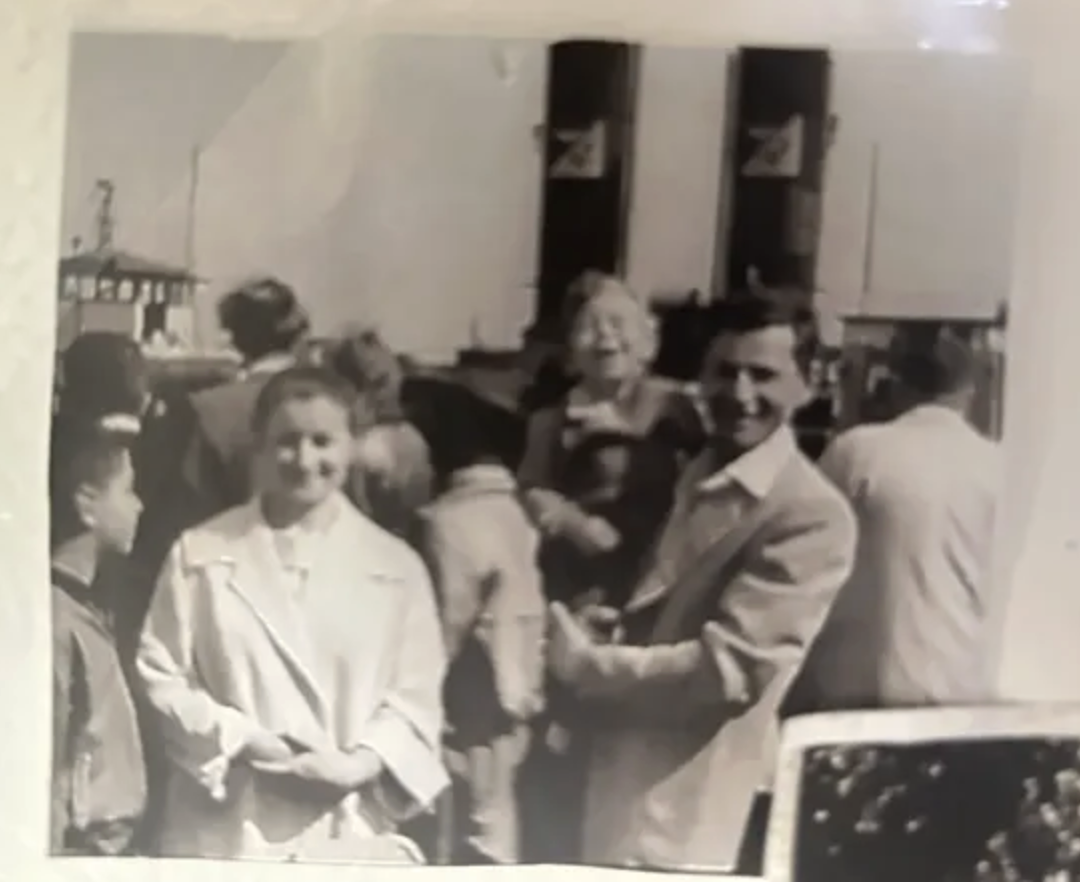
They are all smiling—leaving behind a continent of murdered families, and all that cannot be said.
The photograph is not a good one.
Blurred. Crowded. Taken on a sun-struck deck in Haifa, strangers drifting through the frame.
Edna is smiling.
Harry is smiling.
Sam is smiling.
The ship is the TSS Olympia.
And they are leaving.
September 1, 1960.
Twenty-one years earlier—to the day—Edna was four years old, at a birthday party in Warsaw, when the bombs began to fall.
A CHILD SOLDIER
She was ten when the Germans finally took her.
Even then, they didn’t know who they had.
October 2, 1944—her birthday—the day the Warsaw Uprising surrendered.
For sixty-three days, she had fought in it.
Ten years old.
The youngest soldier in the Polish Home Army.
Nom de guerre: Kajtek.
She couldn’t read.
She carried messages she couldn’t decipher through burning streets.
She carried a pistol.
She was wounded by a grenade.
That same day:
- She was decorated for valor by General Bór-Komorowski
- She was assigned prisoner number 224040
The youngest decorated soldier in the Polish Home Army.
A prisoner of the Reich.
Ten years old.
PERFORMANCE AS SURVIVAL
They marched her twenty kilometers to Ożarów.
Then to Stalag XB at Sandbostel.
There, something improbable:
A French POW theater troupe—L’Équipe—was staging Hamlet.
Directed by a Jewish man the Nazis didn’t know was Jewish.
Costumes stitched from scraps.
Photographs stamped on the back:
geprüft — approved.
Nazi-approved Shakespeare.
Edna understood exactly what they were doing.
She was ten years old.
She was already a performer.
She left Sandbostel with their photo album.
OBERLANGEN
Then came Oberlangen:
- The only all-female POW camp in Nazi Germany
- 1,721 Polish women soldiers
- Rotting barracks on a frozen marsh
- Two hundred to a room
Seven months.
The Germans never knew she was Jewish.
She was still Stefcia.
She was still performing.
THE OTHER SHIP
Harry knew this harbor differently.
In 1947, he stood on these same docks—not departing, but detained.
He had come on the Exodus 1947 with 4,500 Holocaust survivors.
They were intercepted in international waters.
Forced into Haifa.
Transferred under armed guard.
Sent back.
When they refused to disembark in France—
When they declared a hunger strike—
When they endured twenty-four days in suffocating heat—
The British made their final decision:
They sent them back to Germany.
Back.
To.
Germany.
Harry spent more than a year in a displaced persons camp before reaching the land he had crossed an ocean to find.
THIS TIME IS DIFFERENT
Now it is 1960.
Two people—each displaced, expelled, refused—stand on the Haifa docks together.
This time:
- They choose the ship
- They have a son
- They are leaving on their own terms
Harry’s sister was already in Elizabeth, New Jersey.
He had found safety in Israel.
But now he wanted something else.
Possibility.
The old promise:
Streets paved with gold.
Not because it’s true—
but because it is necessary to believe it might be.
So they packed what a young family packs when starting over
for the second time in one lifetime.
And they boarded the Olympia.
CROSSING
Lisbon.
Then the Atlantic.
October 1, 1960—one month to the day after departure—the Olympia arrived in New York.
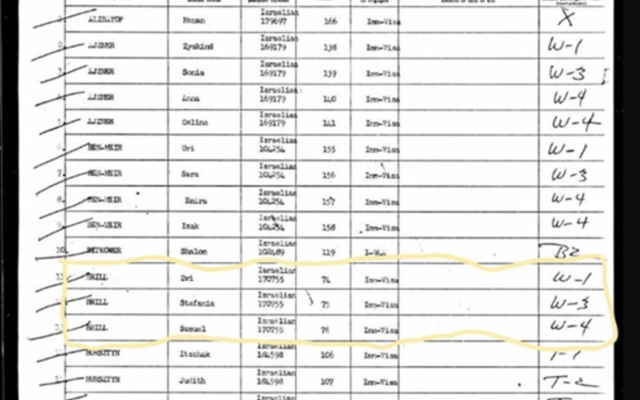
The United States Customs Service stamped their manifest.
Tourist class.
Israeli passports.
Immigrant visas.
BRILL, Zvi — Passenger 74
BRILL, Stefania — Passenger 75
BRILL, Samuel — Passenger 76
ADMITTED — OCT 1, 1960
ONE WORD
Thirteen years earlier, Zvi Brill had stood in this same harbor and been turned away.
Loaded onto a deportation ship.
Sent back to Germany.
Refused.
Now:
Admitted.
One word.
Everything.
THE DATE
I keep returning to the departure date.
September 1.
The anniversary of the bombs that fell on Edna at her best friend’s birthday party. The day her childhood ended.
Of all the days a ship might sail—this one.
I don’t know if she noticed.
I never thought to ask.
But I think about what it means
to leave
on the same day
everything once collapsed.
As if, quietly, without ceremony, she were telling the calendar:
This day is mine now.
They sailed from Haifa.
They arrived in New York.
They did not look back.
Janet Bond Brill, PhD, is the author of Little Edna’s War, based on her mother-in-law’s Holocaust testimony, published on January 27, 2026, on International Holocaust Remembrance Day. Order Now