A terrible question: Will Israelis trust the vote?
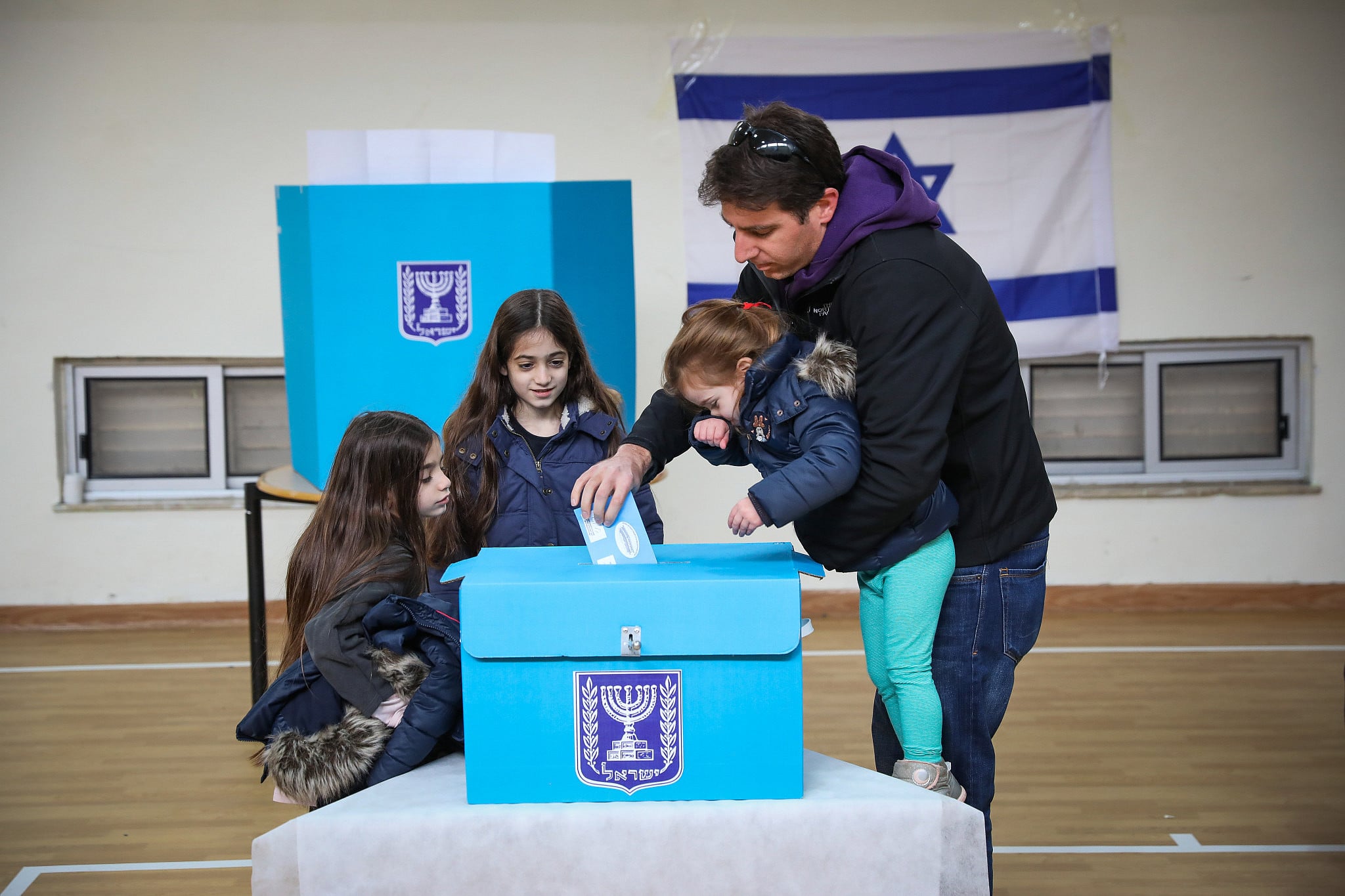
As the Knesset prepares to vote on its dissolution, concerns are mounting over the erosion of public trust in state institutions and the electoral system itself – alongside growing claims that Benjamin Netanyahu will seek to delay the process, reshape the election timetable, and consolidate networks of political loyalty around him.
Trust is the most valuable currency in a democracy. More important than power, the police, the army, the Shin Bet, the Mossad, or the courts. All of these institutions matter, but none can sustain a free society on their own. They function only so long as the public believes they operate in its name, for its benefit, and according to the law; only so long as citizens believe that public servants are loyal to the state rather than to a prime minister, or to the interests of a criminal defendant willing to subordinate the country to his personal survival.
And that is precisely what is now breaking in Israel. Not merely trust in Netanyahu – that fracture happened long ago. What is collapsing now is something deeper and more dangerous: confidence that the institutions themselves are still capable of standing up to him.
Israel is entering one of the most sensitive periods in its history while led by a prime minister who has lost the confidence of most of the public, trails badly in the polls, carries the burden of both the October 7 catastrophe and his ongoing criminal trial, yet continues to wield state power. At the same time, he surrounds himself with appointees who understand one simple fact: a different government would likely remove them from office. Some may be qualified, some may even be talented – that is beside the point. The point is that they assume their roles under the patronage of a man who has already demonstrated that, in his view, the state, its institutions, the war, the hostages, the budget, the draft law, and even elections themselves are all pieces on the chessboard of his personal survival.
Under normal circumstances, as elections approach, Israeli citizens should be able to trust that the Shin Bet, the police, the Central Elections Committee, and other institutions will act with complete impartiality and professionalism. Under normal circumstances, when the head of the Shin Bet warns of attempts to disrupt or manipulate elections, the public ought to listen carefully. That is part of his duty.
But Israel is no longer in normal circumstances.
When the head of the Shin Bet – himself a political appointment born under controversial circumstances – begins publicly raising concerns about potential election fraud, a basic question inevitably arises: are we hearing a genuine professional warning, or the beginning of political groundwork being laid in advance?
It is a terrible question, and the very need to ask it is itself a tragedy. But in a wounded democracy, such questions sometimes become unavoidable.
The same dynamic is now unfolding around the Mossad. Israel cannot afford the appointment of a Mossad chief clouded by doubts of this magnitude. Not because every candidate for high office should be automatically suspected, but because this particular position demands unquestioned integrity and public confidence. When a sitting Mossad director opposes the appointment of his successor, when an extraordinary letter is submitted to the attorney general and the High Court, and when the prime minister fights not only for the appointment itself but also against the mere disclosure of the opposition to it, a decent candidate, under such circumstances, ought to step aside voluntarily.
Related: Gofman accuses AG of acting in bad faith in case against his appointment as Mossad head
Such a person should say: I do not wish to enter this office through an institutional civil war. I do not wish to serve as Mossad chief while a substantial part of the system sees me not as a servant of the state, but as the prime minister’s personal appointee.
But this is the era Israel is living through now, an era dominated by politics. Stone by stone, the foundations upon which the state was built are beginning to erode.
On Wednesday, the Knesset is expected to vote on dissolving itself. In theory, this should be a routine democratic moment: there appears to be a majority in favor of new elections, even if only by advancing them a month. But in Israel of 2026, even that sentence sounds naive.
Everyone understands that Netanyahu will do everything possible to secure the election date most advantageous to him. Everyone knows he will attempt to stall, delay, buy time, find another ladder to climb down from, another war, another “security incident,” another justification.
A prime minister is entitled to make difficult decisions during wartime; at times, he must. But such decisions depend on a basic level of public trust – trust that national interests come before personal ones. In Netanyahu’s case, that trust has evaporated. Again and again, he has shown that his overriding concern is his own political survival. And that survival has become disastrous for Israeli citizens.
A country can confront external enemies. It can confront Iran, Hezbollah, Hamas, international pressure, and economic crises. What is far more difficult is confronting a reality in which senior law-enforcement officials know they may be dismissed the moment Netanyahu leaves office, or fear challenging him and his interests lest they too become targets.
This is a formula for dangerous instability.
Democracies do not collapse in a single day. They collapse when citizens stop believing that the rules apply equally to everyone. When they stop believing that the police serve the public rather than the minister overseeing them, that senior commanders make decisions based on security considerations rather than political ones, that the head of the Shin Bet warns of genuine dangers rather than constructing a narrative designed to preserve his own position and shield a collapsing political order.
Vigilance
This is therefore no time for parliamentary niceties or clever social-media posts. Vigilance is required on every front: in the Knesset, within the Elections Committee, throughout the judicial system, in oversight of the police and the Shin Bet, across political campaigns and social media platforms, and against every attempt to plant in the public consciousness the idea that if Netanyahu loses, the election must have been stolen.
That seed must be uprooted now, before it takes hold. Other democracies have already shown how such processes begin.
Anyone who cares about Israel must understand that this is a dangerous moment because the man at the wheel is a leader without restraints, without boundaries, and cynical to an alarming degree, a man who has already demonstrated that there are few limits to what he is prepared to do in order to survive politically.
The next elections, if conducted properly, will not be merely another round of voting. They will be a test of survival for Israeli democracy itself. A test of whether there is still a state here, or merely rule by factions and loyalists. A test of whether any trust can still exist between citizens and their government.
And trust cannot be demanded by force. It cannot be legislated into existence. Trust is built through clean decisions, clean conduct, and leadership that understands the state must come before the individual.
So long as Netanyahu remains in office, doing everything possible to stay there, appointing those who will protect him, and treating the lives of Israelis as pawns in his personal struggle for survival, that trust will not return.
And without trust, wars cannot be won. Without trust, societies cannot be built. Without trust, democracies cannot endure. Without trust, even a strong state eventually discovers that it has become hollow from within.
Until trust is restored, this is the time to remain vigilant – and to fight for it.